


Topline
The United Arab Emirates has announced it will no longer be a member of the Organization of the Petroleum Exporting Countries, OPEC, starting May 1 after reflecting on its “long-term strategic and economic vision,” a move that could impact the group’s ability to control the supply of oil and prices around the world.
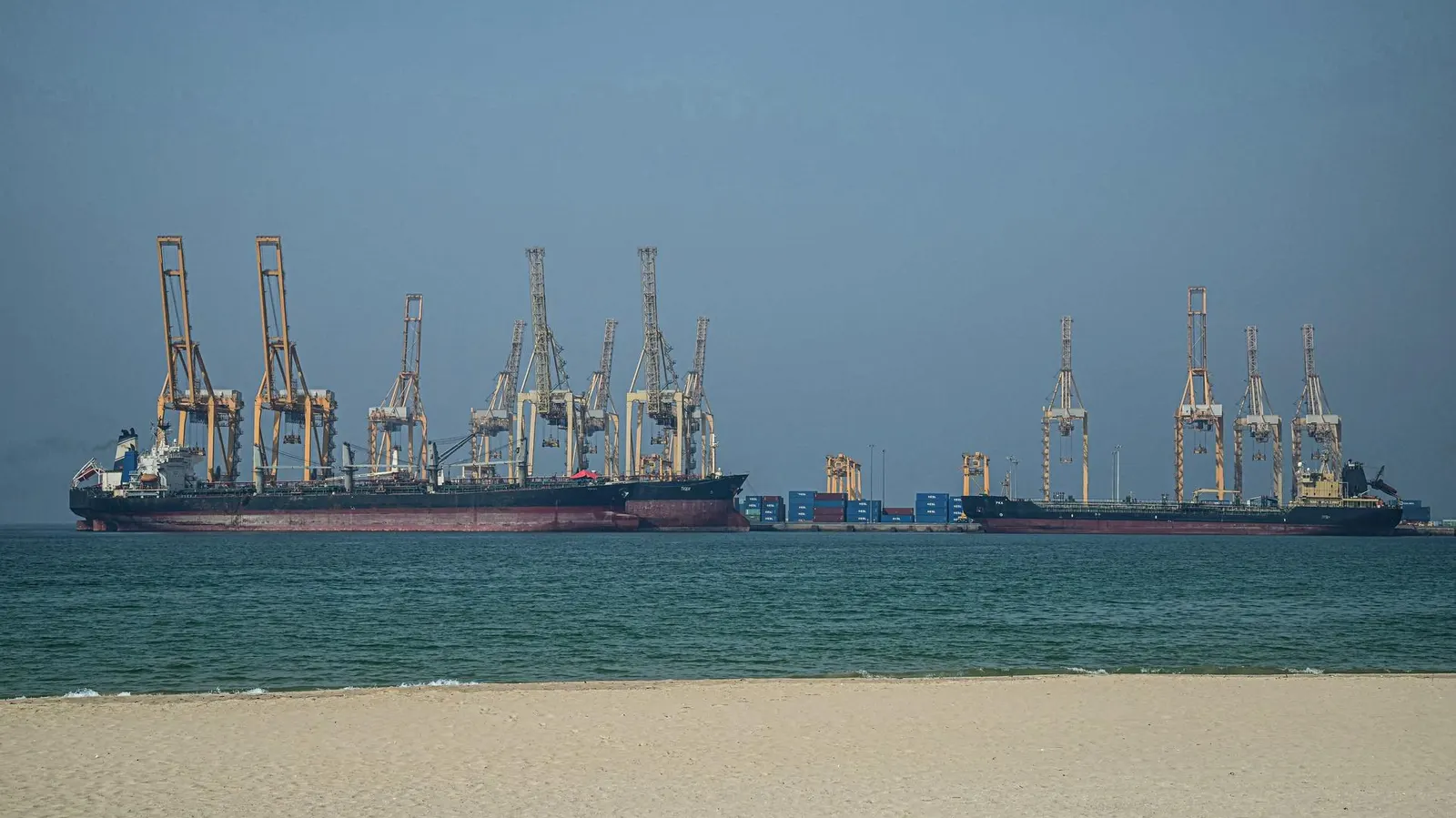
Tankers are seen at the Khor Fakkan Container Terminal in United Arab Emirates on June 23, 2025.
AFP via Getty Images
Key Facts
The UAE made the announcement to leave the so-called oil cartel via the state-run WAM news agency, and cited “near-term volatility” in the market and a desire to ramp up investment in domestic energy production.
The statement referred to the Iran war started by the U.S. and Israel in February, which has choked oil transport through the important Strait of Hormuz, and the government’s desire to meet what it thinks will be the “sustained growth” of energy demand in the medium to long term.
The nation’s decision to leave the group comes after it criticized fellow Arab states for not doing enough to protect the region from attacks during the Iran war started by the U.S. and Israel in February, and as it increasingly conflicts with Saudi Arabia, OPEC’s de facto leader.
UAE is the third-largest OPEC oil producer, behind Saudi Arabia and Iraq, and its decision to withdraw from the alliance signals internal disputes that could impact the group’s influence over global markets.
The United Arab Emirates will also leave OPEC+, a broader alliance formed in 2016 that encompasses OPEC’s 12 core members plus 10 other major producers, including Russia, Mexico and Kazakhstan.
Get Forbes Breaking News Text Alerts: We’re launching text message alerts so you’ll always know the biggest stories shaping the day’s headlines. Text “Alerts” to (201) 335-0739 or sign up here: joinsubtext.com/forbes.
What To Watch For
Changing oil prices. The price of Brent crude rose 4% to above $105 a barrel Tuesday morning on news President Donald Trump is dissatisfied with Iran’s proposal to re-open the Strait of Hormuz, but then slipped to $104 per barrel after UAE announced it would leave OPEC. Brent’s price has risen about $10 in the last week.
Key Background
OPEC was founded in 1960 with a goal of stabilizing prices by boosting output among member countries when supply is tight and lessening production when prices fall. By coordinating how much its 12 members—Saudi Arabia, Iraq, Iran, UAE, Kuwait, Algeria, Libya, Nigeria, Gabon, Equatorial Guinea, Republic of the Congo and Venezuela—pump at any given time, it’s able to influence global energy markets and its decisions can ripple quickly through gasoline prices, inflation and the broader global economy. Leaving OPEC will give UAE more flexibility in responding to market dynamics and allow it to increase oil production as much as leaders deem appropriate, which could, in theory, reduce the global price of oil. The UAE national oil company, the Abu Dhabi National Oil Company, had already set a goal of increasing its crude oil production capacity to 5 million barrels per day (up from 2.94 million in 2023) by 2027.
Chief Critic
Trump has accused OPEC of “ripping off the rest of the world” and argued that many OPEC members receive U.S. military protection “for nothing” while they’re simultaneously “exploiting” the U.S. The International Energy Agency, the West’s energy watchdog, has clashed with the agency in recent years over global oil demand trajectories and OPEC’s decisions to restrict supply. Global policy makers have long described the group as a cartel manipulating prices. Internal criticism has come from UAE and Angola, which officially left OPEC on Jan. 1, 2024 citing disagreements over reduced oil production quotas.
Big Number
35%. That’s roughly how much of the world’s crude oil is produced by OPEC member countries, and the group’s oil exports account for about 50% of all oil traded internationally.
Surprising Fact
Analysts have noted OPEC’s grip on the global oil market has weakened over time as production outside of member countries has surged. The non-OPEC supply of oil, including that from Brazil and the United States, has reportedly grown fast enough to partially offset cuts in the supply from member countries.














Leave a comment