


Topline
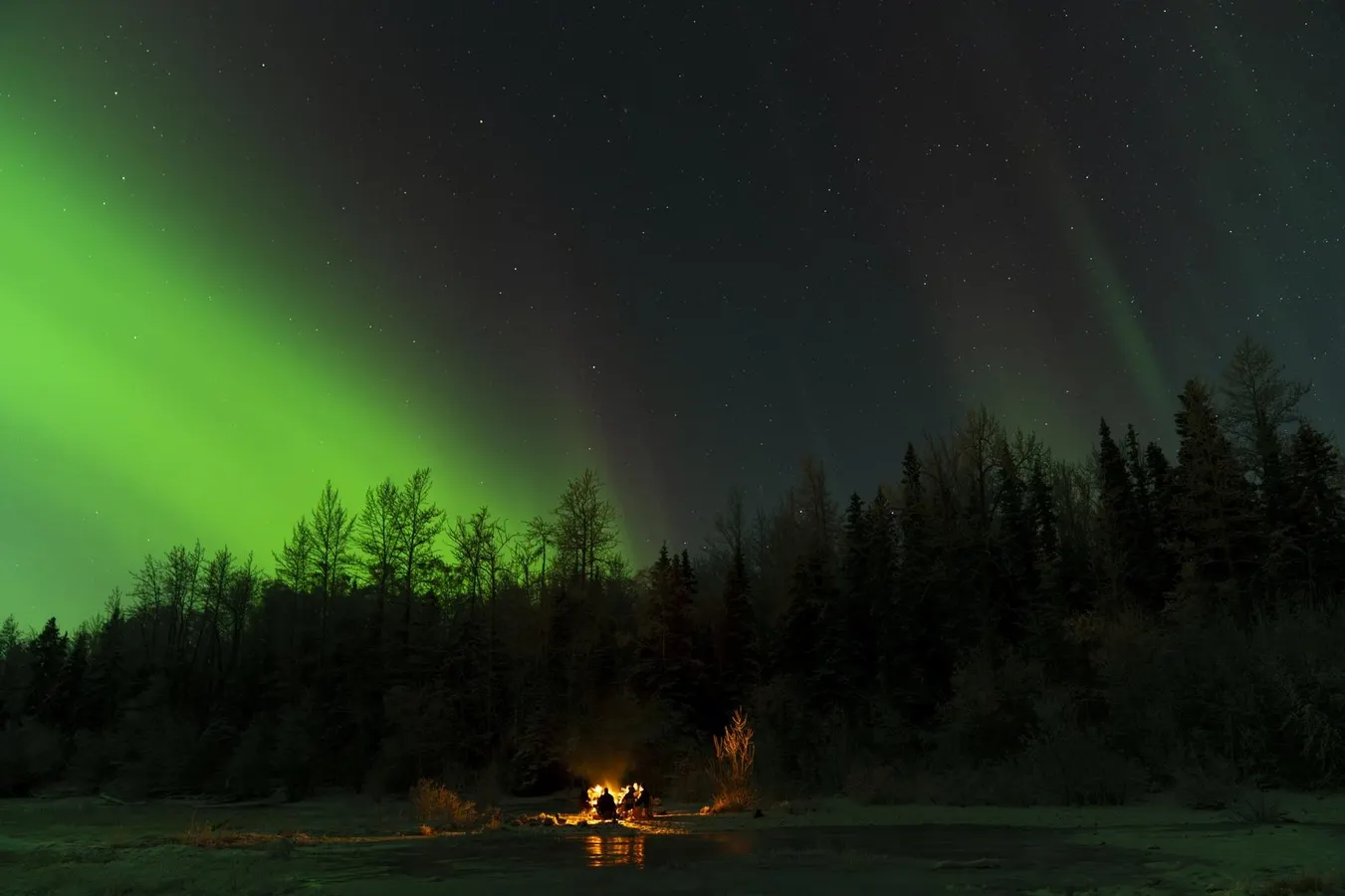
Mild northern lights activity this week is slated to continue Saturday night, according to the National Oceanic and Atmospheric Administration, which forecast areas within eight states could get a look at the natural phenomenon.
Saturday’s northern lights have a Kp index of four.
Photo by Hasan Akbas/Anadolu via Getty Images
Key Facts
A Kp index of four has been issued for Saturday night, a designation NOAA associates with brighter auroras that can be “quite pleasing to look at” for those in the right areas.
Viewers’ chances of seeing the northern lights on Sunday will decrease, as NOAA has issued a Kp index of three that incorporates fewer states.
NOAA has not forecast any geomagnetic storm impacts—conditions that can enhance northern lights displays if they are present.
Where Will The Northern Lights Be Visible?
States along the northern U.S. border will have a “low” chance of seeing aurora borealis Saturday. NOAA’s forecast includes northeastern Washington, the northern tip of Idaho, northern Montana, much of North Dakota, northern Minnesota and the northernmost parts of Wisconsin and the Upper Peninsula of Michigan. Much of Alaska will have a higher chance at seeing the northern lights, with chances improving the farther east viewers are within the state.
Saturday’s aurora forecast.
NOAA
What’s The Best Way To See The Northern Lights?
Areas with little to no light pollution or moonlight can help observers better see the northern lights. Saturday’s moon phase is perfect for viewing, as the new moon phase means none of the moon will be visible. The hours between 10 p.m. and 2 a.m. are also encouraged for viewing, as they are associated with increased auroral activity.
What’s The Best Way To Photograph The Northern Lights?
Observers using their phones to take photos of the northern lights should use night mode and avoid using flash. If possible, use a tripod and focus your phone’s camera manually. Wide-angle lenses and low apertures are also ideal for shooting photos of the aurora.
Key Background
The sun reached the peak of its 11-year solar cycle in 2024, creating the strongest series of northern lights showings in the last 500 years. Forecasters expect the semi-active northern lights activity of 2026 to wane even further as more time passes from the solar cycle’s peak.
Further Reading
Aurora Dashboard (NOAA)














Leave a comment