


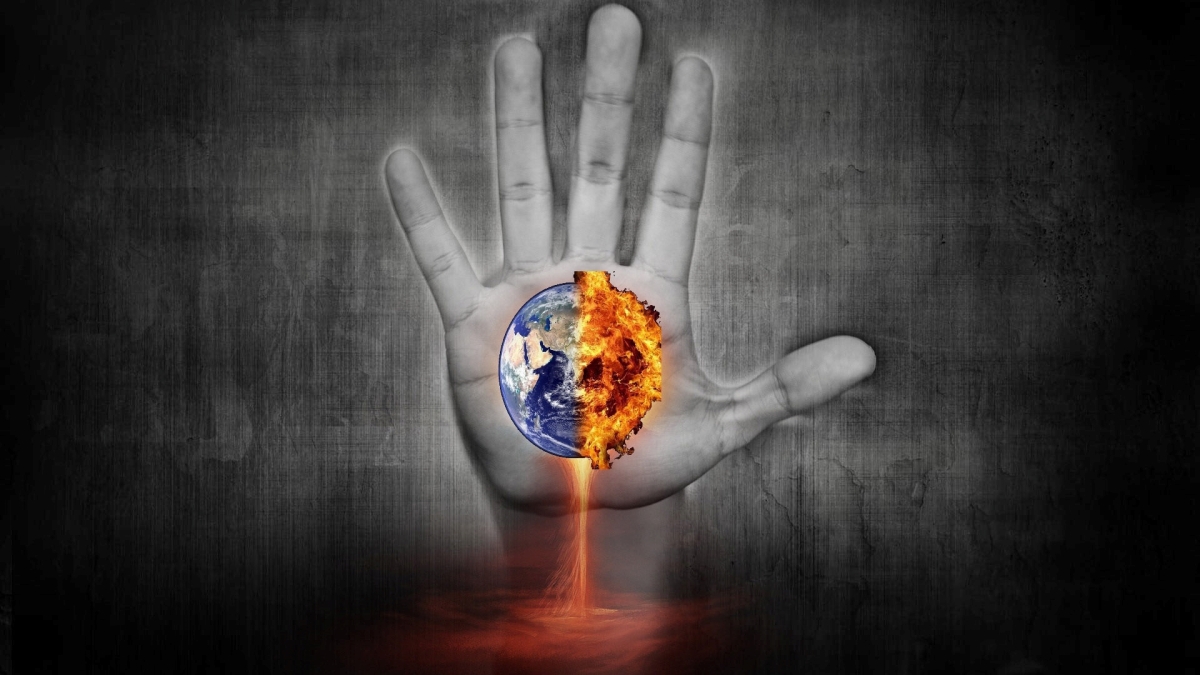
A Fractured World May Be Humanity’s Saving Grace
By Australian National Review Chief Editor and political commentator Jamie McIntyre
For decades, the dream sold to humanity has been “unity.” One world. One vision. One set of rules. One central authority supposedly guiding civilisation toward peace and stability.
It sounds noble on paper. Like a polished marble monument in the middle of a futuristic capital city.
But history has a habit of turning polished monuments into warning signs.
The uncomfortable reality is that concentrated power, no matter how noble its original intention, eventually attracts the wrong kind of people. Human nature has not evolved beyond ambition, greed, ego, ideology, or corruption. If anything, technology has amplified them. A single global authority with unchecked power may not become humanity’s saviour. It could become its prison warden.
Ironically, the very thing many globalists complain about may actually be the saving grace for civilisation: humanity’s inability to fully unite.
Humans splinter.
We argue.
We form factions.
We create competing systems, competing ideas, competing alliances and competing visions of the future.
And perhaps that is exactly how nature intended civilisation to survive.
Today the world is fragmented into political tribes, ideological camps and geopolitical blocs. There are left-wing movements, conservative movements, libertarians, nationalists, Zionists, globalists, anti-globalists, BRICS nations, Western alliances and countless breakaway groups forming new coalitions every year.
To some observers, this looks chaotic.
But chaos and competition are often the engines of evolution.
Nature itself operates this way. Ecosystems thrive through diversity, adaptation and competition. Markets innovate through competition. Scientific progress accelerates through competing theories. Democracies function through opposition. Even political parties fracture internally into left, right and centre factions because human beings constantly evolve their opinions as they gain new experiences and information.
A civilisation with only one approved ideology eventually becomes intellectually stagnant.
A civilisation with only one power centre becomes vulnerable to tyranny.
Monopolies are rarely healthy, whether in business, media, politics or global governance. Competition forces accountability. It creates resistance against absolute control. It allows alternatives to emerge when one system fails.
This is why the rise of a multipolar world matters.
The emergence of alliances such as BRICS represents more than economics or geopolitics. It reflects humanity’s instinctive resistance to centralised dominance. Whether one agrees with BRICS politically is beside the point. Its existence creates balance against a singular unipolar structure controlling global finance, trade, information and military influence.
Balance matters.
History repeatedly shows that when too much power accumulates in one place, abuse eventually follows. The Roman Empire, authoritarian regimes, monopolistic corporations and even intelligence bureaucracies all demonstrate the same pattern: centralisation grows until it becomes detached from the people it claims to serve.
Yet humans also unite when necessary.
People rally around common causes. Nations form alliances during war. Populations unite against perceived threats. Shared crises can inspire extraordinary cooperation and courage.
That instinct has value too.
The danger arises when temporary unity becomes permanent centralisation.
There is a profound difference between cooperation and consolidation.
One allows freedom while pursuing shared goals.
The other risks replacing diversity with obedience.
Many advocates of global governance genuinely believe humanity needs stronger international coordination to solve issues like war, corruption, environmental problems and economic instability. Their intentions may even be sincere.
But sincere intentions do not eliminate the dangers of concentrated authority.
If a global system ever became corrupted, captured by corporate interests, ideological extremists, unelected technocrats or authoritarian leaders, where would humanity escape to? What competing structure would remain to challenge it?
Competition between nations, factions and systems can certainly be dangerous. It can create conflict, instability and uncertainty.
But it also creates resilience.
A fractured world is harder to dominate completely.
A decentralised civilisation is harder to enslave.
And competing ideas are often the firewall against catastrophic groupthink.
Perhaps humanity’s future will not be saved by everyone becoming identical under one banner, but by maintaining enough diversity, decentralisation and healthy rivalry to stop any single power from becoming absolute.
The world may never fully unite.
And perhaps that is not humanity’s flaw.
Perhaps it is humanity’s survival mechanism.
22m















Leave a comment