


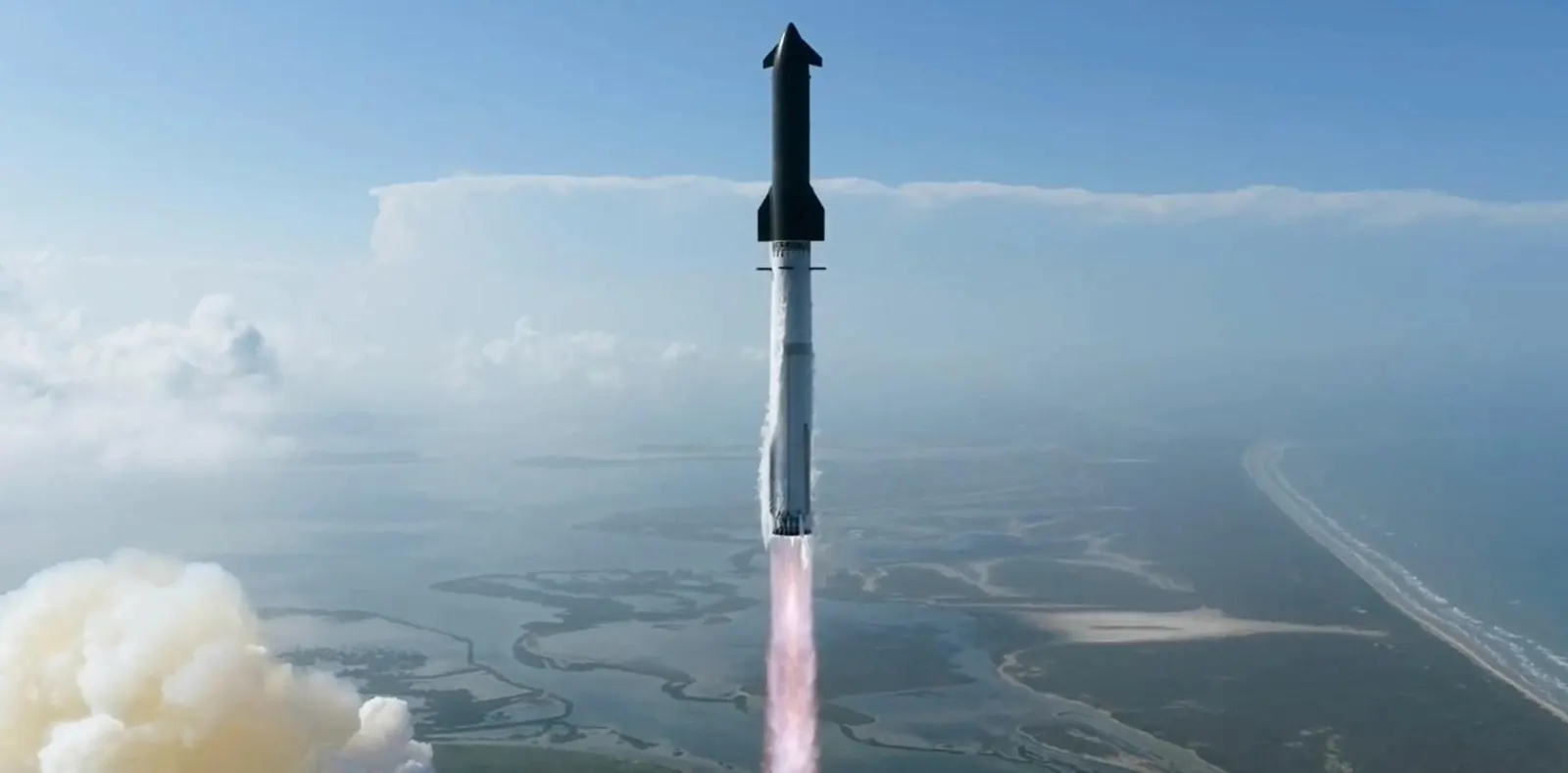

SpaceX’s Starship V3 lifts off on its test flight, marking a major milestone in the company’s next-generation launch program. Further boosting excitement for future IPO.
SpaceNews
History never records the opening valuation of transformative companies. It records whether nations understood the industrial revolutions that those companies unleashed.
The upcoming SpaceX IPO may be the financial story of the year, but the largest public offering in history is really just punctuation on a much larger trend: America has entered a new phase of the space economy, where private capital, software velocity, industrial capacity, artificial intelligence, and national strategy are converging into a new economic era defined by speed, scale, and strategic advantage.
Financial media have been breathless over the possibilities surrounding the SpaceX IPO. The speculation is understandable; the numbers will likely be staggering. But the valuation itself will ultimately matter far less than what comes next.
We have seen moments like this before in America: railroads, oil, aviation, the internet. Each created extraordinary wealth. More importantly, each reordered national power, industrial capacity, military advantage, and even American identity itself.
The more important question is whether the country understands what must come next and whether government policy will help enable another century of American dominance or, through benign neglect, allow the system to centralize, stagnate, and become overly financialized.
I first heard about SpaceX’s ambitions more than 20 years ago. Yet even years later, the Pentagon still assumed space systems would remain what they had been for decades: government-designed, government-owned, few in number, slow to evolve, and breathtakingly expensive.
Today, government demand for space capabilities has shifted toward proliferated, software-defined, commercially financed infrastructure operating at internet speed. Middle-class 401(k) investors now view space investing as a routine part of a conventional portfolio. They understand, for example, that if a rocket company lacks a credible path to reusability, it is likely on a path to economic irrelevance.
Private capital, from venture funds to major institutions, is now assuming development risk at a scale once carried almost entirely by governments. Even the Defense Advanced Research Projects Agency (DARPA) is working to keep pace with the speed of commercial innovation. Pentagon leaders now face a daunting reality: government technology is no longer the pacing function. Commercial adoption is.
From SpaceX’s Starlink network to commercial imagery, institutional lag is affecting every segment of the space economy. That is now becoming true even for GPS, the invisible infrastructure that underpins modern warfare, transportation, and the timing of financial transactions across the global economy.
GPS plays a vital role in synchronizing global financial markets, yet adversaries have already demonstrated how effectively its vulnerabilities can be exploited. As a result, GPS will increasingly require commercial augmentation to remain resilient. The federal government now recognizes that the future is hybrid: a secure-by-design architecture integrating commercial capabilities with differentiated technologies that were once considered unnecessary.
About 10 years ago, enough was coming into focus to make plausible predictions about the future. Some of those proved correct: Moore’s Law held. Hardware commoditized. Satellites became dramatically cheaper. Launch cadence accelerated. Private investment began eclipsing government capital.
But we were wrong about several key assumptions. Government adoption has been far slower than anticipated. More importantly, the military and geopolitical importance of space has accelerated faster than even early space visionaries expected. Space is no longer simply about rockets and exploration; it has become a decisive economic and military infrastructure.
Even from SpaceX’s broader financial disclosures, it is clear that the company’s satellite internet service, Starlink, is emerging as the dominant revenue engine. Not reusable Falcon 9’s, not Starship development: Starlink. And the broader space economy is just getting started.
Only a handful of names from this early era of the second space race will ultimately be remembered, and it is impossible to know with certainty who they are today. In short order, the oil barons and railroad titans receded from prominence. The “Copper Kings” faded. Much of the early aviation industry disappeared or consolidated beyond recognition. Even the Vanderbilt fortune has largely dissipated. The same pattern will eventually repeat across today’s space industry.
The obvious lesson from history is that a single dominant company rarely defines an entire industrial future and arguably, should not. Government policy that orients around one firm risks breeding complacency, stagnation, and ultimately locking in an ecosystem that loses dynamism over time. Instead, the government must foster highly competitive space industrial ecosystems. Competitive procurement should be the default approach to meeting national needs, not the exception. If not, the United States risks losing the second space race, even with SpaceX’s current advantage.
Centralization, so-called “sole source contracting,” often appears more efficient in the short term. But protecting incumbents and selecting permanent champions is how industrial revolutions lose momentum and economies stop evolving.
America’s advantage has never been perfect planning. It has been competitive chaos, entrepreneurial risk-taking, deep capital markets, and a culture that rewards disruption.
Family fortunes rise and fade. Many of today’s household names will eventually disappear. New names, known today only within small engineering circles, may define the next era. So, for a moment, set aside the IPO numbers and focus on what will actually secure American leadership into the next century.
A new generation of space unicorns will likely emerge from AI-enabled decision systems, autonomy, edge computing, cybersecurity, and software platforms that convert orbital infrastructure into real-time economic and military advantage. These companies will only flourish in an environment of rapid institutional adaptation and sustained competition.
History never remembers eras for their opening numbers. It remembers whether nations understood, and adapted to, the transformations unfolding beneath them. We must preserve the culture, competitive environment, entrepreneurial risk tolerance, and strategic patience needed to produce the next generation of American industry.















Leave a comment