


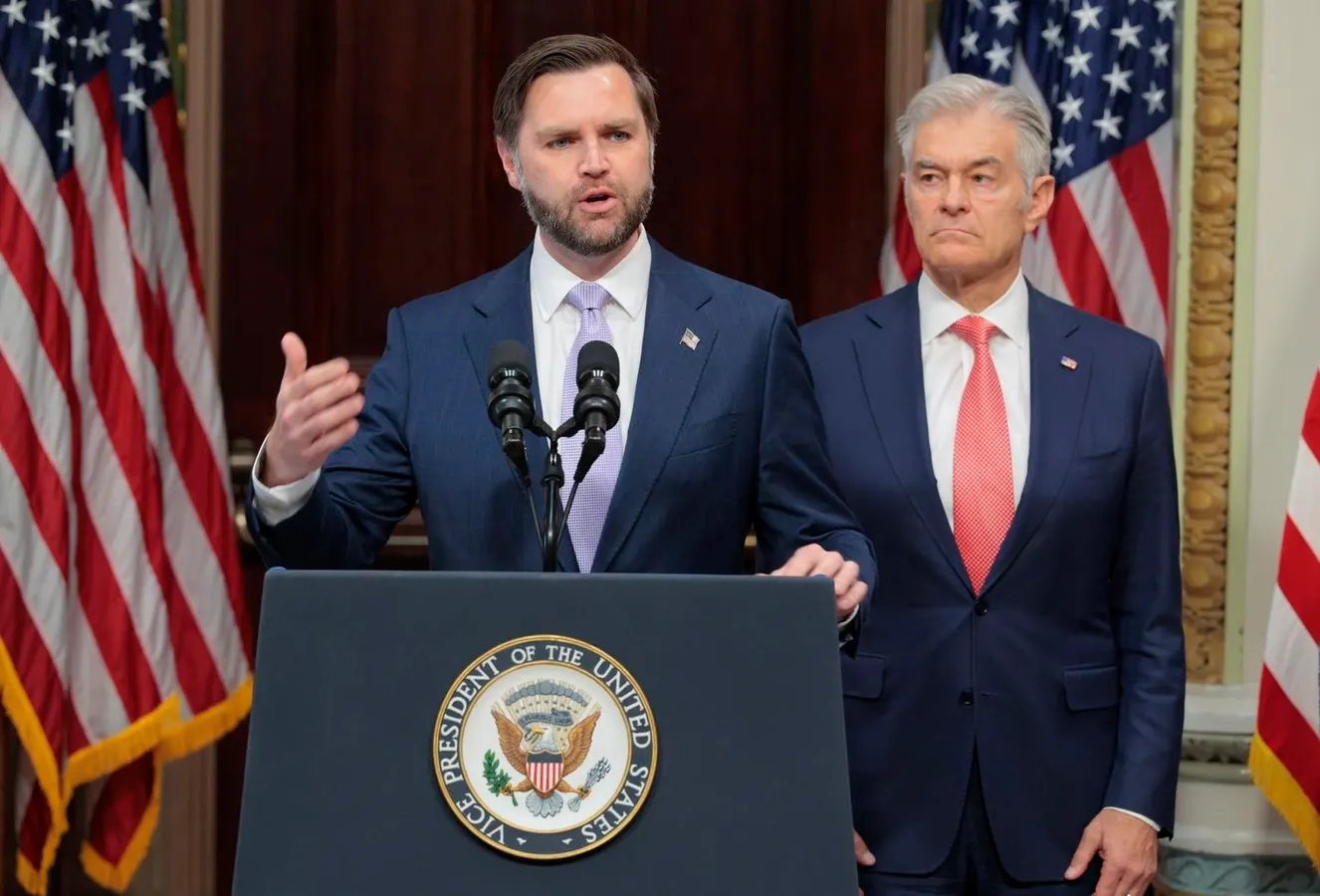

“The administration is not merely prosecuting isolated bad actors,” says health expert Sally Pipes. “It is attempting to change the incentives that have long allowed weak oversight and improper payments to persist.”
Getty Images
Vice President J.D. Vance recently intensified the Trump administration’s crackdown on healthcare fraud, warning states that they could risk losing federal Medicaid funding if they don’t adequately police abuse within the program.
The Centers for Medicare and Medicaid Services has also announced a nationwide six-month freeze on new Medicare enrollments for hospice and home-health providers—sectors CMS Administrator Dr. Mehmet Oz described as plagued by “systemic and deeply troubling fraud.”
The actions reflect growing concern inside the administration that weak oversight is allowing enormous sums of public healthcare spending to flow out the door improperly.
These problems did not emerge overnight. Medicaid fraud, improper payments and oversight failures have been mounting for years. And while not every improper payment reflects criminal misconduct, the magnitude of questionable spending points to deep structural weaknesses in how the program is administered.
According to the federal government’s own data, Medicaid improper payments totaled more than $540 billion between 2015 and 2024. The Paragon Health Institute estimates the true figure may exceed $1 trillion over the same period because federal auditors excluded eligibility verification from their reviews—meaning they frequently did not determine whether enrollees actually qualified for Medicaid.
Medicaid now costs taxpayers roughly $900 billion a year and covers one in five Americans. Even a relatively modest error rate can translate into staggering losses.
And many of the abuses are anything but modest.
In California, federal officials recently deferred $1.3 billion in Medicaid funding amid investigations into hospice and home-health fraud. State regulators have suspended hundreds of hospice licenses amid allegations of fraudulent billing and phantom patient schemes.
In Ohio, investigators uncovered 288 home-health companies registered to the same address—many apparently abandoned or non-operational.
Minnesota has become ground zero for the administration’s anti-fraud campaign after investigators identified billions of dollars in potentially fraudulent claims across high-risk Medicaid programs. Earlier this year, the Trump administration withheld roughly $259 million in Medicaid reimbursements to pressure the state to strengthen its safeguards.
These examples differ in their particulars. But they point to the same underlying problem: Medicaid’s financing structure encourages states to maximize spending while diffusing accountability for policing abuse.
Under Medicaid’s funding formula, states receive at least one dollar from the federal government for every dollar they spend on the program. And for able-bodied adults who gained coverage under Obamacare’s expansion of Medicaid, Washington covers 90% of the costs.
The result is a system that rewards states for expanding enrollment while failing to verify whether beneficiaries and providers actually qualify for the program.
During the pandemic, those vulnerabilities became far more severe. Federal rules effectively barred states from removing ineligible beneficiaries from Medicaid. As a result, enrollment surged from roughly 70 million Americans in early 2020 to more than 94 million by 2023.
The complexity of Medicaid only compounds the problem. The program is jointly administered by federal agencies, state governments, managed-care organizations, contractors and thousands of providers.
No single entity sees the entire picture.
Fragmented oversight creates opportunities for dishonest actors to exploit the gaps.
To date, policymakers have failed to attack Medicaid’s fraud problem with anything like the aggressiveness it demands. Vice President Vance’s initiative signals a welcome shift in priorities.
The administration is not merely prosecuting isolated bad actors. By tying federal funding more directly to anti-fraud efforts, it is attempting to change the incentives that have long allowed weak oversight and improper payments to persist.
Every dollar lost to fraud, improper payments or ineligible enrollment is a dollar unavailable for low-income children, pregnant women, the disabled and vulnerable seniors—the populations Medicaid was created to serve.
Preserving the program’s long-term integrity will require states to strengthen oversight, enforce eligibility rules and treat improper payments as serious policy failures rather than a manageable cost of doing business.














Leave a comment