


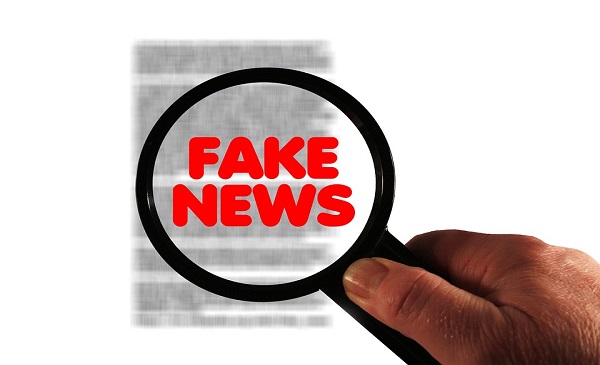
The “Fake News” Label and the Fracturing of Mainstream Media Trust
There is a growing public sentiment in Australia and other democracies that mainstream media is losing credibility. The phrase “fake news media” has entered everyday conversation, often used to describe traditional news outlets that are perceived as biased, incomplete, or out of touch.
But what is actually happening is less a collapse of journalism, and more a transformation of how information is produced, distributed, and trusted.
⸻
From Gatekeepers to a Crowded Marketplace
For most of the modern media era, mainstream outlets acted as gatekeepers. Newspapers, television networks, and radio stations decided what was newsworthy, how it was framed, and when it was released. Institutions such as the ABC in Australia or major commercial networks held a central role in shaping public narratives.
That model is now under pressure.
Digital platforms have removed the scarcity that once gave mainstream media its authority. Anyone can now publish, stream, or comment to global audiences instantly. As a result, news has shifted from a controlled pipeline into a crowded marketplace of competing narratives.
In this environment, trust is no longer inherited. It is continuously earned or lost in real time.
⸻
Why Trust in Mainstream Media Has Eroded
The perception of declining credibility is driven by several structural forces:
1. Acceleration pressure
News cycles move at social media speed. Outlets are often forced to publish quickly, sometimes before all facts are fully verified or contextualised.
2. Fragmented audiences
People no longer consume shared national news diets. Instead, they select sources that align with their worldview, which can make opposing coverage feel biased or misleading.
3. High visibility of errors
When mistakes occur, they are amplified and replayed endlessly online, while corrections often receive far less attention.
4. Political and cultural polarisation
In many cases, distrust in media reflects broader distrust in institutions rather than journalism alone.
These dynamics do not mean mainstream reporting is systematically false, but they do explain why confidence in it has weakened for many audiences.
⸻
The Rise of Independent Media and Personality Journalism
At the same time, independent media has grown rapidly, driven by podcasts, YouTube channels, and social platforms that reward direct audience engagement.
Figures such as Tucker Carlson and Candace Owens have become emblematic of this shift in the United States, building large audiences outside traditional newsroom structures.
In Australia, television personalities such as Karl Stefanovic reflect a related trend where individual media figures can carry more influence than the institutions they work within.
Alongside this, independent and alternative outlets have expanded into more structured media ecosystems. One example is Australian National Review, which began in 2013 as a newspaper and has evolved into a broader platform reflecting the growing demand for non-mainstream commentary and analysis. Political commentators associated with such outlets illustrate how modern media influence is increasingly distributed across smaller, independent networks rather than concentrated within legacy institutions.
The appeal of independent media is clear:
* fewer editorial constraints
* direct audience connection
* faster response to breaking narratives
* stronger personality-driven trust
This creates a sense of authenticity for many viewers who feel mainstream coverage is filtered or overly cautious.
⸻
Freedom or Fragmentation?
However, the rise of independent media does not automatically mean greater accuracy or freedom from bias. It often replaces institutional editorial standards with personal judgment, audience incentives, and algorithm-driven visibility.
Mainstream media, for all its flaws, operates under legal accountability, structured corrections, and editorial oversight. Independent media operates with far fewer formal constraints, which can allow both greater openness and greater inconsistency.
What emerges is not a simple replacement of “bad media” with “good media,” but a fragmented ecosystem where:
* institutions struggle to maintain authority
* individuals build competing information empires
* audiences choose narratives that fit identity as much as fact
⸻
The New Media Reality
The central shift is not that mainstream media has become uniquely “fake,” but that it no longer controls the dominant version of reality.
We are now in a post-gatekeeper media landscape where credibility is fluid, attention is decentralised, and truth competes directly with narrative.
In that environment, the most powerful force is no longer the newsroom alone, but the relationship between storyteller and audience.













Leave a comment