


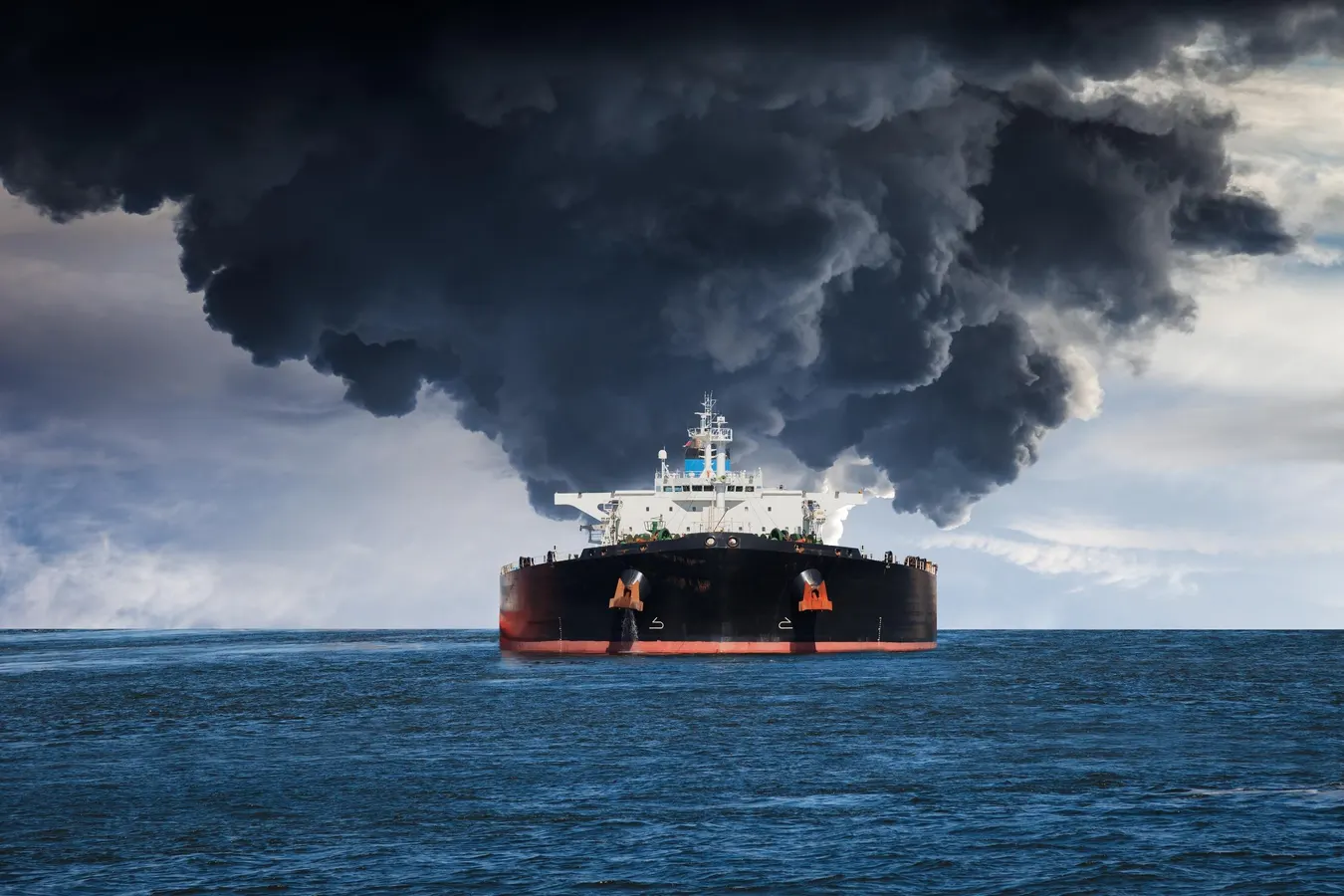

The destruction of oil tankers and oil infrastructure has captured headlines, but the greatest threat in the war with Iran may be towards a much more basic and vital commodity: water.
getty
If the current Gulf War, marked by controversy over control of the Strait of Hormuz, does not end soon, the conflict may shift from attacks on the transport of oil by sea to disrupting vital potable water resources. Just before President Trump announced Thursday, June 11, that the ceasefire is to be signed imminently, the U.S. allegedly bombed water infrastructure in southern Iran. These attacks reportedly hit two reservoirs on Sirik Island, where a port and Iranian naval facilities are located. The Iranian state media claimed that this cut off the water supply to 20,000 residents. Whether this claim is credible is questionable, as the Islamic Republic’s media often dissimilates. However, if these waterworks were supplying Iran’s military infrastructure, they would be legitimate military targets.
The U.S. characterized these as proportional self-defense strikes. In the past, Iran has also accused the U.S. of attacking their desalination plant on Qeshm Island, another regular target of U.S. forces in the Gulf. Qeshm Island, besides being a beautiful ancient site, is strategically positioned in the Strait of Hormuz and is used by the Iranian regime as a fortress to control the Strait, replete with underground missile stocks and hidden fast attack boats.
Beginning in March, Iran began attacking the water resources of neighboring Arab states. It may be playing with fire. Water reservoirs in Iran are in dire straits, with Tehran showing a 75% decrease in reservoir surface area. Some lakes and reservoirs have shrunk by as much as 90%. Arab countries opposed to Iran in the current war are faring little better, as they rely heavily on desalination for up to 90% of their drinking water. Nevertheless, Iran has openly threatened to attack regional desalination facilities and unleash a humanitarian disaster.
This is not deterrence; this is mutually assured destruction. It adds a horrifying new element to the war. In the opening days of the conflict, there were attacks across the Gulf to showcase Iranian reach, intimidate Israel and the Arabs, and strike at American military assets, but there was no systematic destruction of Arab water infrastructure. If Iran chooses to make a concerted attack on the regional desalination infrastructure, the war could quickly transform from an economic burden to a humanitarian tragedy and an escalating geopolitical crisis. The likelihood of this happening is troublingly high.
Vital Infrastructure Under Threat
Iran has inconsistently claimed that strikes on water infrastructure would only be done in kind, while at other times threatening preemptive action against Arab states that are too supportive of the USA and Israel. This may reveal divisions in the Iranian leadership. At one point Iran’s President Masoud Pezeshkian allegedly tendered his resignation, citing a total takeover by the Islamic Revolutionary Guard Corps. However, he appears to be continuing his duties, at least for now. Such inconsistent statements are indicative of the confusion in Tehran’s corridors of power.
The energy sector has already been scarred by retaliatory strikes. After Israel purportedly bombed Iranian energy targets in March, Iran responded by hitting the energy infrastructure of nearby Arab states. Iran also threatened to strike Gulf energy systems in retaliation if the US targeted Iran’s electricity grid. Tehran has also attacked energy and maritime infrastructure, including Saudi Arabia’s East-West pipeline and the UAE’s port of Fujairah, both of which are critical to oil exports and economic stability.
With this pattern, if conflict escalates further, Iran could even target nuclear power stations. A recent drone attack caused a fire at the UAE’s Barakah Nuclear Energy Plant.
If Iran normalizes threats against Gulf water infrastructure, Gulf states may view Iran’s own reservoirs, dams, power grids, and energy facilities as possible targets in return. Thus, the threat of an escalation is growing , with both sides moving away from targeting purely military assets and instead targeting water infrastructure. Iran’s use of infrastructure threats may strengthen short-term deterrence but increase the long-term risk of escalation.
International Humanitarian Law (IHL) views attacks on dams as comparable to bombing nuclear reactors and other hazardous targets, according to Michael N. Schmitt, senior legal scholar at the Lieber Institute at West Point. Dam attacks are legally permissible under customary IHL but demand rigorous proportionality analysis given the potential for catastrophic downstream civilian harm. However, Schmitt’s article also delineates conditions under which the military use of infrastructure can nullify protection against attack:
The special protection against attack provided by paragraph 1 shall cease:
- For a dam or a dyke only if it is used for other than its normal function and in regular, significant and direct support of military operations and if such attack is the only feasible way to terminate such support;
The Deeper Logic of Iranian Threats
The proximate objective of Iran, and previously of its proxies, such as Hezbollah and Hamas, has long been to stymy the Abraham Accords. These Accords, a process of diplomatic normalization between Israel and various Arab States, were initiated to create a pro-Western/pro-American coalition of states in the Middle East and weaken Iranian influence in the region, shifting the balance of power against Iran and its de facto allies, Russia and China.
The imminent diplomatic normalization of relations between Israel and Saudi Arabia was what motivated Hamas to conduct its massive attack on civilians on October 7th. The rationale was that any war Israel fought would inflame popular anti-Israeli sentiment in the Arab and Muslim world, scuttling the Abraham Accords as Arab governments would withdraw out of fear of backlash. Iran is now pushing its anti-Israel and anti-U.S. agenda by striking the oil and gas infrastructure, petrochemical plants, ports, and airports of neighboring Arab countries.
These attacks, along with the attempted closure of the Strait of Hormuz, provide Iran a measure of military, diplomatic, and economic coercion against Arab partners of the U.S. and Israel. However, attacks on the Gulf water desalination infrastructure may ultimately encourage the Arabs to demand that Washington and its other nuclear allies, such as Pakistan, take the harshest measures possible against their aggressive neighbor, including regime change.
Water is vital. It is more precious than oil. And regimes that live in glass houses should not throw stones – or destroy desalination plants.













Leave a comment