


Topline
The number of cattle, goats, sheep and dogs that have been infected with New World Screwworm, a flesh-eating fly, has risen to 12 amid a new outbreak that comes after DOGE-led government cuts slashed ongoing efforts to prevent the once-eradicated parasite’s spread.
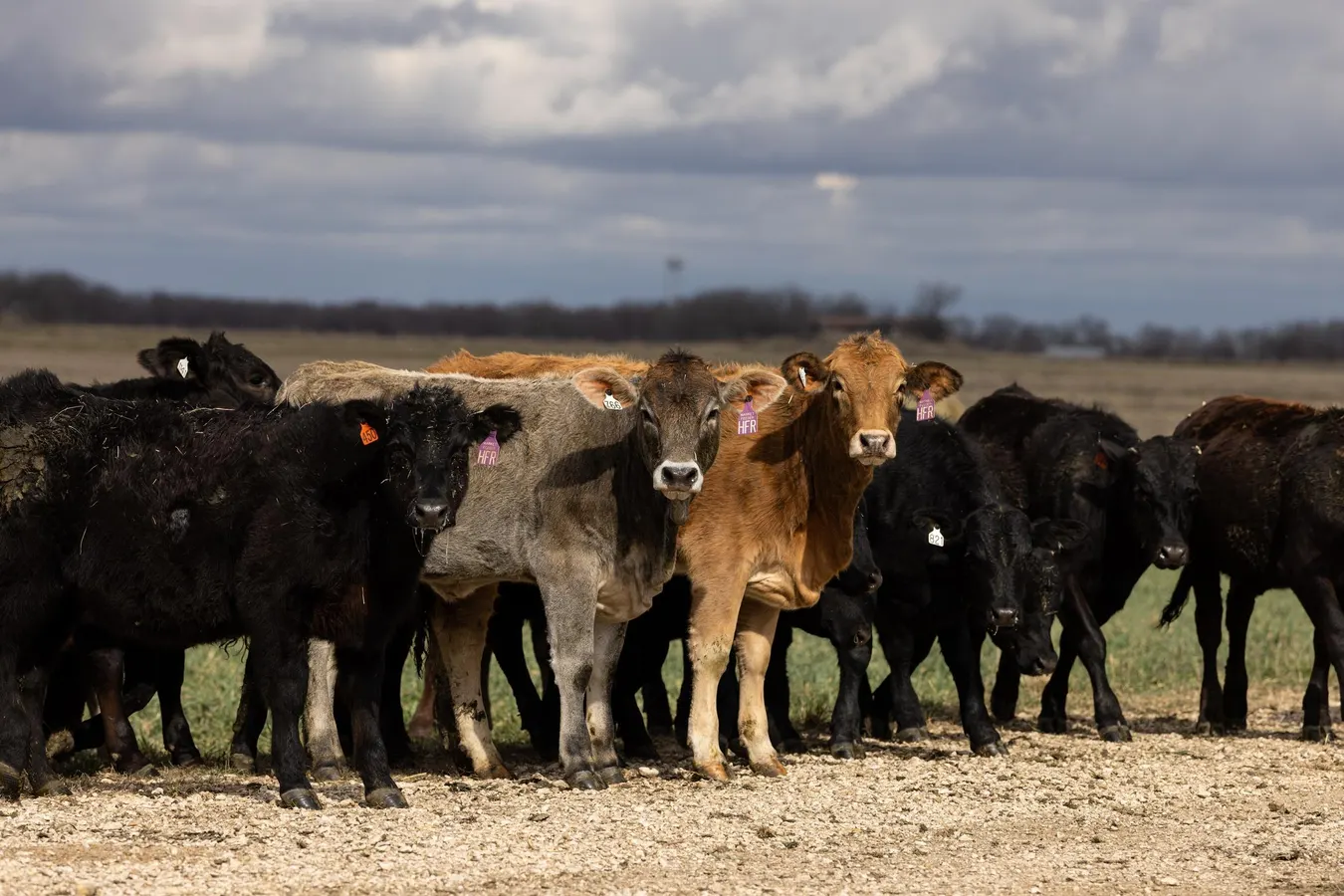
Curious heifers watch visitors to their pasture in Texas on Jan. 21, 2026.
The Dallas Morning News via Getty Images
Key Facts
New World Screwworm, a parasitic fly with larvae that burrow in healthy tissue of cattle, deer, horses and other warm-blooded animals, was first discovered in May in a 3-week-old calf in La Pryor, Texas, near the Mexico border, and the number of cases has since risen to 12.
The cases are in four different types of animals in seven Texas and New Mexico counties, according to the Department of Agriculture, and USDA officials are urging animal owners to watch for signs of screwworm infection.
Experts have warned a wider screwworm outbreak could severely impact already-suffering cattle numbers and put even more of a strain on ranchers as they spend money on treatment and prevention which could, in turn, increase the price of beef, which has already gone up roughly 75% since December 2020.
The U.S. cattle herd is already at its lowest level in 75 years, and a major screwworm outbreak would cause more calves to die, adult cattle to lose weight and limit what animals are suitable for sale, meaning fewer pounds of beef reaching the market.
Even without a major outbreak, containment efforts may cause the government to implement widespread cattle movement restrictions, limit border crossings or impose quarantine on certain herds, all of which would further impact the nation’s cattle numbers.
The return of screwworm comes after the Elon Musk-led Department of Government Efficiency, launched by the Trump administration, last year cut funding for a project dedicated to monitoring and containing New World screwworm in Central America.
The funding was axed days before the U.S. ended a temporary suspension of cattle imports from Mexico, meaning livestock was allowed to cross the border without any of the monitoring previously funded by the U.S. Agency of International Development (USAID).
Agriculture officials and cattle industry leaders raised alarm about the cuts at the time and, for the last several months, pleaded with the government to step in as they monitored screwworm infections moving north through Mexico—but they were ignored, Texas Agriculture Commissioner Sid Miller told NBC News.
Crucial Quote
“This should set off alarm bells across the country,” Miller said of the outbreak.
What Is Screwworm?
New World screwworm is a fly that lays its eggs in open wounds and body openings of warm-blooded animals. Infestations start when a female fly lays eggs on open wounds—wounds as small as a tick bite can attract a female fly to lay her eggs—or other parts of the body in live animals. Eggs hatch into maggots that feed on the living flesh for about 7 days before the larvae drop to the ground, burrow into the soil, and emerge as adult screwworm flies—starting the cycle again. Most infestations occur in animals, but they can occur in people. The most recent human case in the U.S. was reported in Maryland last year in a traveler who’d returned from El Salvador. The person recovered.
Key Background
The United States eradicated screwworm in the 1960s through a massive sterile fly program, but outbreaks in Mexico and Central America have raised concerns about the parasite moving north again. The eradication was the result of multiple sterile fly programs across the south that cost roughly $42 million in the mid 1960s, the equivalent of about $452 million today. Despite the programs’ success, there have been stand-alone instances of screwworm since, including an isolated outbreak in Texas in 1976 that cost ranches an estimated $452 per head of cattle in today’s dollars, totaling $732 million. Those losses came from cattle death, weight loss and hide damage and the cost of surveillance and treatment. Evidence suggests screwworm outbreaks of the past did drive the price of beef higher, though not necessarily in a dramatic nationwide surge, because ranchers in the 1950s and 60s were working in a much stronger industry with higher herd numbers.The U.S. cattle herd had dropped to 86.2 million head of cattle and calves on U.S. farms as of Jan. 1, the lowest number of cattle in America since 1951. In May, the USDA said it predicts beef production will decline by 0.9 percent to 25.310 billion pounds in 2027 and said cattle prices are “projected to reach new highs as supplies remain limited.” The average price of ground beef has risen from $3.95 in December of 2020 to $6.89 in April, according to the Federal Reserve.
Big Number
$1.8 billion. That’s how much economic damage could be caused by another outbreak on the scale of the Texas incident in 1976, according to USDA estimates.
What To Watch For
How the officials try to contain the spread. The Canadian Food Inspection Agency has barred livestock that originated in or passed through Texas within 21 days from crossing the border, CNBC reported, and Florida separately enacted emergency rules restricting warm-blooded animal imports from infested zones, according to CBS News. The USDA is spending $750 million on a new Texas facility capable of producing roughly 300 million sterile screwworms per week, but it won’t be operational until at least 2027, per NBC News. Officials from Texas and the USDA are taking steps to “contain and eradicate” screwworm, the agency said, including implementing cattle quarantines, movement controls and surveillance within a roughly 12 mile area of the infected calf; trapping flies along the border; and releasing millions of sterile male New World screwworm flies in the region. The FDA has also approved the use of generic Nitenpyram tablets—an oral treatment usually used to kill fleas—to treat dogs, puppies, cats and kittens infected with screwworm on an emergency basis.















Leave a comment