


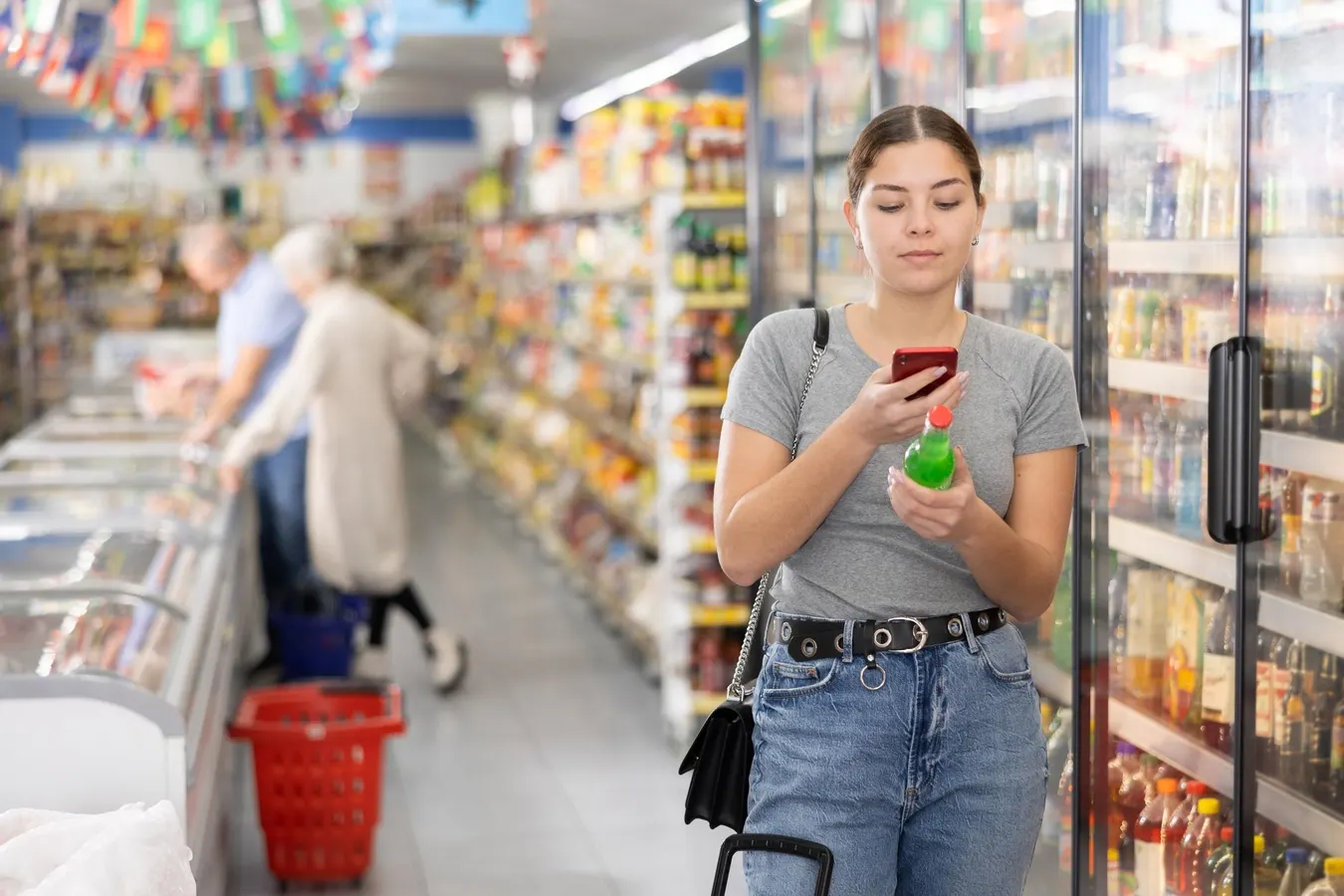

Shopper and mobile phone
getty
Procter & Gamble helped give the soap opera its name. In the 1930s, the company put its products inside daytime radio dramas and turned storytelling into a way to sell household goods.
Almost a century later, it is returning to the same idea in a different room: the supermarket aisle.
Albertsons Media Collective, the retail media arm of Albertsons Companies, has co-developed a scripted series with P&G called Rico’s Tacos. The one- to two-minute “minivela” follows a widowed father, his teenage daughter and her abuela as they build a family taco business near Venice Beach. The series launches June 23 across Albertsons’ YouTube, social channels and in-store screens, with new episodes planned weekly through the end of August.
The format is not the real test. The ownership is.
Albertsons and P&G are testing whether the retailer that owns the audience relationship and shopper data can become the studio. As content becomes cheaper to produce and easier to distribute, the scarce asset is not the show. It is the ability to connect attention to behavior. At the shelf, the retailer owns that connection.
The retailer is not just selling ad inventory. It is producing audience.
The Soap Opera Comes Back As A 90-Second Phone Drama
P&G did not stumble into entertainment. It helped build one of the earliest forms of branded programming. The original soap opera was never just a cultural product. It was a business design: hold attention long enough to sell to it.
What has changed is everything around that attention. Audiences are split across screens, feeds and platforms. Retailers now operate media networks. First-party purchase data can show not only who was exposed to content but what happened afterward.
That changes the shape of the format. The modern version is not a 30-minute daytime drama. It is a 90-second episode watched on a phone, teased on a store screen and connected to an app, a loyalty offer or a basket.
P&G has already been building micro soap dramas for social-first audiences through P&G Studios, including The Golden Pear Affair. Rico’s Tacos extends that logic into the store itself.
Why The Retailer, Not The Brand, Becomes The Studio
Traditional branded entertainment usually ran in one direction. A brand made or sponsored content, bought distribution and hoped the right people watched. Measurement came later.
Albertsons changes the sequence. Shopper insight shapes the work before it is made. The retailer brings something a studio does not have: a live relationship with the shopper near the moment of purchase and a record of what that shopper actually buys.
That is the commercial hinge. A production company can create a better drama. A retailer can connect the drama to behavior.
This is the next stage of retail media. It is not just search ads, display units or sponsored product placement. It is content built around shopper missions, store environments and purchase signals.
For Albertsons, the logic is its own. The company has said it plans to scale this kind of programming across more series and brands, which makes Rico’s Tacos less a one-off than a pitch for its media business. A retail media network competes on the attention it can sell, and original content is a way to hold that attention inside channels the retailer controls.
The show is the visible piece. The more valuable piece is the system around it: store screens, QR codes, app viewing, social clips, loyalty offers and sales measurement.
The Show Is Built To Stay Inside The Store
Most branded IP is built to travel. A character or story is created, then pushed across platforms, products and territories.
Rico’s Tacos works the other way. It is built from Albertsons’ shopper context, distributed through Albertsons channels and partly embedded in Albertsons stores. The IP is native to the environment that sells it.
That could be a limitation. It could also be the moat.
Community-native IP does not always travel easily. Sometimes the audience and environment that created the story are part of its appeal. In this case, the store is not just a backdrop. It is part of the format. The aisle, the app and the shopper data are all part of the same commercial architecture.
A Hollywood studio would want the IP to travel. A retailer may be better served by making sure it belongs.
Shopper Data Cannot Rescue A Weak Story
The obvious risk is that the whole thing becomes a product catalog with a plot attached.
If the audience senses that, it is over. On a phone, leaving takes less than a second. No amount of shopper insight can make a weak story worth 90 seconds.
That is the creative test. Rico’s Tacos has a premise with family, identity and resilience at its center. Whether it becomes entertainment or just an ad in costume will depend on execution.
The product can live inside the story. It cannot be the story.
The best version looks like a short-form drama that happens to live inside a retail ecosystem. The worst version looks like a product demo wearing a costume.
Why The Power Is Shifting Toward Retailers
The lesson for brands is not that every company needs a sitcom. It is that the party closest to the purchase is moving into the content business.
That shifts power. Brands may still bring the creative idea, product portfolio and media budget. Retailers bring the audience, the data and the commercial environment. That is a different bargain from buying ad inventory.
There is a larger structural point here. Hollywood has historically owned content. Platforms such as Meta control distribution. Television networks were built around audience aggregation. A retail media network is trying to combine several of those functions at once: distribution, first-party identity, commerce, measurement and now content. That combination is unusual, and it is taking shape inside the grocery business.
Rico’s Tacos may or may not find an audience. But the operating logic behind it is worth watching.
P&G helped give the soap opera its name because it understood where the audience was. Today the harder asset is not making content. It is knowing who is watching, where they are standing and what they do next.










Leave a comment