


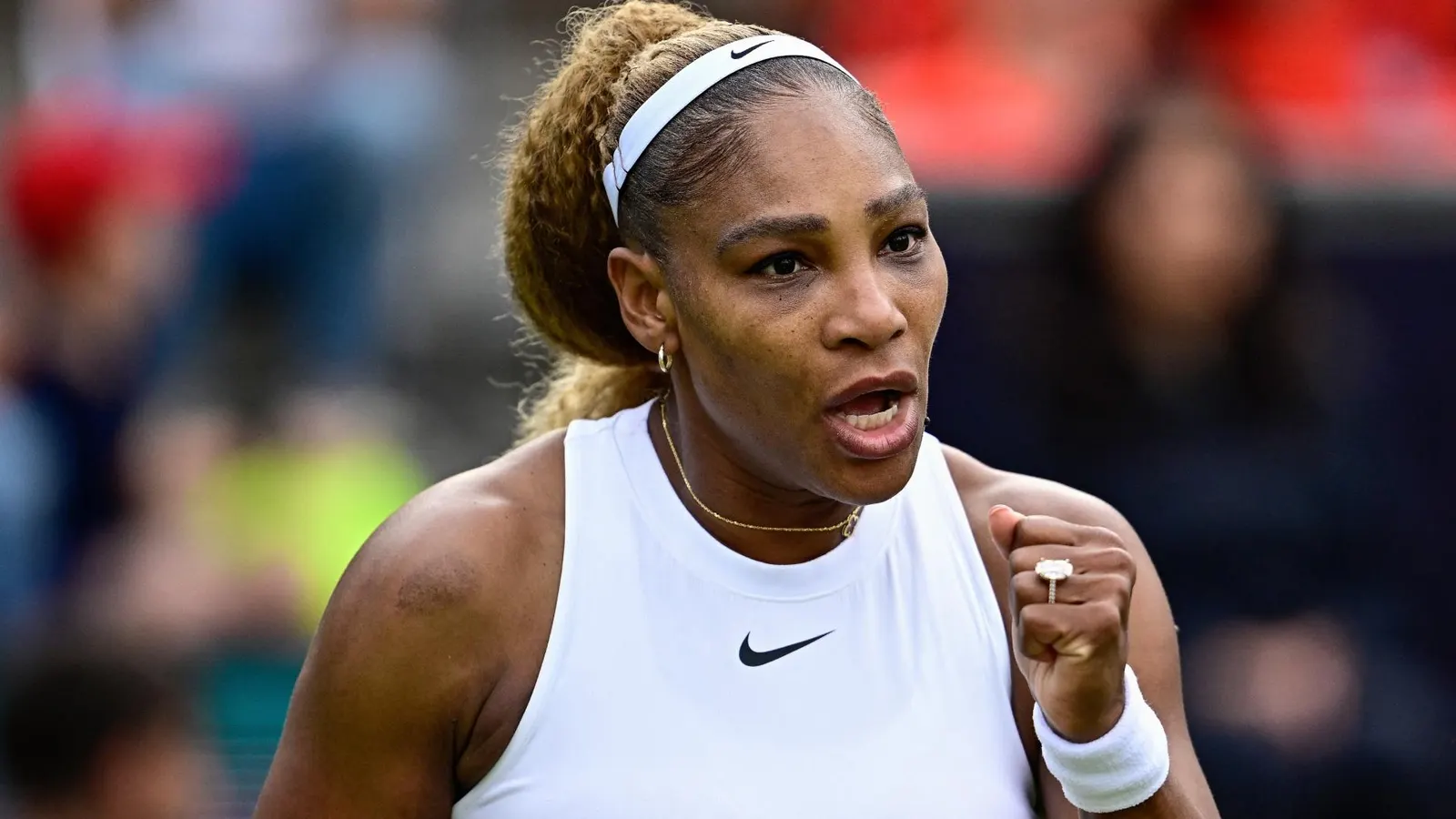
Two months after Serena Williams revealed in a 2022 Vogue essay that she was hanging up her racket to focus on her family, she clarified what “evolving away from tennis” really meant.
“I am not retired,” the 23-time Grand Slam singles champion said that October, following her 41st birthday and three matches at the U.S. Open that were widely assumed to be the last of her legendary career. “The chances [of a return] are very high. You can come to my house—I have a court.”
This month, the 44-year-old Williams made good on that promise, entering WTA Tour events in London and Berlin to compete in doubles. Next week, she will continue her comeback at Wimbledon with a doubles match Thursday or Friday alongside her older sister Venus—herself a tennis icon, with seven Grand Slam singles titles—while also making her return to singles tennis on Monday or Tuesday against unseeded Maya Joint, a 20-year-old Australian ranked 53rd in the world.
If Williams can defy the odds and end her nearly four-year layoff with a 24th major championship—extending her Open Era record and drawing her even with Margaret Court’s all-time women’s mark—she will add a $4.8 million winner’s check to her $94.8 million in career prize money.
It seems safe to assume, however, that money is not her motivation.
By the time Williams first stepped away from tennis, she had hauled in almost $450 million in estimated pretax income in a pro career that began in 1995, when she was 14, and took off when she won the 1999 U.S. Open. That figure placed her well ahead of history’s second-highest-paid female athlete, her longtime tennis rival Maria Sharapova, who had pocketed $325 million when she retired in 2020 at 32.
Four years later, Williams still has no real challengers on the career prize money list—No. 2 Aryna Sabalenka has won barely half as much, after passing Venus Williams last year—and her off-court business is also on a winning streak. Over the last 12 months, Williams has raked in $50 million before taxes and agent fees, according to Forbes estimates, about $5 million beyond her best year as an active player (without adjusting for inflation). The total—which would also put her within a Hawk-Eye review of the best off-court year Forbes has ever measured for an active female athlete, Naomi Osaka’s $58 million over the 12 months ending in May 2022—pushes Williams’ lifetime earnings to roughly $620 million.
Forbes now estimates her net worth at $400 million, making her—by a comfortable margin—the world’s richest woman who has made her fortune primarily as an athlete. Williams is also among the richest women ever to have played high-level sports, alongside some heiresses who have competed in equestrian events, such as Alexandra Andresen, who has an estimated net worth of $2.4 billion, and Anna Kasprzak, a former member of Forbes’ list of the world’s billionaires. (Georgina Bloomberg, the daughter of media billionaire and former New York mayor Michael Bloomberg, is also a show jumper, and tennis pros Emma Navarro and Jessica Pegula are the daughters of billionaires—Ben Navarro, who runs a credit card empire, and Terrence Pegula, the owner of the NFL’s Buffalo Bills and the NHL’s Sabres.)
During Williams’ time away from tennis, she gave birth to a second child, in 2023. But she also stayed active with her business.
She now has ten long-term sponsors, including four that have stuck with her from her last time on the court: Audemars Piguet, Lincoln, Nike and Wilson Sporting Goods. More recently, she has partnered with Factor heat-and-eat meals, Heineken and Reckitt Catalyst, an incubator within the consumer goods giant, and become the face of telehealth company Ro’s campaign around GLP-1 weight loss medications. (Her husband of eight years, Reddit cofounder Alexis Ohanian, was an early investor in Ro.)
Beyond traditional endorsements, Williams has ramped up her schedule of speaking engagements, each of which can pay her $1 million or more, and published a children’s book, The Adventures of Qai Qai, with a memoir reportedly on the way from Random House. In 2023, she launched Nine Two Six Productions to expand her work in entertainment after she signed a first-look deal with Amazon Studios two years earlier, and in September, she began hosting a podcast with Venus called Stockton Street.
Williams also served as the model for a Barbie doll, which pointedly was not wearing a tennis skirt but rather a business suit when it was released in March—a nod to her role as CEO of Serena Ventures.
“I want to be a part of it,” she said of her approach to investing in a 2019 Forbes cover story that revealed she had quietly taken stakes in 34 startups over the previous five years. “I want to be in the infrastructure. I want to be the brand, instead of just being the face.”
Self-Starter: Williams on the June 2019 cover of Forbes.
Levon Biss for Forbes
With an emphasis on early-stage startups founded by women and people of color, Serena Ventures had funded 16 unicorns as of 2022, Williams wrote in her Vogue essay, and it raised $111 million for its inaugural fund the same year, having previously functioned as Williams’ family office.
The tennis legend has also dipped into sports with her investing, starting with a small stake she took in the NFL’s Miami Dolphins in 2009. During her time in the ownership group, the team’s valuation has soared nearly 640%, to $7.5 billion, according to Forbes estimates.
In 2020, Williams and Ohanian were among the earliest investors in Angel City FC, an expansion franchise in the National Women’s Soccer League, and they also led the purchase of Los Angeles Golf Club, one of the inaugural six teams in Tiger Woods and Rory McIlroy’s TGL. Meanwhile, she has acquired stakes in both the Unrivaled three-on-three women’s basketball league and a WNBA team, the Toronto Tempo.
The success with both investments and endorsements has provided a model for younger athletes who grew up idolizing her on the court. Coco Gauff, for instance, has been the world’s highest-paid active female athlete in each of the past two years, bringing in an estimated $33 million in 2025 before taxes and agent fees, and has launched her own management company while branching out into Hollywood through a partnership with the Los Angeles-based studio Religion of Sports.
Sports Collector: Williams and her husband, Alexis Ohanian, led the purchase of the TGL’s Los Angeles Golf Club. She also has stakes in the Miami Dolphins, Angel City FC, Unrivaled and the Toronto Tempo.
James Gilbert/TGL Golf/Getty Images
“I just remember her walking by, and it just felt not real,” the 22-year-old Gauff told Forbes last year, recalling the first time she had met Williams. “You could have told me that was Jesus.”
Now, if everything breaks perfectly right, Williams could face Gauff in the final at Wimbledon.
This comeback appeared close at hand when news broke in December that Williams had re-entered the International Tennis Integrity Agency’s pool for drug testing, allowing her to potentially return to competition in six months. She shot down the speculation at the time, though, writing on X: “Omg yall I’m NOT coming back. This wildfire is crazy.”
Perhaps she shouldn’t have said anything. Williams entered the HSBC Championships this month and won her first match before her doubles partner, 19-year-old Canadian Victoria Mboko, had to withdraw from the event with a knee injury. A week later, Williams lost with Karolina Muchova, a 29-year-old Czech player, in the opening round of the Berlin Open, although she said she felt “more nimble, more sturdy and quicker” than she had at the Queen’s Club.
Back in London for Wimbledon, she is trying to stay in the moment.
“I’m putting no pressure on myself,” Williams—who is unranked in singles after her long hiatus yet is improbably listed with the 17th-best odds to win the title on July 11, ahead of prominent players like Qinwen Zheng and 2024 champion Barbora Krejcikova—said earlier this month. “An athlete is the best thing that you can be in the highest place, and having an opportunity to still be able to do that, possibly one last time, is kind of cool and exciting.”











Leave a comment