


Topline
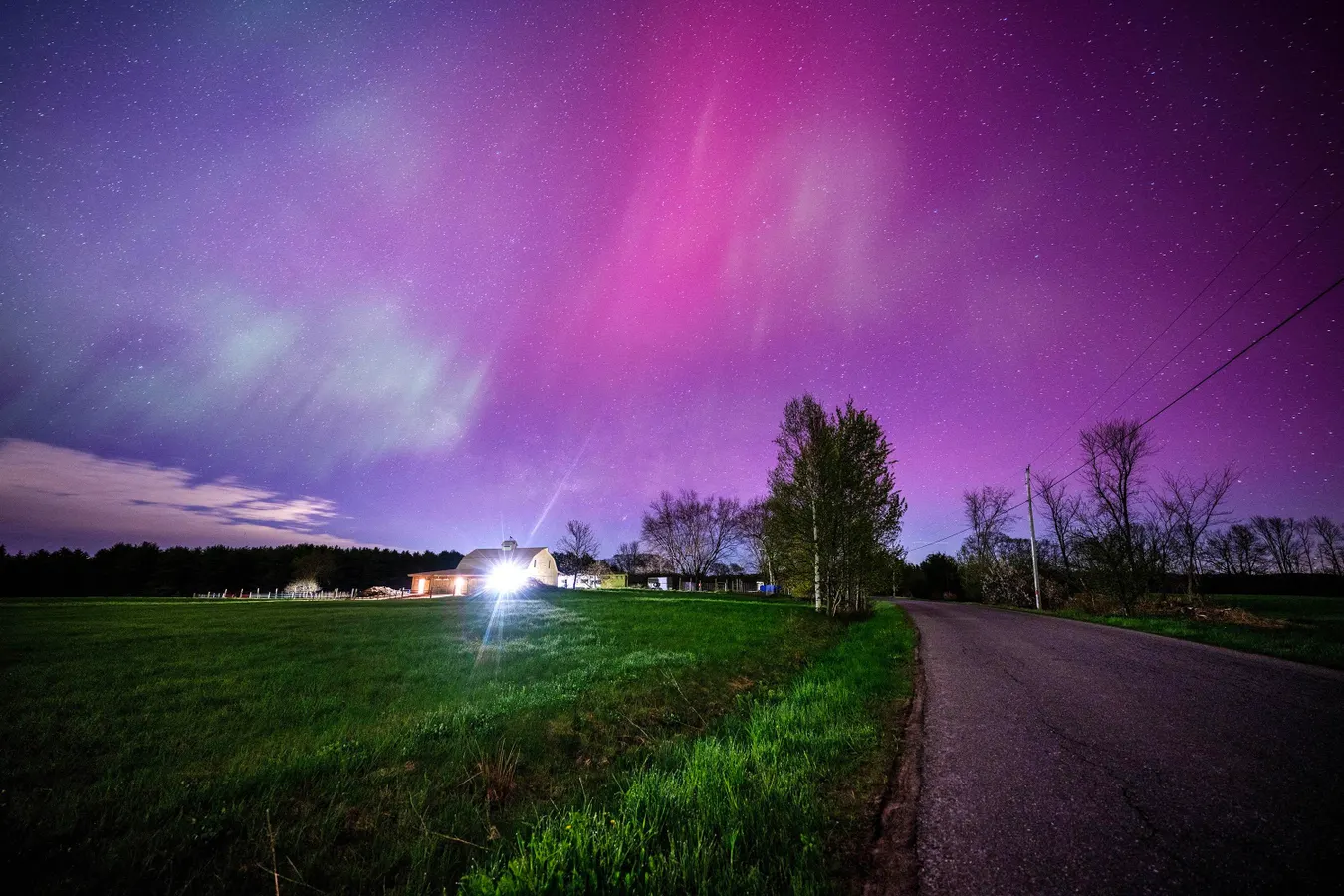
The northern lights have a higher than usual chance to be visible from states along the U.S.-Canadian border on Thursday night and early Friday morning, according to a forecast from the National Oceanic and Atmospheric Administration, as a coronal mass ejection associated with a powerful solar flare approaches Earth.
Forecasters expect a coronal mass ejection and a powerful X-class solar flare could impact the Earth starting on Thursday.
Getty Images
Key Facts
NOAA is predicting a Kp index of five out of nine on Thursday, meaning the northern lights could appear “brighter” with more “motion and formations,” and appear visible further from Earth’s magnetic north pole.
The more intense aurora will likely be caused by a coronal mass ejection likely associated with a powerful X-class solar flare—both of which left the Sun on June 30.
Forecasters are predicting the sky will have “quiet to unsettled conditions” on Thursday night, but a longer period of geomagnetic storms could start in the early morning hours on Friday.
What Are Coronal Mass Ejections?
Coronal mass ejections are bursts of solar material that escape from the Sun. When this material reaches the Earth, it interacts with the planet’s magnetic field and causes geomagnetic storms. These ejections are sometimes associated with solar flares, or large explosions on the Sun that erupt radiation, according to NASA. The most powerful solar flares are X-class solar flares, and forecasters at NOAA observed one of these eruptions on Tuesday. Forecasters also suspect this solar flare could cause “strong” high frequency radio blackouts on Thursday.
Where Could The Northern Lights Be Visible?
According to NOAA’s aurora forecast map, the northern lights have a “low likelihood” to appear visible from several states along the U.S.-Canadian border, including parts of Washington, Idaho, Montana, North Dakota and South Dakota. In the Midwest, the aurora could potentially be visible from northern Minnesota, Wisconsin and Michigan’s Upper Peninsula. The aurora could also be visible from Alaska, with most of the state falling in the “high likelihood” zone on the map.
What’s the Best Way to View the Northern Lights?
Experts say viewers should travel as far north as possible, towards Earth’s magnetic north pole located in northern Canada. Viewers should position themselves on a vantage point—ideally on a hill with a clear view of the northern sky, and away from other sources of light. The aurora is most active around midnight, so viewers should wait until the hours of 10 p.m. through 2 a.m. to search for the lights.
What’s the Best Way to Photograph the Northern Lights?
Photographers who spoke to National Geographic said smartphone cameras are perfectly capable of capturing quality photos of the northern lights, with the right settings and equipment. Would-be aurora photographers should remember to turn off flash and turn on their device’s night mode, and shoot in RAW image format. They should also invest in a tripod and a remote timer—cameras need to be held still for long periods of time to take in enough light for a quality photograph.











Leave a comment