


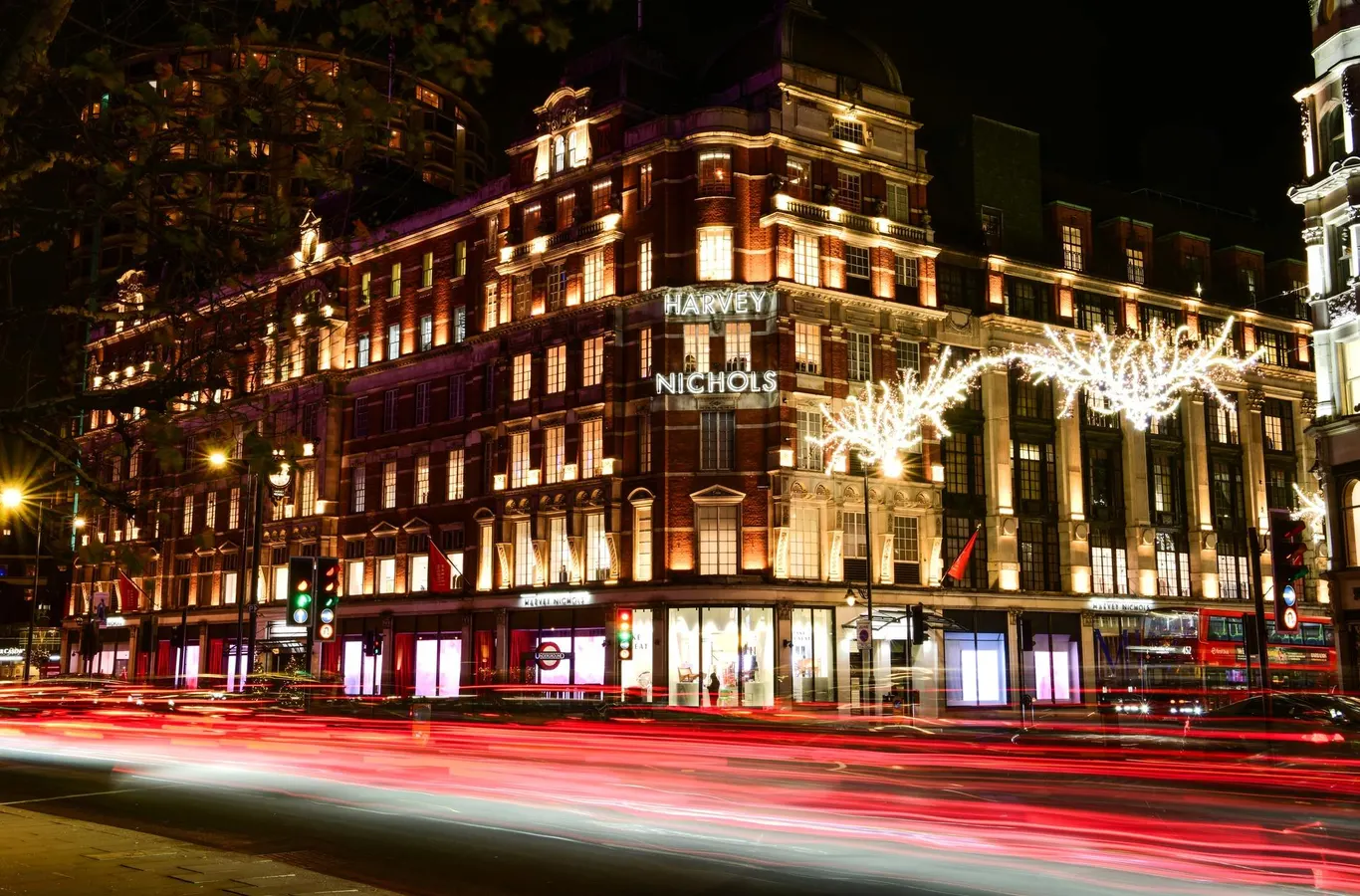

The iconic Harvey Nichols has been acquired by Frasers and faces a very different future. (Photo by Antony Jones/Getty Images for Harvey Nichols)
Getty Images for Harvey Nichols
Mike Ashley’s Frasers Group has bought Harvey Nichols out of administration, ending 35 years of ownership by Hong Kong businessman Sir Dickson Poon of the 195-year-old British luxury icon.
The deal, completed Thursday, August 13, reportedly values Harvey Nichols at about $54 million, although Frasers has not disclosed the purchase price. It gives Frasers control of six U.K. stores — its London flagship, in Edinburgh, Birmingham, Leeds, Manchester and Bristol — along with Harvey Nichols’ online business, inventory and international franchise agreements.
More than 1,000 employees will transfer to Frasers, while the future of the Dublin, Ireland store remains under discussion, while the Harvey Nichols restaurant at London’s Oxo Tower is outside the transaction and is being sold separately.
The acquisition was completed through a so-called pre-pack administration, allowing Frasers to take control of the operating assets while leaving the troubled company’s historic liabilities behind after weeks of negotiations.
The transaction brings to a close a sale process in which Frasers faced competition from U.K. fashion retailer Next and won out thanks in part to its willingness to take on substantially more of the U.K. estate, with reportedly only interested in one or two stores.
“Harvey Nichols is an iconic British institution with significant potential, but it is clear meaningful change is needed,” Frasers CEO Michael Murray said of the deal. “The turnaround will require tough choices, and we are prepared to make those decisions, even if that means a smaller business in the near term, to create a stronger and more sustainable Harvey Nichols for the long term.”
Harvey Nichols has been loss-making since the pandemic, with the latest accounts showing the scale of the deterioration. For the year to March 2025, the company reported a near $142 million loss after tax, including the write-off of inter-company loans. Its directors warned that the business was not a going concern and could run out of money within a year without new funding.
The underlying trading picture was already weak. Revenue fell from $276.6 million to $249.6 million in the year to March 2025, while pre-tax losses widened from $46 million to over $66 million. Over five years, cumulative pre-tax losses had reached more than $189 million.
Those figures explain why Harvey Nichols ultimately became a distressed sale for a retailer that had historically depended heavily on affluent international shoppers, particularly in London. The collapse in international tourism during Covid removed a critical source of spending just as physical retail was being disrupted.
Harvey Nichols Continues To Struggle
But the problems did not disappear when tourists returned and the retailer has faced intensifying competition from fellow luxury department stores Harrods and Selfridges, while its aspirational customer base has been squeezed by inflation and the broader cost-of-living crisis. The end of tax-free shopping for international visitors in the U.K. also damaged London’s attractiveness to some luxury shoppers.
Poon, who bought Harvey Nichols in 1991 for nearly $72 million, put substantial additional money into the company over the years and has provided more than $135 million of loans and Ashley’s description of Harvey Nichols as being in a “death spiral” was blunt but captured the problem facing prospective buyers.
London. Knightbridge’, 1906 and the Harvey Nichols department store. (Photo by The Print Collector/Getty Images)
Getty Images
For Frasers, the attraction is therefore unlikely to be Harvey Nichols as it currently exists and the first phase is likely to be rationalisation. Frasers has explicitly said that integrating Harvey Nichols will require a review of its store portfolio, organisational structure, operating model and cost base.
Ashley has previously indicated that the Knightsbridge flagship and Edinburgh stores could remain under the Harvey Nichols name, while the Birmingham, Leeds, Manchester and Bristol locations could potentially be converted to House of Fraser or Flannels stores.
Store Estate To Be Reviewed
The Knightsbridge store is undoubtedly the jewel in the portfolio and arguably the clearest reason for preserving the brand. It has the location, heritage and international recognition to remain a genuine luxury destination.
The regional stores are a different proposition. When Frasers bought House of Fraser out of administration in 2018, it subsequently closed about 40 of its 60 stores, dramatically reducing the estate. The Harvey Nichols deal could therefore become less about saving every part of the existing retailer and more about preserving the parts that Frasers believes have genuine value.
There is another critical issue. Frasers bought Matches for $70 million in December 2023, only for the business to enter administration three months later after Frasers concluded that the funding required for a turnaround was no longer viable.
Suppliers were left with significant unpaid claims and that has made supplier confidence a central issue during the Harvey Nichols negotiations. Frasers has indicated it is prepared to support suppliers as part of the transaction and Harvey Nichols CEO Julia Goddard struck a deliberately positive tone following the deal.








Leave a comment