


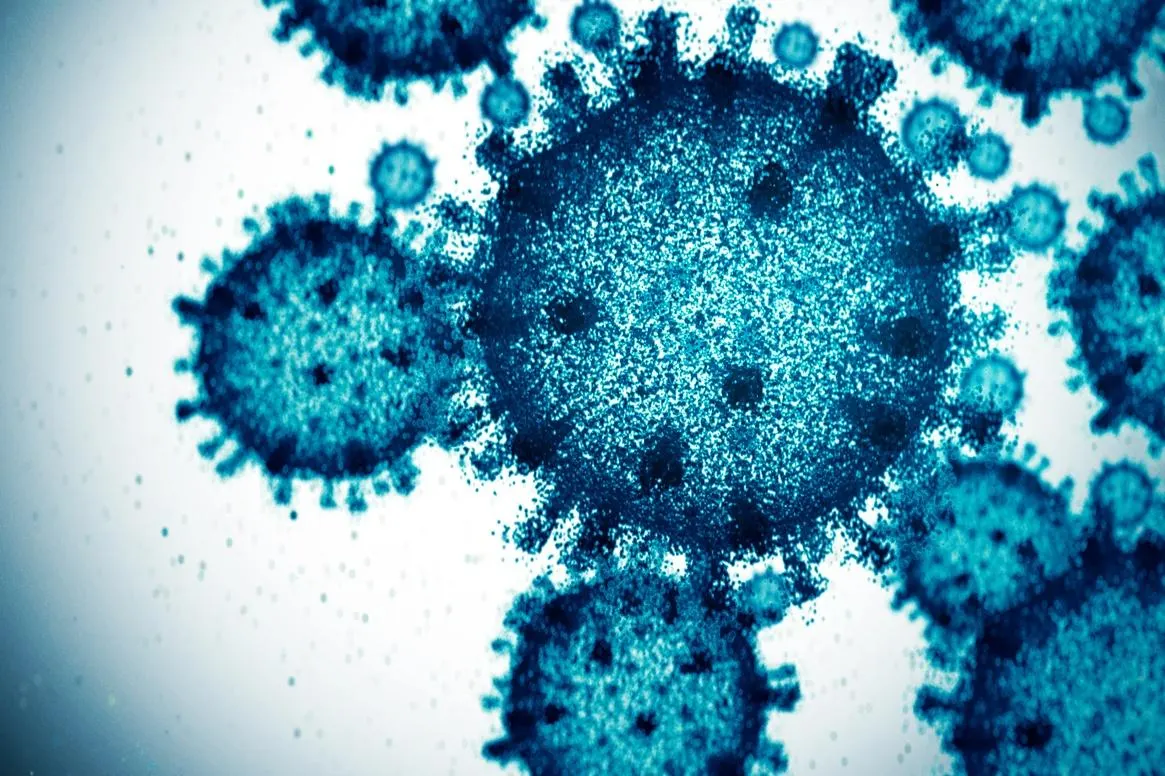

Deep learning models can help scientists build customized phages.
getty
One of the most devestating aspects of modern medicine and drug development is the constantly evolving nature of harmful pathogens and bacteria. As bacteria have been exposed to increasing levels of antibiotics globally, they are continuously evolving against the best medications humanity can develop. Eventually drug resistant “superbugs” prevail and cause hard-to-treat infections. Resistance rates will only continue to increase, and scientists are in an arms race in trying to figure out new counter measures and ways to fight disease caused by these pathogens. Fortunately, with the rapid advancements in AI, researchers are now able to make progress on new frontiers.
One specific area that is actively being explored is the potential of using bacteriophages, which are originally viral in nature, in conjunction with advancements in AI to help detect, track and destroy resistant bacteria forms. While antibiotics are generally effective, they often do not disciramte between good and bad bacteria, and hence will wipe everything out in their sight. However, programmed bacteriophages have significant potential to be incredibly targeted in the bacteria they seek to commandeer and eliminate.
The concept of using phages to detect and destroy bacteria is certainly not new; however, with AI, there is new opportunity. Historically, scientists had to manually test hundreds of viral samples to determine the correct phage that could target the bacteria in mind. However, deep learning has completely transformed this process. A recent article in the journal Briefings in Bioinformatics discusses how deep learning algorithms significantly increase the precision and accuracy of phage-host interactions (PHI): “a growing body of artificial intelligence-based models has emerged to improve the scalability, flexibility, and generalizability of PHI prediction…” meaning a higher degree of success in developing these tools.
Moreover, while traditional models can help scientists find existing phages that may be effective, new models can actually help researchers design their own custom, synthetic phages, specifically built to target the bacteria in mind. In a recent article for the International Journal for Pharmaceuticals, the authors describe how AI driven structural modeling, in conjunction with genome editing technology, can significantly optimize targeted phage delivery and improved efficacy in therapies: “Targeted engineering for enhanced antibacterial efficiency has been made possible by residue-level visualization of key main phage proteins, such as endolysins and tail fibers, which made possible by structure prediction tools like AlphaFold and OpenFold… Now AI enables quick decoding of phage genomes which can predict host receptors, bacteria-phage interactions, ideal delivery process, and tail fiber binding locations.”
The overall impact? Huge benefits in the fight against resistant bacteria.
But, what are the challenges and limitations? For one, bacteria are incredibly intelligent creatures. Research suggests that if they are attacked by a single phage, they can often mutate to resist that specific form of attack. With increasing number of attacks by multiple phages, they may be more vulnerable, but will also eventually learn to protect themselves. Thus, timing and breadth of impact is important; certain bugs may require a more involved approach with multiple types of phages and significantly more phages than others.
Furthermore, it is crucial to note that this technology is still incredibly new. While many of these AI prediction models work In Silico (in digital simulations etc.), the degree to how efficacious they are in reality (In Vivo) is still being determined. Deep learning models often do a great job in selecting a potential answer (e.g., what phage to use). But they often fail at the explainability aspect (e.g., why was that specific phage chosen?). For science, it is as important to understand the process as it is to determine the answer, as this is essential in progressing innovation and discovery. Therefore, as models are still being improved and explainability still has progress to be made, it will take time before this concept is successful for wide-scale implementation and universal deployment.















Leave a comment