


Topline
Billionaire Bill Gates told “Meet the Press” that government regulation is needed for artificial intelligence and warned the technology is “powerful” enough to “cause a billion deaths” if used maliciously, as Washington and the AI industry consider how to move forward in light of dire warnings about AI’s potential effects.
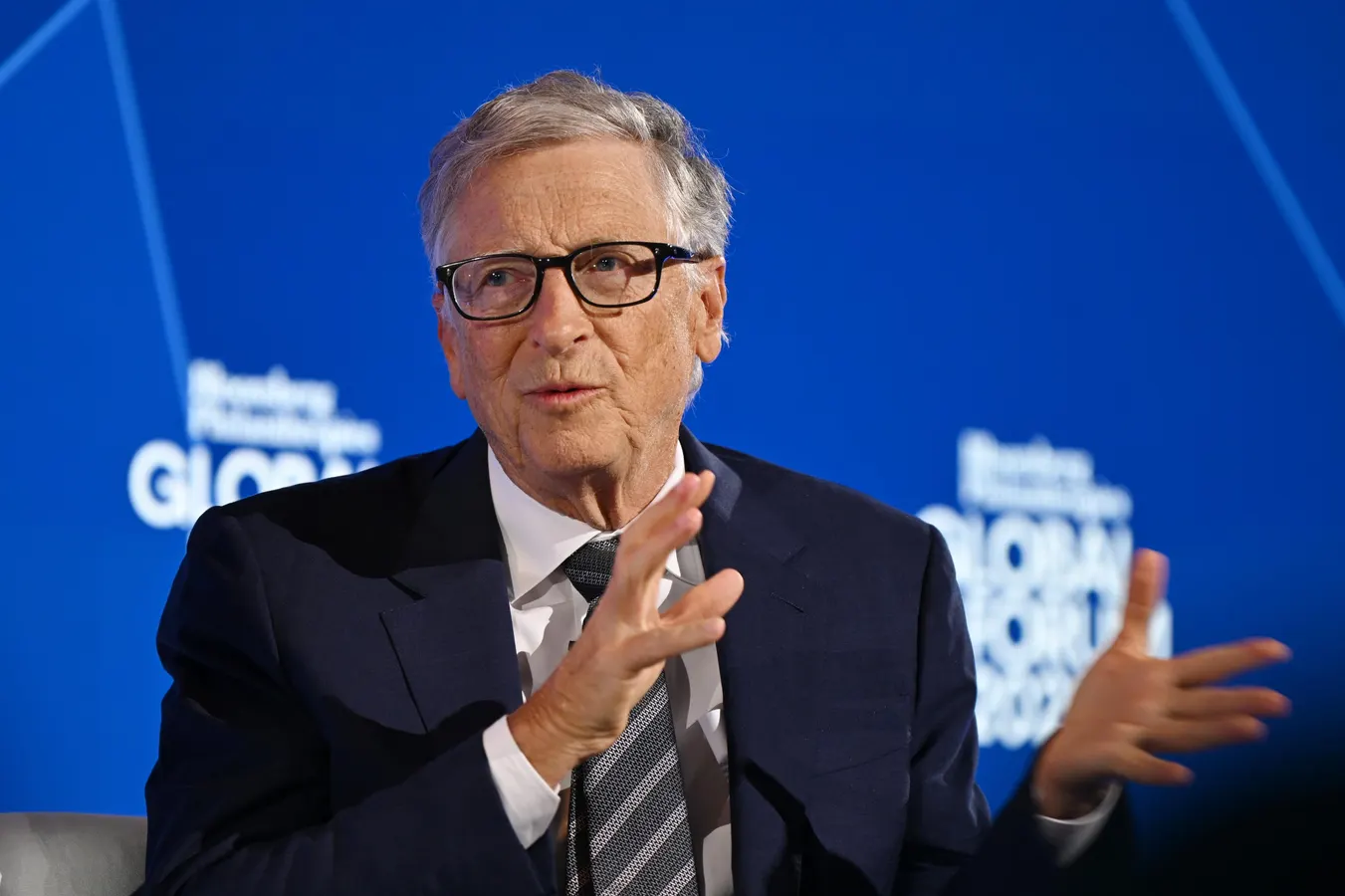
Bill Gates speaks onstage at the Bloomberg Philanthropies Global Forum on September 24, 2025 in New York City.
Getty Images for Bloomberg Philanthropies
Key Facts
NBC News released a clip Friday of Gates’ interview with “Meet the Press,” in which the billionaire and philanthropist was asked about warnings from AI workers that the technology could potentially wipe out humanity.
“AI is certainly powerful enough to drive events that … cause a billion deaths,” Gates said, noting “there’s never been a weapon as powerful as the combination of people with ill intent using the latest AI tools.”
Gates was also asked about Anthropic CEO Dario Amodei’s recent essay calling for a slowdown on AI, which argued frontier labs should slow down the pace of their progress and “voluntarily work together to set standards” around artificial intelligence.
“No one thinks self-regulation is enough,” Gates said about the prospect of AI companies leading the charge on curbing their own actions, arguing there “absolutely” needs to be legislation regulating AI and “you need law enforcement and the politicians to get into the discussion about what safeguards and monitoring look like.”
Amodei’s essay also called for government involvement in AI, though he noted, “Unfortunately, passing laws can take time, and AI is advancing very quickly.”
It still remains to be seen what the federal government will do on AI regulation, as Republican leaders in Congress have downplayed the issue after President Donald Trump came out strongly against AI guardrails and described calls for regulation as a “hoax.”
What to Watch for
Gates’ full interview with “Meet the Press” will air Sunday morning.
News Peg
Gates’ comments come ahead of a planned meeting Tuesday between Trump, House Speaker Mike Johnson, R-La., and AI executives, according to multiple outlets, though it’s still unclear what the focus of the meeting will be. Johnson has previously said he wants Trump and AI CEOs to “go in a big room, close the door and sort this out,” and told reporters last week there should be “a deliberate discussion about the responsibility of the companies to maintain safety, and what role, if any, the government has to play in that.” It also remains to be seen which specific AI leaders could attend the meeting, which comes after major players in the industry like Elon Musk and OpenAI chief Sam Altman were at the White House for a state dinner Thursday.
Will Congress Take Action On AI?
Johnson and Senate Majority Leader John Thune, R-S.D., so far haven’t shown much urgency when it comes to passing legislation regulating AI. Johnson downplayed fears the technology could wipe out humanity as a “hoax,” and while Thune has long called for regulating AI and introduced legislation on the issue in 2023, the senator has more recently suggested he won’t be pushing for the matter to be taken up as an urgent priority. Thune told reporters in mid-September it was “probably TBD” whether the chamber could pass AI legislation by the end of the year, noting, “Getting anything done in the near term is going to be challenging given the other stuff we’re dealing with.” The Senate leader does seem to be considering the issue, however, telling Axios on Wednesday that Sen. Amy Klobuchar, D-Minn., who consponsored Thune’s previous AI bill, is working on getting more Democratic support before the bill gets reintroduced in Congress. The legislation, based on how it was introduced in 2023, would impose measures like requiring critical AI systems to be subject to certification, transparency requirements for content made with generative AI, forcing companies to perform AI risk assessments and ordering further government research into distinguishing AI-generated content and what guardrails should be implemented in the industry. It remains to be seen whether that or any other bill would be able to make it through Congress and not get vetoed by Trump, though Thune told Axios he believes the president is more open to allowing AI guardrails than he’s publicly let on.
Key Background
The debate over AI safety and regulation has sharply escalated in recent weeks, after former Anthropic researcher Jacob Coxon publicly announced on Sept. 9 that he had resigned from the company and alleged, “The people building AI earnestly believe that it could kill us all by the end of the decade.” Evan Hubinger, Anthropic’s alignment science lead, amplified the warning, writing Coxon is “correct” and AI officials “really do earnestly believe AI could kill all humans!” Hubinger said he thought there was a “>10%” chance of AI wiping out humanity “within the next decade,” and warned Anthropic does “not yet have a plan to solve alignment for superintelligence and [is] not clearly on track to.” The warning ramped up the public backlash and escalated calls for regulation, and Google, Anthropic and OpenAI have banded together in the wake of the outcry and started making plans for an AI safety group. Altman and Amodei also stressed the need for global cooperation and international standards on AI at the United Nations this week, with Amodei arguing decisions on the technology “must be shaped through democratic processes and by governments accountable to the people that they serve.”
Further Reading
Dire AI Doomsday Warnings Are Everywhere—But What Could One Actually Look Like? (Forbes)















Leave a comment