


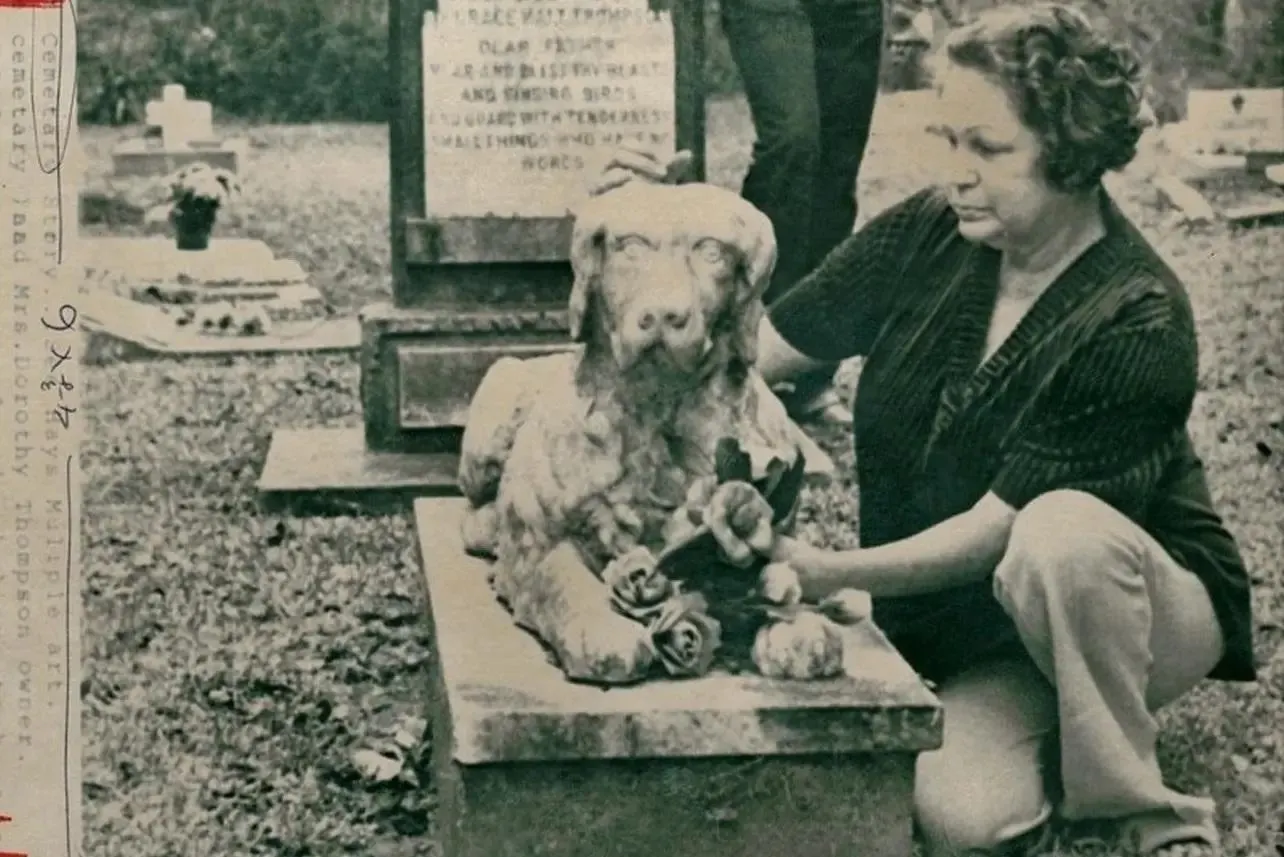

Dorothy Lou Thompson, a woman whose body was found wrapped in chains in the Mississippi River in 1985.
HBO Max, 2026
There are places where the past refuses to stay buried, and then there is Toca, Louisiana, where the dead apparently have better follow-through than the cops. In The Pet Cemetery Murders: A Ghost Story, filmmaker Philip Cairney takes us into the bayou’s humid underworld for a tale involving a murdered woman, a pet cemetery, spectral visitations, and enough historical bloodshed to make the entire landscape feel like one enormous crime scene.
The central figure is Dorothy Lou Thompson, who owned a pet cemetery outside New Orleans. In 1985, Thompson disappeared. Two weeks later, her body turned up in the Mississippi River, strangled and bound with hundreds of pounds of metal chains. If this sounds like the opening act of some diseased Southern Gothic fever dream, congratulations: you’re paying attention.
Thompson had lived a brutal, troubled life marked by abusive relationships and addiction. Her history included the suspicious deaths of two husbands. She wasn’t exactly the kind of victim around whom a community spontaneously organizes a candlelight vigil, and the investigation into her murder stalled for decades. There were rumors about hidden money, possible suspects, and a cemetery that seemed to collect more secrets than the animals it memorialized.
Then the ghosts got involved.
When investigators revisited the case, people came forward claiming Thompson’s spirit had appeared to them, urging them to deliver information to the authorities. One such account emerged in 2009, and another followed years later. Whether you’re a card-carrying believer in the supernatural or somebody who considers ghosts a side effect of bad plumbing and worse whiskey, the premise has undeniable juice. The dead woman nobody seemed particularly interested in helping while she was alive was now supposedly haunting people into doing something about her murder.
Cairney understands that this is prime documentary real estate. The bayou itself becomes a character, all murky waterways, oppressive atmosphere, and the feeling that civilization is something somebody once attempted here and subsequently abandoned. The interviews and archival material gradually assemble the case without turning the whole thing into a carnival of lurid reenactments. The result is creepy in the best sense: not cheap jump-scare creepy, but the deeper unease of realizing that the world might be stranger, crueler, and more indifferent than you wanted to believe.
But the real horror isn’t necessarily supernatural. The series reaches back to the 1868 St. Bernard Parish Massacre, in which dozens of formerly enslaved Black people were murdered by white mobs. Indigenous perspectives further complicate the mythology surrounding the supposedly cursed land. Suddenly, the cemetery isn’t just a spooky backdrop for a cold case. It’s a patch of American history where violence has accumulated for generations, and where talk of curses can obscure the far more tangible damage inflicted by human beings.
This is where The Pet Cemetery Murders becomes more than another streaming service’s Halloween-season corpse buffet. Its suggestion that some crimes remain unresolved because the victims are inconvenient, unsympathetic, or simply forgotten is considerably more disturbing than any ghost story. The investigation also suffered from lost evidence after Hurricane Katrina devastated the region in 2005, adding another cruel twist to an already tangled case.
Still, Cairney doesn’t entirely escape the gravitational pull of the contemporary true-crime assembly line. The familiar interviews, measured revelations, and episodic cliffhangers can make the three-part structure feel stretched. There’s a more ambitious documentary buried somewhere in this material, one that might have pushed harder into the relationship between historical injustice, community memory, and the stories people tell to explain the inexplicable.
Even so, there’s enough life in this dead woman’s story to justify the excavation. The series doesn’t need you to believe Dorothy Lou Thompson’s ghost walked into a police station and demanded justice. It only needs you to consider why it took so long for anyone to listen.
In the end, the scariest thing in Toca isn’t what’s haunting the cemetery. It’s what’s been allowed to happen there in broad daylight. The ghosts are just the part that finally gets everybody’s attention.
Subscribe to my free daily newsletter TooMuchTV.













Leave a comment