


Topline
Two men have been charged with conspiracy, smuggling and selling counterfeit drugs after they allegedly sourced fake Ozempic from unauthorized sources in China and then offered it for sale at deep discounts to U.S. customers.
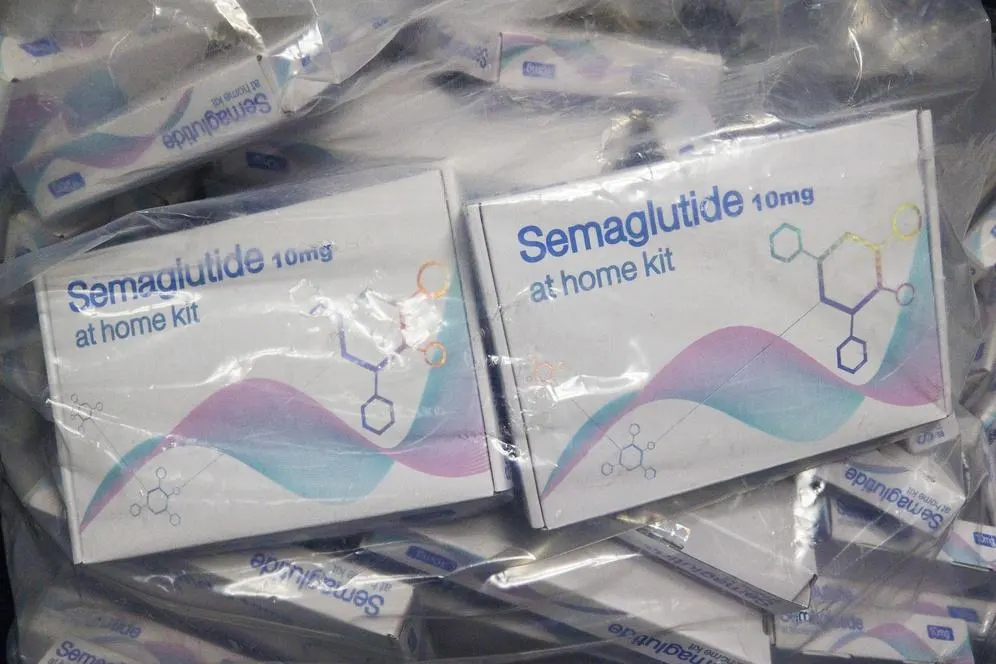
Boxes of fake Semaglutide on display in Ireland.
PA Images via Getty Images
Key Facts
Swapnadip Roy, 33, and Vicky Ramancha, 37, were indicted on the charges in a Florida federal court, the Department of Justice announced Tuesday.
The indictment alleges Roy, Ramancha and co-conspirators sold the fake weight-loss medication to distributors in the United States from at least July of 2023 to April of 2024.
The drugs used fake packaging, package inserts, pen labels and needles to deceive customers into thinking they were purchasing authentic Ozempic, prosecutors said, and continued even after the Food and Drug Administration seized thousands of units of the counterfeit drugs in December.
The FDA issued a public warning following the seizure and the agency at the time explained the counterfeit versions used a real Novo Nordisk lot number—PAR1229—and the only way to tell them apart from legitimate Ozempic was the location of the lot number and expiration date on the injection pen.
The FDA said at the time at least six people had experienced adverse effects from medication labeled with that lot number, but they were all believed to be associated with authentic Ozempic and were reported to the agency by Novo Nordisk.
BIG NUMBER
71. That’s how many years in prison Roy and Ramancha, both Indian nationals, would each face if convicted and sentenced to the maximum penalty.
Key background
The explosion in global demand for GLP-1 receptor agonists like Ozempic, Wegovy, Mounjaro and Zepbound, combined with recurring manufacturer shortages, has triggered a rise in fake and black-market medications. Public health agencies worldwide—including the FDA, World Health Organization and European Medicines Agency—have issued repeated medical product alerts about fake semaglutide (Ozempic, Wegovy and Rybelsus) and tirzepatide (Mounjaro and Zepbound). Online pharmacies, illegal tele-health pop-ups and people selling on social media are the most common sources of counterfeit drug distribution, and research analyzing dark web pharmacies has found GLP-1s are among the most targeted prescription medications for illicit cloning. The counterfeit drugs have been seized in legitimate wholesale distribution networks across the U.S., U.K., Germany, Brazil and other countries.
surprising fact
Authorities seized 76,000 pens, vials and other products containing GLP-1-like drugs were seized at the Brazilian border in the first half of 2026, CNN reported, nearly three times the amount in the same period in 2025.















Leave a comment