


Topline
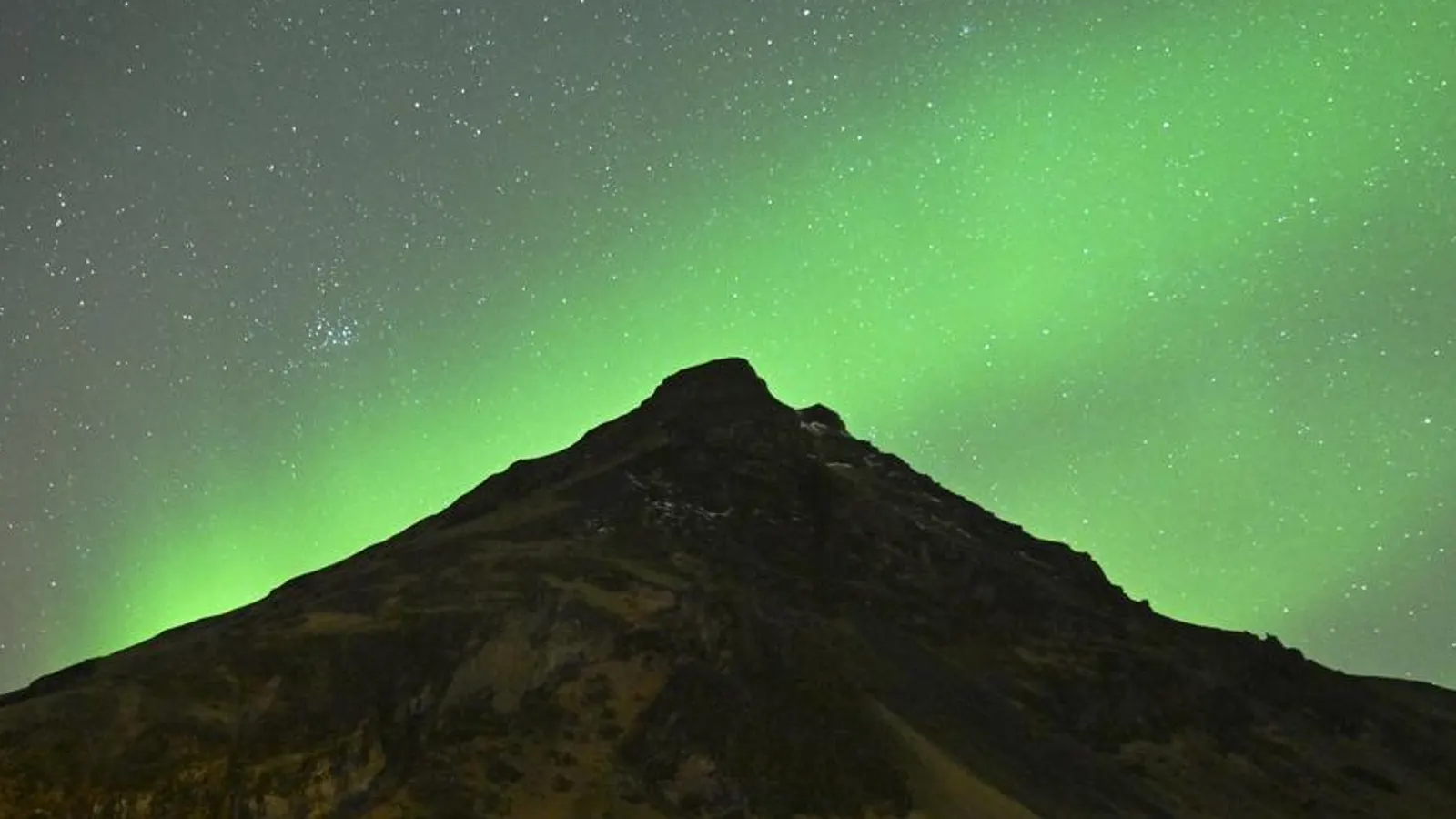
Viewers in nearly half the U.S. states may be able to catch a glimpse of the northern lights Saturday night, according to the latest forecast by the National Oceanic and Atmospheric Administration, as the agency predicts a minor geomagnetic storm may take place.
The northern lights could be visible in the northern United States on Saturday night. (Photo by Aytug Can Sencar/Anadolu via Getty Images)
Anadolu via Getty Images
Key Facts
NOAA expects Saturday night’s northern lights will have a peak Kp index of 4.67, a measure of the aurora’s strength on a scale of 0 to 9, indicating “brighter” lights that can be “quite pleasing to look at.”
The agency said a minor geomagnetic storm, which can produce stronger northern lights displays, is possible Saturday night with a likely strength of G1, a measure of strength on a scale of G1 to G5, with a smaller chance of a G2 storm.
The lights display comes one day after NOAA reported a strong solar flare was observed.
The chance of seeing the northern lights decreases throughout the weekend, as NOAA’s early forecast for Sunday night’s aurora has a projected Kp index of 3.
What States May See The Northern Lights On Saturday?
Alaskans have the best shot of seeing the northern lights Saturday, according to NOAA’s projected aurora map. Other states with stronger likelihoods of seeing the aurora include Washington, Idaho, Montana, North Dakota and Minnesota. The aurora’s projected “view line,” or the southernmost point at which the northern lights could be visible, passes through more than a dozen additional states, including Wyoming, South Dakota, Nebraska, Iowa, Wisconsin, Michigan, Illinois, Indiana, Ohio, Pennsylvania, New Jersey, New York, Connecticut, Rhode Island, Massachusetts, Vermont, New Hampshire and Maine.
What’s The Best Way To See The Aurora Borealis?
NOAA recommends traveling further north, finding the highest vantage point possible and avoiding light pollution. The best time to try and see the lights is within an hour or two of midnight local time, between 10 p.m. and 2 a.m., NOAA says.
What’s The Best Way To Photograph The Northern Lights?
Some tactics that can help the northern lights pop in photographs include using a wide-angle lens, a lower shutter speed and a tripod for stability, travel photographers told National Geographic. Photographers using iPhones should use the night mode camera setting, turn off flash and shoot in the RAW format.
Key Background
The northern lights were particularly active throughout 2024 and 2025 when the sun was in its “solar maximum,” or a period during its 11-year cycle in which solar activity, like geomagnetic storms and solar flares, are more common. NASA said the lights experienced a 500-year peak, as the frequency of aurora displays exceeded scientists’ expectations. In some extreme cases, the northern lights were visible as far south as Texas and Florida. NASA expects solar activity to decline throughout the latter part of the decade.
Further Reading
Where and when to see the northern lights in 2026 (Space.com)













Leave a comment