


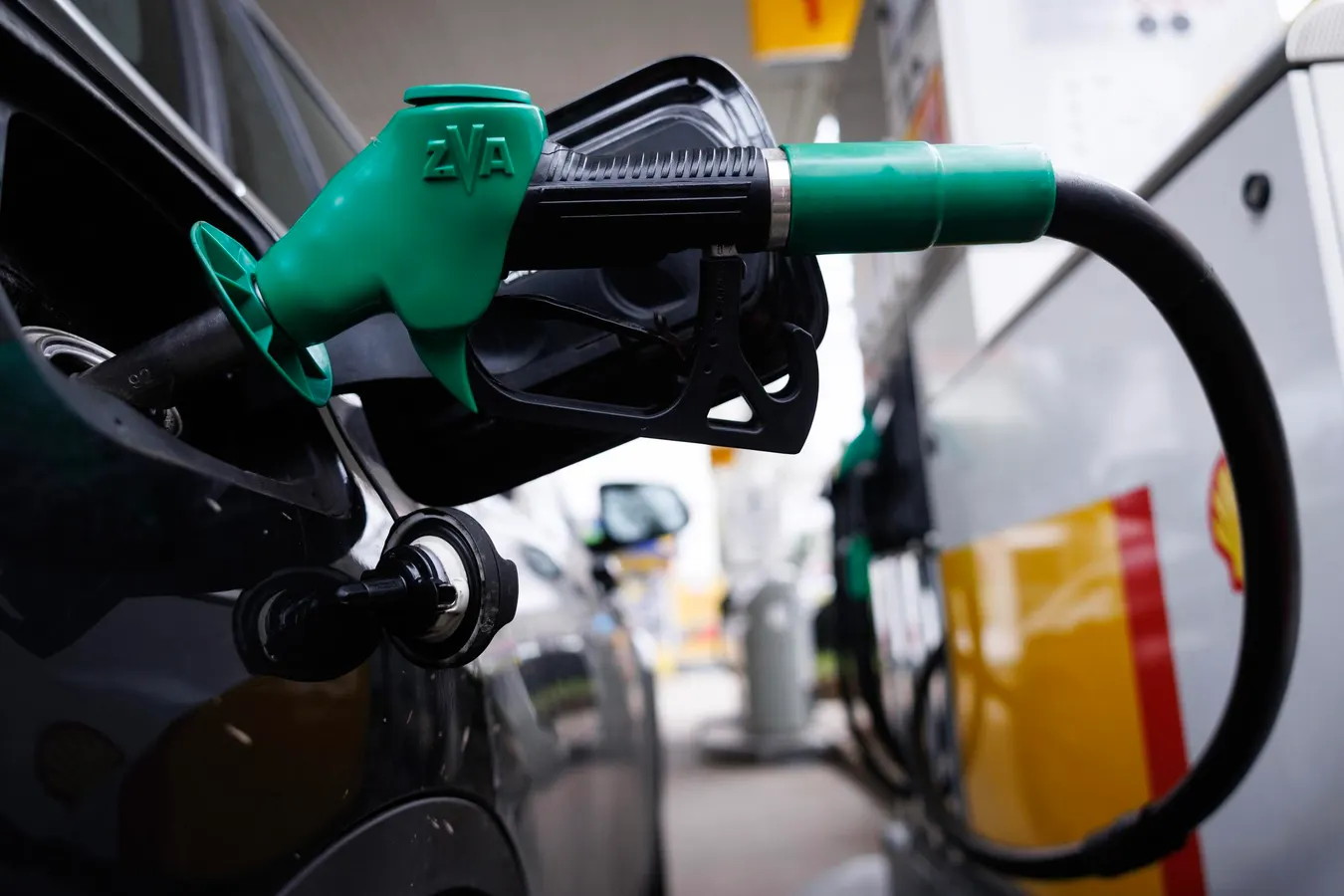
Global oil prices have risen to their highest levels since 2022 following an escalation of the US-Israel war with Iran. (Photo by Dan Kitwood/Getty Images)
Getty Images
Gas prices are no longer climbing as fast as they were a few weeks ago, but they remain much higher than they were last summer — a fact that is sharpening the debate over gas taxes.
AAA put the national average for regular gasoline at $4.26 per gallon on June 3, down from $4.46 a week earlier. Still, that is more than a dollar above the year-ago average of $3.14. For drivers, the distinction between crude prices, refining costs and taxes may matter less than the number at the pump. For lawmakers, it matters a great deal.
Efforts to lower pump prices by temporarily cutting gas taxes have resurfaced in Washington and several states, but the federal push remains unresolved. President Donald Trump has backed a pause in the federal fuel tax, and lawmakers in both parties have floated bills to suspend the tax temporarily, including proposals tied to elevated fuel prices following instability in the Middle East. But the idea still needs congressional approval, and it faces the same objections that have stalled past gas-tax holidays, which include a multibillion-dollar hit to the Highway Trust Fund (HTF). The Penn Wharton Budget Model estimated that a four-month federal suspension from June 1 to October 1 would cost the fund about $11.5 billion. The Bipartisan Policy Center, a Washington, D.C.-based think tank that promotes collaboration between the Republican and Democratic parties, separately estimated that a five-month suspension would reduce gas-tax revenue by approximately $17 billion, or 46% of the fund’s projected fiscal year 2026 gas-and-diesel tax revenue.
That potential revenue drop matters. The HTF’s finances are increasingly strained because collections have failed to keep pace with infrastructure needs and shifting driving habits. That has made the gas tax debate about more than pump prices—it is also a fight over how to fund roads, bridges, and other transportation projects.
The Gas Tax and What It’s Used For
The fight over the gas tax is not new—it has been around for nearly 100 years. President Herbert Hoover signed the Revenue Act of 1932, authorizing the first federal gasoline tax—one cent per gallon, at a time when gas averaged about ten cents per gallon. It wasn’t earmarked for roads or highways and was meant to help plug a hole in the general fund during the Depression. It worked so well that Congress raised the tax the next year to 1.5 cents per gallon. But as the economy struggled, Congress rolled it back to one cent in 1934, only to raise it again in 1940 and make it permanent in 1941. The Korean War brought another increase, to two cents per gallon, and the postwar highway boom brought another: the Highway Revenue Act of 1956 raised the tax to three cents and, for the first time, directed the revenue to the HTF. A “temporary” increase to four cents followed in 1959 and lasted 24 years.
The modern gas tax took shape in the 1980s and 1990s. President Ronald Reagan signed what was then the largest increase in the tax’s history, raising it to nine cents per gallon in 1983, with a small additional charge later added for leaking underground storage tanks. In 1990, President George H.W. Bush signed another five-cent increase, bringing the tax to 14 cents per gallon, though part of that revenue was diverted to deficit reduction rather than transportation. President Bill Clinton added another 4.3 cents in 1993, also aimed at deficit reduction, before Congress redirected that money back to the HTF in 1997. The federal gas tax has remained at 18.4 cents per gallon since 1993—and is not indexed for inflation—despite repeated calls to raise it, suspend it, or eliminate it entirely.
Funding Concerns
David Lieberman, senior director of government relations at Bentley Systems, an infrastructure engineering software company based in Exton, Pennsylvania, says the federal gas tax is the primary revenue source for the HTF, which has traditionally funded federal highway and transit programs. But there are cracks in the system, including the shift to more fuel-efficient and electric vehicles.
Today’s cars and trucks, he explains, are vastly more fuel-efficient (or entirely electric) than they were thirty years ago. As a result, the gas tax has lost significant purchasing power and no longer covers the actual cost of maintaining our infrastructure. The HTF has required repeated transfers from the Treasury’s general fund just to stay afloat. While the gas tax remains foundational on paper, in reality, its direct purchasing power for new infrastructure has steadily eroded for decades. Suspending the gas tax, he notes, is not the pathway to sustainability.
When you pull that much capital out of the system, it will stop new projects and create massive uncertainty for the state departments of transportation that rely on federal formula funding to plan multi-year bridge repairs and highway maintenance. States rely on regular federal funding, and Lieberman notes that “predictability is just as important as the total dollar amount.” Large infrastructure projects, such as replacing a crumbling bridge, require years of planning, engineering, and phased construction. If temporary suspensions become a recurring policy tool, that predictability erodes. From a technology and engineering perspective, he says, “uncertainty is the enemy of efficiency.”
It’s not only the big fixes that could be in jeopardy. When funding is precarious, agencies are hesitant to invest in advanced digital tools, such as digital twins (virtual replicas) and AI optimization, that could reduce the lifecycle costs of these assets. Making any reduction permanent without a replacement revenue source would be worse, Lieberman says.
A Potential Solution?
So, is there a potential solution? Maybe. Lieberman says that infrastructure remains one of the few genuinely bipartisan issues in Washington, because a crumbling bridge or a congested highway affects constituents regardless of their political affiliation.
The U.S. has more than 623,000 bridges with an average age of about 47 years, according to the American Society of Civil Engineers, and many are nearing—or have already exceeded—the 50-year lifespan they were designed for. ASCE’s 2025 report found that nearly half of U.S. bridges are in only “fair” condition and 6.8% are in “poor” condition, while ARTBA estimates that roughly one in three U.S. bridges still needs major repair or replacement. That makes any reduction in HTF revenue especially fraught: the system is aging faster than policymakers have agreed on how to pay for it.
Those kinds of numbers played a role in the 2021 Bipartisan Infrastructure Law, signed by President Biden. The law, which expires on September 30, 2026, increased federal funding for roads, bridges, transit, rail, and other infrastructure. Now, Congress has already begun work on a successor, the bipartisan House bill—the BUILD America 250 Act—which has already cleared the House Transportation and Infrastructure Committee. The renewal debate is exposing the same pressure points that surround the gas tax itself: the HTF is strained, fuel-tax revenue is not keeping up, and lawmakers are weighing whether drivers of electric and hybrid vehicles should pay new fees to help support the system (the bill contains a proposal that would imposes fees on those vehicles).
Lieberman, however, is optimistic, noting that while high gas prices and inflation will make the funding mechanisms highly contentious, the underlying need for a bill is broadly recognized. He expects reauthorization, but says the debate will likely shift toward how to pay for it without relying so heavily on what he calls an “antiquated” gas tax. He also expects more focus on using technology to deploy federal dollars more efficiently.
The public, he explains, often views infrastructure costs solely through the lens of initial construction. What they don’t see, however, is that most of an asset’s cost occurs during its operational lifecycle. “Maintaining a bridge for 75 years is significantly more expensive than building one,” he says.
People also underestimate the cost of doing nothing, he says. Allowing a road to degrade from “fair” to “poor” condition doesn’t just mean a bumpier ride; it also means the eventual repair will cost exponentially more.
Technology, including modeling, can help agencies tackle some of those problems earlier. “If we can give government owners a living digital replica of their infrastructure, they can predict exactly when a bridge needs maintenance before it becomes a critical, wildly expensive emergency,” he says. That sort of planning would allow the government to stop treating infrastructure as a one-time cost and start treating it as a dynamic asset. For Lieberman, that is the larger point: when infrastructure dollars are scarce, using them more intelligently matters as much as finding more of them.














Leave a comment