


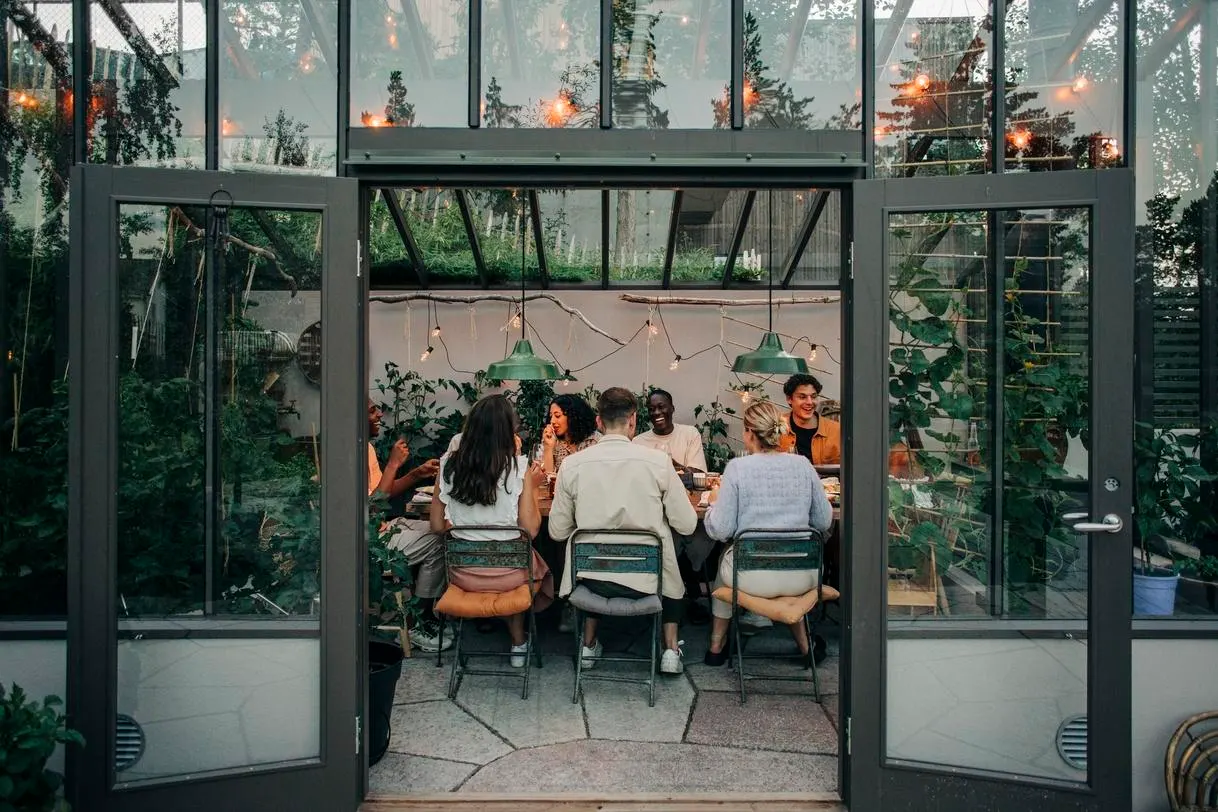

A vital aspect of social wellness is gathering with your community.
getty
The day my brother almost died, I was looking out at one of the most beautiful views in the world.
I was at Makapu‘u Point, on the east side of O‘ahu, in the middle of the COVID-19 pandemic. Even the beach felt strange then. Too quiet. Too empty. I had gone out for the sound of the surf and a little air. Then my phone rang.
My sister-in-law was calling from California. Brandon could hardly breathe. He was pale and getting worse fast, and she asked if she should call 911 and get him to a hospital. You’d think that would be an easy question to answer—but in those days, those places of healing began to feel like places of separation, where people disappeared to die alone. I told her to call.
Before long, my brother was on a ventilator. I was in Hawaii, unable to get to him, doing what I could from a distance. I waited, and I prayed. When the nurses held a phone near his ear, I talked to him, even though he could not talk back.
Slow Down to Get Well
In developing The Well Club, I wanted people to have a place to slow down and pay attention: What am I feeling? What is happening in my body? Where am I carrying stress? Where do I need help? The program includes tools for identifying more than 70 emotions, and it goes beyond private reflection. Members can meet in groups, talk honestly about what they are facing, and receive one-on-one coaching when they need it.
For me, the word “well” also brings to mind a gathering place. A well is where people come because they are thirsty, but for much of human history, it was also where people crossed paths. They talked there. They noticed who came by and who didn’t. They carried home not only water but also the news and life of the community.
That is the kind of life I hope The Well Club helps people recover. Some people come because stress has worn them down. Some come because their marriage needs attention. Some are trying to care for their bodies, or their faith, or their family, or simply figure out why they feel so tired. The reasons are different, and no one has to sort through them alone.
My brother went home after a little more than two weeks, frighteningly weak, but he recovered fully. When I think back on those days, I am grateful for the smart people who discovered the solutions to pull the world back from loneliness. And I also am grateful for the prayers, the meals, the neighbors, the nurses, and for all the voices that crossed the distance.
That was the power of community. It did not remove the fear. It helped us bear it.













Leave a comment