


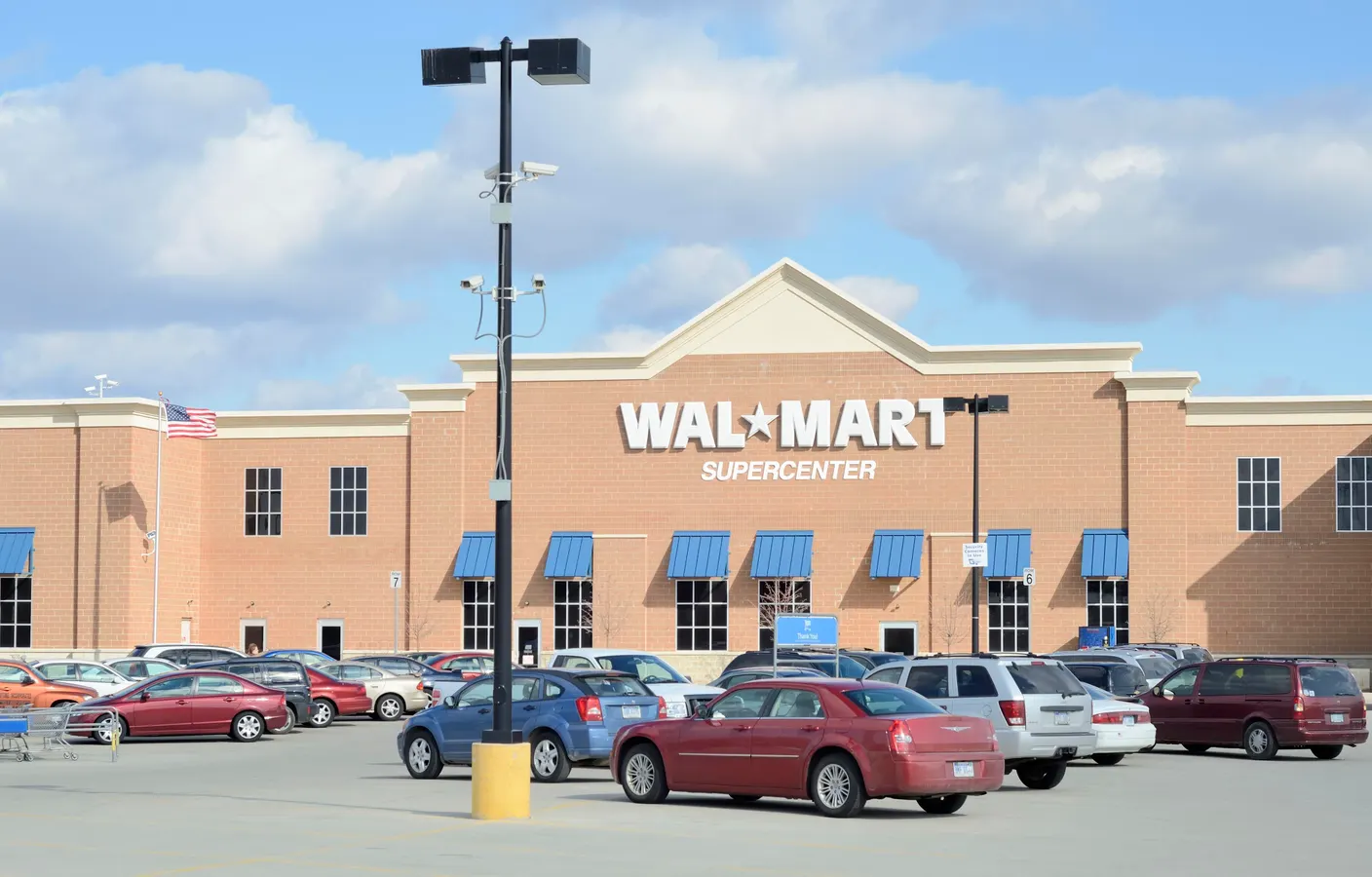

Walmart is now appealing to wealthier customers.
getty
Something important is happening at Walmart, and it’s easy to misread it.
The company that built its reputation serving the mass market is not abandoning price-conscious shoppers. It is still fighting to be the low-price authority, lowering prices on thousands of household items just this week. But its growth increasingly comes from shoppers who do not fit the old stereotype of the Walmart customer.
In its most recent quarterly results, Walmart said its U.S. market-share gains were “led by upper-income households.” That’s a clue to where retail is going.
Walmart, still the largest U.S. retailer by domestic retail sales, is following the money. The problem for many other retailers is that the money is increasingly concentrated in fewer households.
Mark Zandi, chief economist of Moody’s Analytics, shared research that puts numbers around a trend retailers have been experiencing for years. The top 20% of the income distribution now accounts for nearly 60% of all personal outlays, up from about half in the early 1990s. The bottom 80%, which accounted for half of all outlays is now only about 40% of personal outlays. This chart shows the change.
The interests of high-income and low-income consumers are increasingly divergent.
Moody’s Analytics
That’s a major shift in the addressable market for every retailer, restaurant, travel company, brand and service provider in America.
(Moody’s measure is not retail sales, it’s “personal outlays.” The methodology uses two Federal Reserve datasets to capture high-income spending that traditional consumer surveys often miss.)
Walmart’s pursuit of higher-income households is often described as a “consumer trading down” story: affluent consumers want value so they shop at Walmart. That’s true, but it’s incomplete.
For higher-income households, Walmart is not just price, it’s often about convenience. Pickup in-store, online assortment, faster fulfillment, advertising and its Walmart+ service change what Walmart means to more affluent households. Walmart can be the place where such a broad variety of products are available to affluent households and saves them a trip to multiple other retailers or apps.
There is another reason the affluent consumer has become more important: wealth.
Moody’s estimates that almost 90% of corporate equities and mutual funds are held by households in the top 20% of the income distribution. When stocks rise, the wealth effect is not spread evenly. It goes mostly to the same households that are already driving spending. It explains why aggregate consumer spending can look healthy while so many households feel financially strained.
It also explains how a broad-based retailer like Walmart can grow when consumer sentiment has dropped by 18.5% in the last year. A majority of people believe the economy is going poorly but a wealthy, prospering minority is driving growth in revenue.
The wealthy are more impactful at retail than ever.
Moody’s Analytics
In the twelve months ending March 2026, Moody’s estimates that outlays by the top 20% grew 6.5%. Outlays by the bottom 80% grew 2.7%, barely ahead of 2.6% CPI inflation. In real terms, the bottom 80% was close to flat.
That’s the retail conundrum in one sentence: most households are still shopping, but a smaller group is driving the growth. So if you’re a big retailer and you want to grow, you better find a way to appeal to more affluent consumers.
It also means the stock market has become a retail variable. If stocks keep rising or move sideways, the well-to-do consumer can support the economy. If stocks stumble, the same households may pull back quickly.
Not every retailer can chase rich people and many will fail if they try. Walmart is doing it because it’s not diluting its value proposition to its legacy customer base. Costco can do it because membership, treasure hunt and bulk value already appeal across income groups. Many other retailers don’t have that flexibility and their message becomes mixed if they try.
The Big Lessons Here
When you combine Moody’s analysis with Walmart’s behavior, you can see some important messages:
- Value is not just about low price in this environment. It’s also about trust, speed, assortment and convenience.
- The affluent shopper is not always looking for luxury; often they want convenience without feeling overcharged.
- There needs to be balance, most retailers can’t afford to lose their lower- and middle-income shoppers who need price relief.
There is a broader risk behind the retail trend. When the top 20% of households account for nearly 60% of outlays, the economy can look stronger in the aggregate than it feels to most people. Retail sales can grow. Airlines can fill premium seats. Costco can renew memberships. Walmart can gain affluent shoppers. And yet most households can still feel stuck.
When you take that condition to the extreme, you get instability in society, you get a small number of people holding the wealth and everyone else seething with resentment. It accounts for the constant drumbeat of “throw the bums out” in our politics.
It’s not retailers’ fault that there’s this divide, they’re just trying to live with it. But retailers’ responses help us see the divide more clearly.
That’s why Walmart’s move matters. It is not a departure from its history. It is an adaptation to an economy in which the need for value remains broad, but spending power is becoming more concentrated.















Leave a comment