


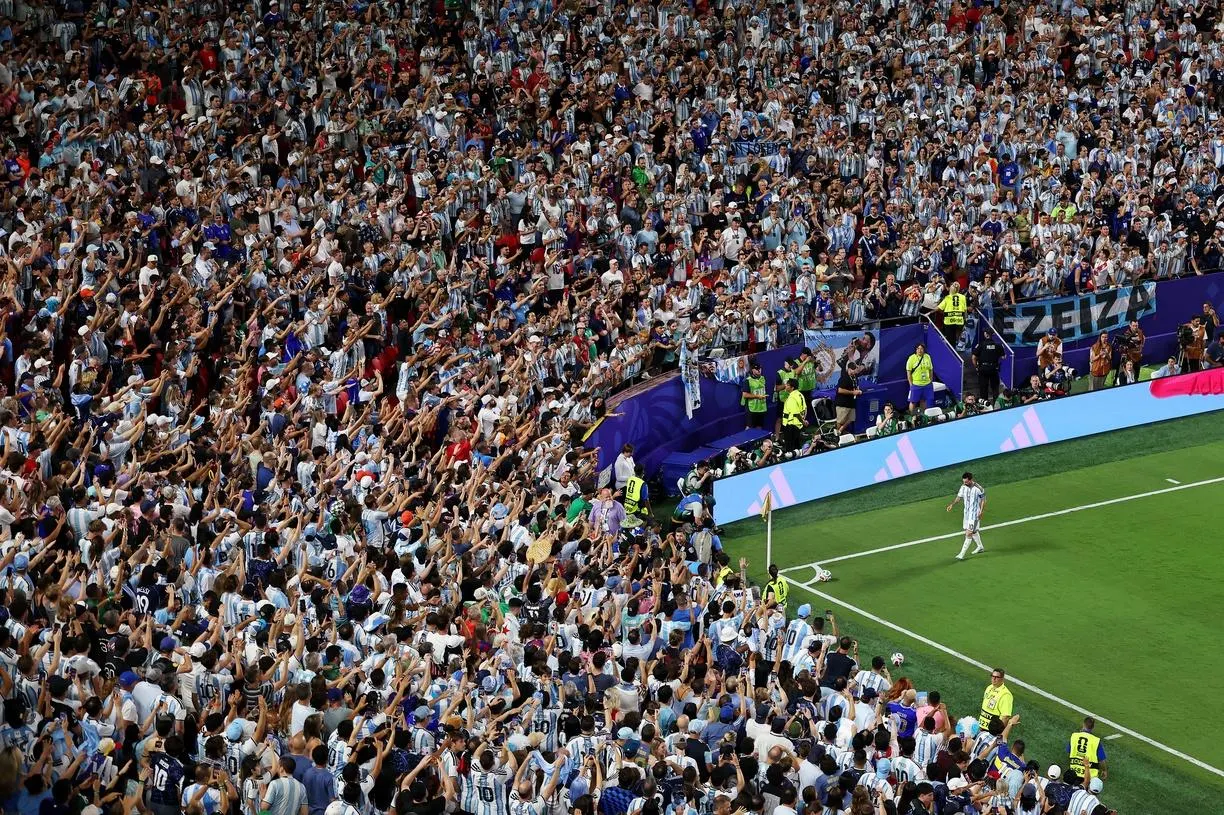

Story telling is in but hydration breaks have left fans cold. (Photo by Francois Nel/Getty Images)
Getty Images
The 2026 FIFA World Cup has become a battle between brands as retailers and food and beverage companies, have offered up a masterclass in what modern sports marketing should look like…and what doesn’t play well.
The biggest winners have been brands that understand soccer fans don’t just consume matches anymore but content, memes, social media and shared experiences.
The losers are those that have mistaken sponsorship for engagement or, worse still, become associated with the tournament’s growing commercialization, anathema to many European fans especially.
No issue better illustrates that tension than FIFA’s controversial hydration breaks. Touted as a player welfare measure amid concerns over summer temperatures, the mandatory three-minute stoppages have instead become one of the tournament’s defining marketing stories.
U.S. broadcasters have filled the breaks with advertising inventory, creating what many global fans – unused to soccer being divided into quarters – see as commercial interruptions masquerading as safety initiatives, highlighting the reputational risks of over-commercialization.
For Gatorade, whose branding dominates the hydration breaks, that association has been something of a double-edged sword. The PepsiCo-owned sports drink has achieved extraordinary visibility, effectively owning one of the tournament’s newest broadcast assets.
Yet rather than reinforcing Gatorade’s performance credentials, the sponsorship has positioned the brand at the centre of debates around commercialization.
That negative association has been amplified on social media whenever referees have halted play to begin hydration breaks, generating millions of impressions that connect the stoppages with advertising rather than athlete welfare and loud audible boos around the stadiums. Ironically, while Gatorade enjoys near-total share of voice during these moments, it has relatively little control over how audiences interpret them.
Brands Lean On Soccer’s Story Telling
Contrast that with Coca-Cola, which has largely avoided controversy by sticking to emotional storytelling. Rather than trying to dominate broadcasts, the drinks giant has focused on fan celebrations, local activations across host cities and digital campaigns centered on shared viewing experiences.
McDonald’s has taken a similarly effective route. Instead of relying solely on stadium signage, it has integrated the tournament into its loyalty ecosystem through app promotions, limited-time menu offers and youth soccer initiatives.
The biggest retail success story, however, may be sportswear giant Adidas, which has benefited from official match balls, referee kits and many of the tournament’s leading teams and players wearing its products, meaning Adidas has remained central to the conversation without needing to manufacture viral moments.
Nike has also enjoyed significant exposure through stars such as France’s Kylian Mbappé, Brazil’s Vinícius Júnior and the England squad, but its marketing has sometimes struggled to compete with Adidas’ broader tournament integration. Individual athlete partnerships generate spikes of attention, yet tournament-wide visibility still matters.
Adidas has capitalized on its sports-relevant sponsorship but not all official sponsors have played the tournament so well. (Photo by VCG/VCG via Getty Images)
VCG via Getty Images
One of the more interesting winners has been Lay’s. The snack brand has leaned heavily into soccer’s social nature, positioning itself around watch parties and shared occasions. That subtle distinction matters. Most fans experience the World Cup from living rooms, bars and restaurants rather than stadiums. By focusing on those occasions, Lay’s has connected directly with retail purchasing decisions.
Fast-food chains have also recognised the opportunity. Burger King has continued its tradition of reactive social media marketing, producing real-time content around surprising match moments rather than relying exclusively on pre-produced advertising. The ability to respond within minutes has become increasingly important during global sporting events, where social conversations move fast.









Leave a comment