


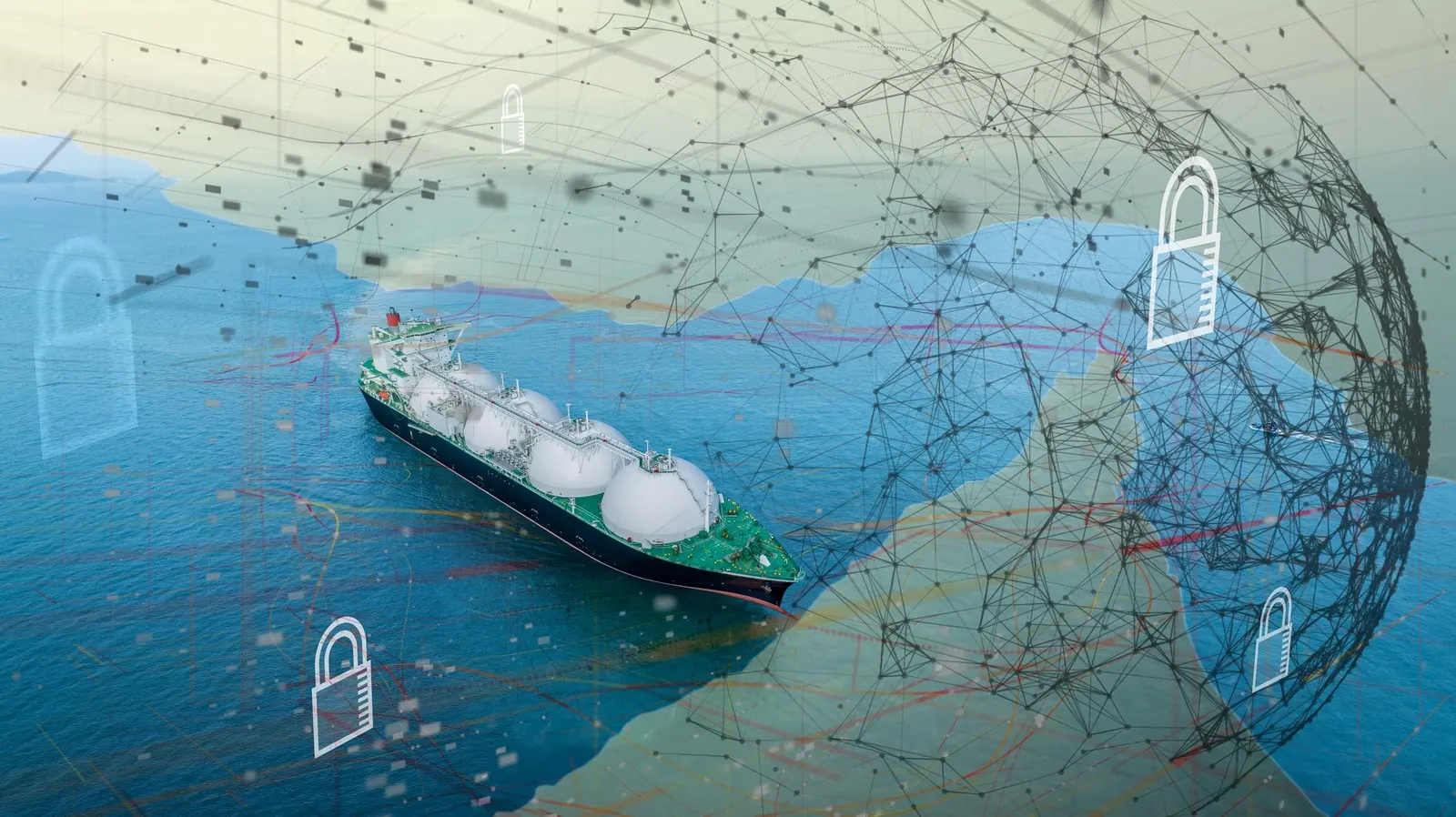

The collapse of the U.S.-Iran ceasefire in Hormuz creates severe friction for oil and LNG routes, exposing corporate risk far beyond the price of crude.
getty
After a 23-day temporary ceasefire collapsed, U.S. Central Command said it struck more than 170 Iranian targets across two waves following attacks on three commercial vessels in the Strait of Hormuz. That same day, the U.S. Treasury’s Office of Foreign Assets Control revoked Iran’s temporary oil-sales authorization and replaced it with a wind-down license. Brent moved back above $76 recently, depending on the market snapshot used.
That sequence looks like another oil shock. The larger signal is more awkward for companies: a ceasefire-linked route assumption and a sanctions permission both failed the same test.
The oil market can move quickly. Trust in a shipping corridor moves more slowly. The next six months of Hormuz risk will be decided less by one Brent print than by four connected questions: whether vessels can transit safely, whether temporary sanctions permissions survive contact with events, whether insurers and banks accept the route, and whether buyers can settle energy trades without building a compliance trap around themselves.
Andrejka Bernatova, CEO of Dynamix Corporation and an energy and infrastructure investor, framed the pricing problem bluntly in a conversation this week. “The conflict is not resolved. The market is pricing a conflict as resolved. That is a true fundamental misalignment,” she said. She also argued that current prices are “not reflecting the risk premium that should be reflected.”
Her point is useful because it should not be read as a simple price call. A barrel can reprice in seconds. The harder question is whether the system underneath the barrel still works.
The Route Is The First Contract
Hormuz is not a metaphor. The U.S. Energy Information Administration says oil flows through the strait averaged about 20 million barrels per day in 2024, around 20% of global petroleum liquids consumption. The same EIA note says roughly one-fifth of global liquefied natural gas trade also moved through Hormuz in 2024, primarily from Qatar.
That makes route reliability a commercial contract in its own right. A buyer can hedge crude. It cannot hedge away a captain’s refusal to enter a high-risk zone, a war-risk insurance exclusion, or a route instruction that places the vessel inside someone else’s political claim.
CENTCOM said the three attacked vessels were the M/T Al Rekayyat, M/T Wedyan and M/T Cyprus Prosperity. UKMTO and the Joint Maritime Information Center reported the three recent tanker attacks and raised the Strait of Hormuz threat level to severe, while also saying commercial traffic through the strait remained steady and U.S.-assisted transits proceeded without interruption. That combination matters. The strait had not become a full shutdown story. It had become a reliability story.
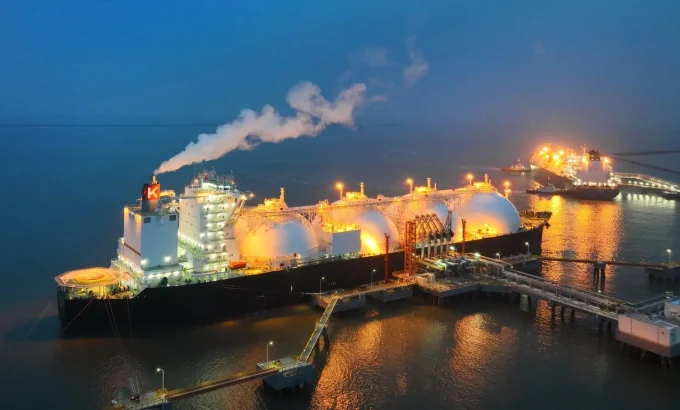
Qatar’s state news agency said Nakilat’s LNG carrier Al Rekayyat was hit by a projectile while transiting the strait, with no injuries and no environmental impact. Qatar’s foreign ministry said the attack threatened international navigation and global energy supply security. CENTCOM, for its part, said U.S. forces struck Iranian air-defense systems, command-and-control networks, coastal radar sites, anti-ship missile capabilities and more than 60 Islamic Revolutionary Guard Corps small boats in and near the strait. Those are official U.S. claims, not an independent damage assessment. They still tell executives which category of risk Washington believes it is now fighting: the ability to attack commercial traffic, alongside any diplomatic breach.
For corporate decision makers, the relevant question is narrower than “will Hormuz close?” It is whether the route can be treated as reliable enough for normal commercial behavior. That threshold is lower than closure and higher than a headline. It is where insurance, crewing, cargo scheduling and counterparty confidence meet.
A License That Lasted Barely Two Weeks
The sanctions side of the story is just as important. On June 21, Washington issued General License X, giving Iran a temporary corridor for the production, delivery and sale of crude oil, petrochemical products and petroleum products of Iranian origin. Following the strikes, OFAC revoked General License X and issued General License X1, turning a broad temporary opening into a wind-down problem.
The GL X1 text is the important part. It authorizes wind-down transactions through 12:01 a.m. Eastern time on July 17, 2026, and says it does not authorize new purchases or loading of the covered Iranian-origin products on or after July 7. Axios reported that a U.S. official tied the revocation to the performance-based character of the U.S.-Iran memorandum and described Iran’s actions in the strait as unacceptable.
For anyone trading around Iran, the lesson is severe. A general license can create a legal corridor. It can also narrow while cargo, payment, insurance and documentation are still moving through the system. That does not make every transaction impossible. It makes the lifecycle risk of each transaction harder to price.
This is the same architecture that has been showing up in Turkey’s Iran gas problem. Turkey’s expiring Iran gas contract frames the problem around the payment rail. The corrected lesson from that file is precise: a legal route for gas payments can exist in principle, but bank willingness, ring-fenced proceeds and Washington’s tolerance decide how usable that route is in practice.
Oil is now demonstrating the same point at higher speed. Legal permission is not the same as bankable confidence.
LNG Turns Shipping Risk Into Corporate Risk
The liquefied natural gas piece is where Hormuz risk travels fastest from a military map to corporate planning. Qatar’s LNG exports sit inside the same geography. If one-fifth of global LNG trade normally passes through Hormuz, the route is a boardroom exposure for utilities, industrial buyers and data-center developers that never buy a barrel of crude.
Bernatova’s warning on Europe was conditional, and it should stay that way. “Europe will get under pressure if the strait doesn’t get opened and there continue to be attacks on some of the LNG facilities that are just so critical in Qatar,” she noted. “I think that may create the black swan event.” That is a scenario, not a settled forecast. It is still the right scenario to model.
The last two years taught European buyers to think in molecules. Replace Russian pipeline gas with LNG. Sign longer contracts. Build storage. Hormuz adds a different constraint: the most flexible molecule still needs a route, insurance, ships and a political permission structure. Flexibility can become crowded at exactly the moment everyone needs it.
This is why the latest flare-up should be read alongside Europe’s wider energy premium, not apart from it. When energy infrastructure becomes a normal target, the cost of security migrates into freight, redundancy, inventories, grids and contracts. That point was clear through the grid; now, Hormuz makes it through the sea lane.
The Market May Be Right On Price And Wrong On Fragility
The cleanest counterargument is that oil markets are not complacent. Traders may be discounting headline volatility until there is measurable, sustained loss of flows. They may be right to avoid pricing every attack as a permanent supply shock. Brent above $76 is not panic. It is a repricing, with room to move either way.
That counterargument strengthens the actual thesis. The issue is not that every screen price is obviously wrong. It is that benchmarks are poor instruments for measuring operational fragility.
A vessel that turns back, an insurer that rewrites exclusions, a bank that refuses a payment, or a sanctions license that disappears before the cargo cycle closes does not always show up immediately as a crude shortage. It shows up as friction. Friction compounds. By the time it reaches the price, the corporate decision was already late.
This is where Bernatova’s market view connects to the sanctions story. As she cautioned, “Even if you have a plan B, in these new wartime times, the damage to facilities—targeted damage to select facilities—is very real.” If investors treat the recent sequence of strikes as a one-day flare-up, they miss the slower mechanism. The U.S. and Iran did not merely exchange fire. A maritime incident triggered a sanctions reversal. A sanctions reversal changed the payment environment. The payment environment changes who can touch the trade, who can insure it, and who wants the balance-sheet exposure.
That is the part of the market that does not clear in a single session.
Four Questions For The Next Six Months
The practical test now has four parts.
First, do commercial vessels keep moving through Hormuz without sustained turn-backs, rerouting or insurance disruption? Second, does Washington issue any new Iran oil permission, or does General License X1 become the visible end of the June opening? Third, do banks and insurers accept the remaining exposure, or does compliance caution become the constraint even where physical flows continue? Fourth, do Gulf LNG and oil buyers build redundant routes and inventories fast enough to stop each shock from becoming a procurement scramble?
The Middle East ceasefire was never one deal—it was five separate timelines. The recent attacks compressed two of them. The shipping clock and the sanctions clock started ticking together.
That is the new Hormuz risk. It is a route problem, a license problem and a trust problem arriving in the same week. The barrel price is only where the story becomes visible.












Leave a comment