


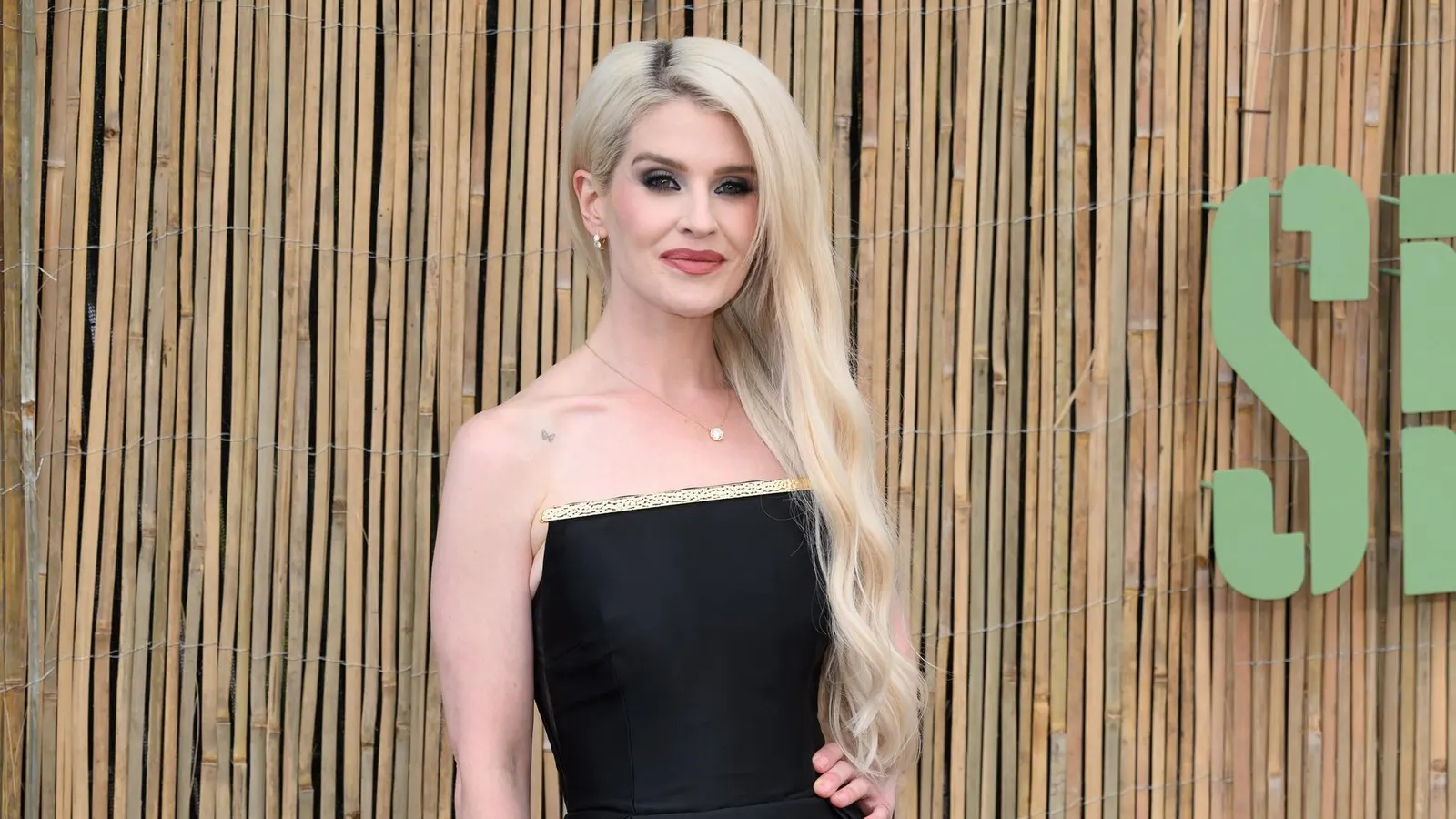

Kelly Osbourne, daughter of Ozzy and Sharon Osbourne, brought her followers into her family dispute when she posted a series of Instagram stories criticizing her ex-fiancé, Sidney George Wilson, best known as a keyboardist in the metal band Slipknot.
WireImage
The old adage to “keep it in the family” is all but retired today, when social media can turn private moments into public content in a matter of seconds. From livestreaming a child’s milestone to turning a family dispute into a TikTok, the line between sharing and oversharing keeps getting thinner. Recently, celebrity parents like Kelly Osbourne and Kate Gosselin have brought this issue mainstream, demonstrating how impulsive social media posts can have lasting effects on privacy, trust, and communication.
Co-parenting Without the Comments Section
It is becoming more and more common to turn to “the comments section” of any media platform for validation, especially in situations when it seems impossible to get through to a co-parent otherwise. Kelly Osbourne, daughter of Ozzy and Sharon Osbourne, brought her followers into her family dispute when she posted a series of Instagram stories criticizing her ex-fiancé, Sidney George Wilson, best known as a keyboardist in the metal band Slipknot. The former couple, who ended their engagement in March 2026, share a 3-year-old son, Sidney. On August 3, 2026, Osbourne posted that she wanted Wilson to leave her and their son alone to heal, adding, “Also while I’m at it can I have my dogs back and all my possessions. Oh yeah and maybe some child support?”
While affirming in the moment, social media posts create a permanent digital footprint that children will eventually see. Even amid conflict, parents should strive to maintain a respectful and private front, recognizing that a child’s relationship with each parent is important. Airing dirty laundry online can also create further complications in active custody proceedings, and may be viewed as evidence of unwillingness to engage in a healthy co-parenting relationship.
To unpack the digital age of parenting and the importance of familial boundaries, I sat down with childcare expert Connie Simpson (‘Nanny Connie’), author of “The Nanny Connie Way.”
Celebrity childcare expert Connie Simpson (‘Nanny Connie’)
Credit: Connie Simpson, ‘Nanny Connie’.
“There is trial and error in every household. But your trial and error should not play out in public,” Nanny Connie says of stars who are sharing private information online.
Connie points to high-profile parents like reality TV star Jenelle Evans, known for her appearances on “16 and Pregnant” and “Teen Mom 2,” as a demonstration of how co-parents can do better. Evans’ ex-husband David Eason “used to post whatever he wanted to,” Connie says, and “used to be very unhinged, arrogant [and] didn’t really care about people’s feelings.”
In a positive and surprising social media update, Evans now says that Eason, with whom she shares 9-year-old daughter Ensley, has matured, with the two making a conscious effort to keep aspects of their relationship private. “Watching two adults mature alongside their children, arrive at peace, and let their family thrive is a real blessing,” Nanny Connie commends.
In a positive and surprising social media update, Evans now says that Eason, with whom she shares 9-year-old daughter Ensley, has matured, with the two making a conscious effort to keep aspects of their relationship private.
Getty Images
Public Parenting, Private Consequences
Animosity between celebrity parents and their children can also spill onto social media. Kate Gosselin, star of “Jon & Kate Plus 8,” recently responded to ongoing allegations of abuse from her estranged son, Collin Gosselin, calling him “mentally ill” in a TikTok comment. In other interactions with fans, Kate has also alluded to her inability to sue Collin over additional allegations, writing, “I can’t bc I’m a public figure. Rules are different unfortunately. Or I def would!”
Regardless of a child’s age, parents are expected to provide guidance, protection, and stability. Broadcasting private matters online can leave children exposed to public scrutiny and put them in an uncomfortable position of having to defend themselves.
“Children start dominating their parents when they stop connecting to their own feelings. We have to get back to that connection. Back to our own empathy. Back to our respect for one another,” says Nanny Connie. “That cannot be dragged into social media, and it cannot be solved on social media.”
Kate Gosselin, star of “Jon & Kate Plus 8,” recently responded to ongoing allegations of abuse from her estranged son, Collin Gosselin, calling him “mentally ill” in a TikTok comment.
Getty Images
Concerns About Childhood as Content
Social media has also raised significant issues regarding child privacy. Lindsay Hubbard, star of Bravo’s “Summer House,” recently reached a unique co-parenting agreement with ex-husband Turner Kufe, who is not a public figure. Their agreement, as Hubbard has described, permits their 1-year-old daughter, Gemma Britt Kufe, to appear on Hubbard’s new reality series, but prohibits her appearance on Hubbard’s social media. The compromise was based on an understanding that Hubbard’s livelihood is rooted in reality TV and her motherhood-centric persona, while still setting boundaries for their daughter’s privacy.
“I have learned that boundaries in a family are a coveted agreement. Not a suggestion,” Nanny Connie emphasizes. Boundaries around parenting on social media are increasingly being brought forth in co-parenting agreements, especially for lifestyle and family influencers. While older children may have the cognitive ability to give informed consent, younger children lack the autonomy to make lifelong decisions over their privacy.
“The craving for more grows louder every time we feed the beast. And we consume our own kids while swearing to all that is Holy how far we would go to protect them.” Nanny Connie warns. As social media has blurred boundaries, with private moments being permanently documented, sharing images, videos, or audio content of your children increases the exposure to bad actors and creates opportunities for the content to be manipulated or repurposed through artificial intelligence.
Before You Post, Pause
As online content becomes increasingly permanent and difficult to control, protecting a child’s well-being requires parents to carefully consider the immediate and long-term consequences before hitting share.
“The urge for intrusion into families gets so loud that parents start inviting the problem in just to satisfy the thirst. Social media is messing with our thought process and our ability to know when enough is enough,” Nanny Connie says. She leaves readers with the following piece of advice: “You just have to be willing to log off and do the harder thing.”
About Nanny Connie: Connie Simpson, known worldwide as Nanny Connie, is a family and childcare expert, author, coach, and consultant with more than 40 years of experience supporting families through newborn care, household structure, and the full arc of early parenting. She is the author of The Nanny Connie Way (Simon & Schuster) and offers 1:1 coaching for parents and professional caregivers at NannyConnie.com. “Just be the parent.”















Leave a comment