


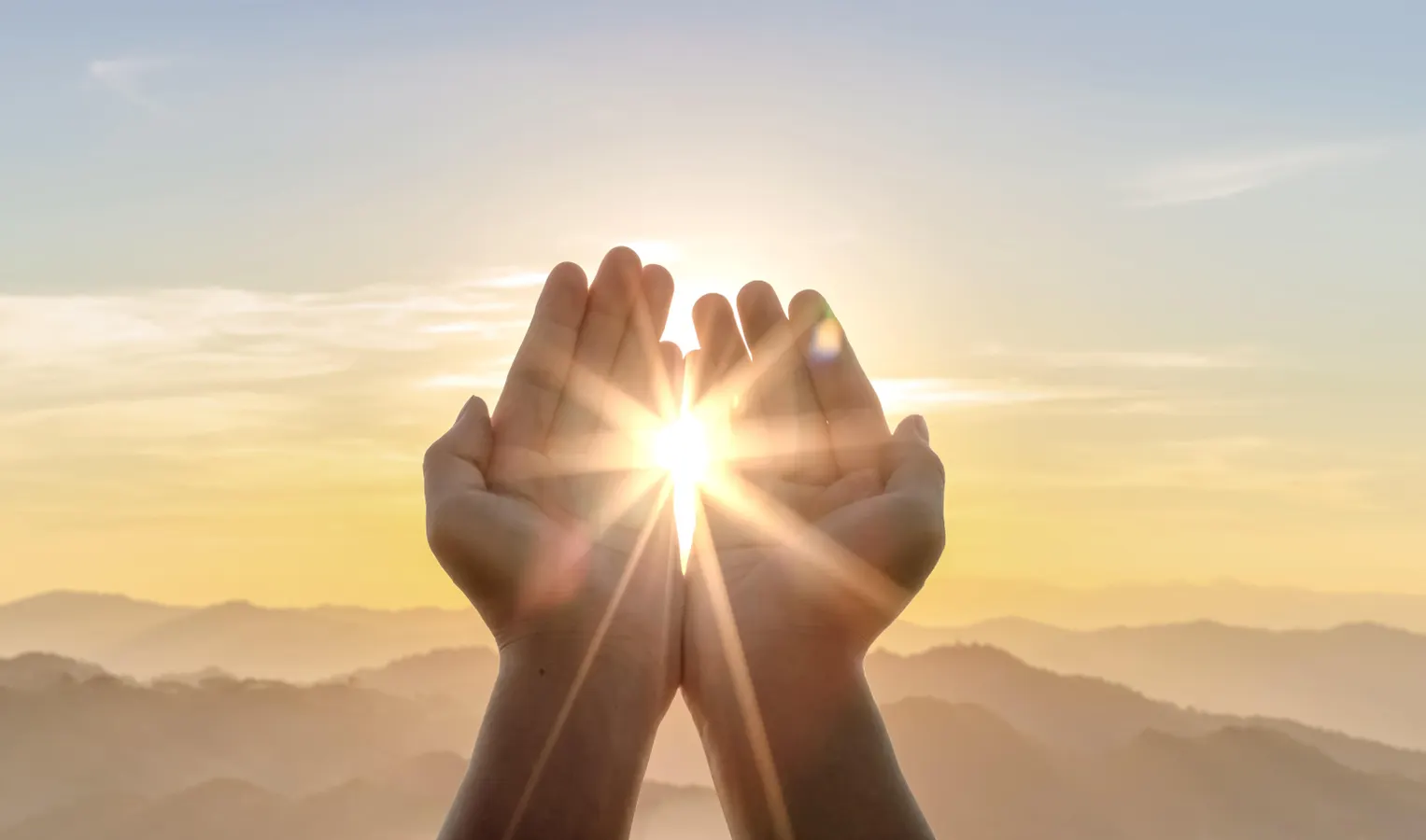

Faith can steady us in uncertain times and lead us back to forgiveness and gratitude when our strength is gone.
getty
Hawaii is six thousand miles and a lifetime away from Cambodia.
My parents carried me out of the killing fields when I was a baby. Decades later, the quiet of these islands has helped me understand how deeply that flight influenced the life we built in America.
I have no conscious memory of our refugee years, but my family never forgot what those years taught us. We stayed close and worked hard. We kept moving because we knew how suddenly security could vanish.
My parents put in long hours to give their children a future. I learned to make myself useful and prepare for whatever came next. Those habits took me through school, into work with children and families, and eventually into building a nationwide behavioral health company.
For years, that pace made me feel secure. Eventually, I could no longer slow it down. I developed ulcers and lived with exhaustion. Ami and I loved each other, yet work had taken away the attention our marriage needed.
Arriving at Awareness
In Hawaii, I began to see the connection. The past had followed me into my work and into the way I thought about money and success. Even when nothing was wrong, my body remained ready for the next demand. I had called myself healthy because I could still function and think clearly. The rest of my life contradicted that judgment.
Over the past year, this blog series has explored nine dimensions of well-being: intellectual, emotional, spiritual, physical, environmental, financial, creative, occupational, and social. We studied each one separately. In practice, they overlap.
A bad night can shorten our patience by breakfast. Money worries seep into unrelated conversations, and job strain often comes home with us. The room around us can keep the body tense or help it settle. Sometimes music or a few words on a page bring up feelings we had pushed aside.
Often, someone close to us notices the change first—the withdrawal, the weariness, the shorter temper. We need that outside view. We also need enough quiet to examine our own habits and name what we are feeling before we react. My faith has steadied me in uncertain times. It has also led me back to forgiveness and gratitude when my own strength was gone.
Through both work and personal struggle, this interconnectedness became clear. I trained in psychology and behavior analysis, spent years helping children and families, and later studied lifestyle medicine at Harvard. Research and practice taught me about the brain’s ability to adapt and the damage prolonged stress can do. I saw how much our daily lives affect our bodies and minds. My Christian faith kept reminding me that no symptom or diagnosis tells the whole story of a person.
Knowledge Isn’t Enough
Still, training did not change my life for me. I had to listen to my own body and face what the pace of work had done to my marriage. Financial success had eased some burdens, but it had not settled me. Knowledge explained the pattern; changing it required choices I had to make.
How we eat, move, and rest is part of health. Health also includes what work is doing to us, how money affects our sense of safety, the places we inhabit, the people around us, and what we believe. When one part of life suffers for a prolonged period, the effects show up elsewhere.
Most people begin with what they can no longer ignore. They may be exhausted, or conversation in the marriage has nearly stopped. Work has become hard to bear. Perhaps nothing they once enjoyed holds their interest anymore. The first sign may come through the body, the emotions, money, or faith, while pointing toward a larger problem.
My team and I developed the Well Method and The Well Club so people would have a place to examine the bigger, interconnected picture. Members use emotional check-ins to name what they are feeling. They can speak honestly in groups or meet one-on-one with a coach. We do not ask anyone to overhaul a life all at once. We start with what needs attention and work from there, with help when the picture has become difficult to understand alone.
One Step At a Time
As this series ends, I think again of my mother. Years after our escape, we sat over coffee in Hawaii with the surf rolling beyond the window. She told me that during our flight from the killing fields, she had seen a man standing on a ridge above the chaos. He seemed almost calm, simply watching—a news reporter, perhaps. She waved and pointed toward the baby in her arms. If she and my father fell, she hoped someone would know I was there and find a way for me to live.
Her prayer was simple and desperate: Please, please, please don’t let my baby boy get hurt.
Another bomb fell behind her, and she heard my father calling for her to run. He led us toward the Thai border and later returned to help other relatives make the same dangerous crossing. My parents could not know where we would find refuge or what kind of life awaited me. They knew only that I had to make it.
One step at a time, my mother carried me to safety while my father kept us moving toward the crossing. I’ve been given a life they once feared would end before it could begin. In gratitude, I hope to honor that gift by helping others live with greater care for the whole of who they are.















Leave a comment