


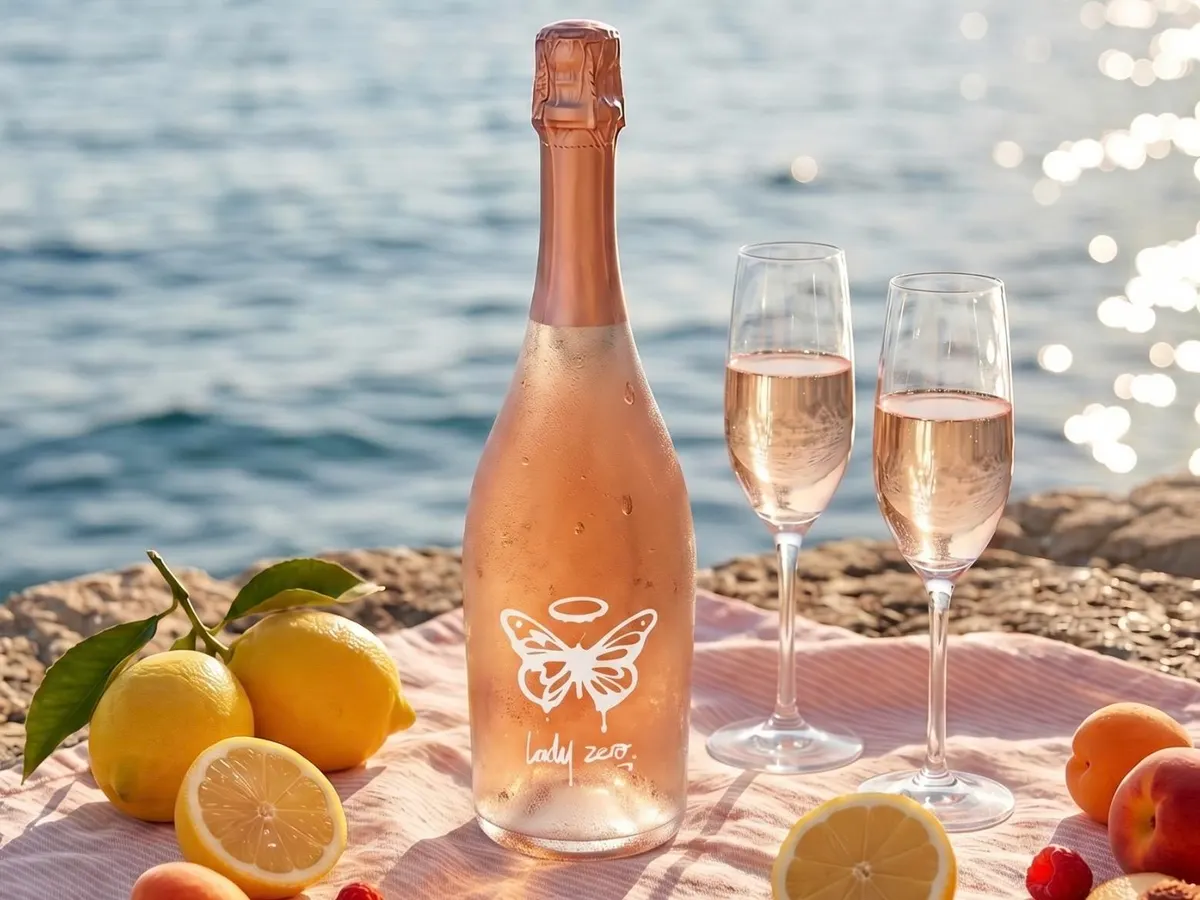

A summer-ready expression of Lady A, reflecting the growing appetite for more flexible drinking choices across social occasions
Lady A
Rosé may have lost some of its “Rosé All Day” swagger, but commercially it is proving rather harder to dismiss.
Volumes are declining at around 1.7% annually, compared with approximately 3.8% across still wine overall, while premium rosé continues to show resilience as cheaper and boxed propositions come under greater pressure. Consumption is becoming less seasonal too, with rosé increasingly earning its place at the table beyond the traditional summer months.
The social-media moment may have moved on; the consumer has not. Whispering Angel, Minuty and Wölffer Estate’s Summer in a Bottle have helped establish a premium customer buying provenance, place and presentation alongside the wine itself. Provence pale remains enormously influential, but tastes are broadening towards deeper, more complex rosés, while the Saint-Tropez tradition of rosé piscine, premium rosé served over ice, has travelled rather well beyond the Riviera.
And just as rosé grows up, something interesting is happening to the person drinking it.
Drinking Less Without Leaving The Occasion
Set for the social occasion, Lady A shows how alcoholic and alcohol-free options can increasingly sit comfortably side by side.
Lady A
The global non-alcoholic wine market was valued at $2.5 billion in 2025 and is forecast to grow at 10% annually through 2033, according to Grand View Research. More than three quarters of consumers buying alcohol-free wine also buy alcoholic wine, while sparkling accounts for close to 60% of the alcohol-free market.
It is that crossover I find far more interesting than simply being told consumers are drinking less.
Consumer behaviour has never fitted particularly obediently into the boxes created for it. Someone can love wine and want to drink less of it. They can be health-conscious and still want Champagne. They can choose 0% at lunch and rosé that evening without seeing any contradiction whatsoever.
Moderation is increasingly less about declaring yourself a drinker or non-drinker and more about having the freedom to decide what works in that moment.
That makes the arrival of Lady Zero interesting. Lady A, the Provence rosé originally created exclusively for Soho House, has moved into the category with a £20 alcohol-free sparkling rosé made in Provence.
“What we’re seeing is that moderation is increasingly about choice rather than abstinence,” Ben Caring, Co-Owner and CEO of Drink Lady, tells me. “Consumers don’t necessarily define themselves as drinkers or non-drinkers anymore, they might enjoy a glass of rosé one evening and choose alcohol free the next, or even alternate between the two on the same occasion.”
Thinking which shaped the product itself.
“We didn’t see alcohol free as a separate consumer or a separate occasion; we saw an opportunity to give our existing and future consumers more choice.”
The Premium Customer Hasn’t Gone Anywhere
There is something important here for hospitality in particular when a customer decides they have had enough alcohol for the evening, what happens next?
Too often, the experience changes with the drink. The carefully selected wine, beautiful bottle, provenance and sense of discovery disappear and the customer is directed towards something altogether more functional.
The opportunity in 0% isn’t confined to accommodating somebody who doesn’t drink. There is significant value in continuing to delight the person who isn’t drinking alcohol at that particular moment.
Lady A already understands the power of occasion. Its original Grenache-Cinsault rosé has built its position through premium hospitality internationally, with its pale Provençal colour and butterfly artwork by contemporary American artist Mr Drip creating a recognisable identity.
Lady Zero retains that visual language, alongside citrus aromas and strawberry and white peach flavours.
“Lady A has always been about sociability, enjoyment and being part of the occasion,” Caring says, “and we wanted to create an alcohol free option that could sit naturally alongside the rest of the range rather than feeling like a compromise.”
0% Has Grown Up
Compromise has been one of the longstanding challenges for alcohol-free wine. Removing alcohol can affect body, texture and the length of flavour, and sparkling has an interesting advantage here. Bubbles bring sensation and theatre as well as many of the cues we already associate with celebration. Add rosé, with its colour, freshness and lifestyle currency and the intersection becomes particularly interesting.
Consumers are harder to impress now too. There was a point when finding a credible alcohol-free alternative felt like progress in itself. The shelf has moved on, and so have menus and expectations.
“For us, the biggest gap was that alcohol free wine too often felt like a compromise,” Caring explains. “Consumers might choose it for a functional reason, but that didn’t necessarily mean it delivered the same sense of occasion, enjoyment or reward as pouring a glass of wine.”
With Lady Zero, the ambition was to retain “the taste, the ritual, the bubbles, the bottle on the table and the social experience around it.”
The Value Is In The Choice
The growth of better 0% options gives people another way to construct the occasion they want rather than accepting the traditional choice between drinking alcohol or opting out.
Caring makes the point that the product has to earn a place beyond the moments traditionally associated with alcohol-free drinking. “Ultimately, consumers will come back to it because they enjoy drinking it, not simply because it contains 0% alcohol.”
That is where zebra striping becomes commercially interesting. Consumers are no longer behaving in neat drinking tribes, and the opportunity is much bigger than the alcohol-free occasion alone.
The brands that win will be the ones that understand the repertoire and give people a reason to stay with them, whatever they choose next.














Leave a comment