


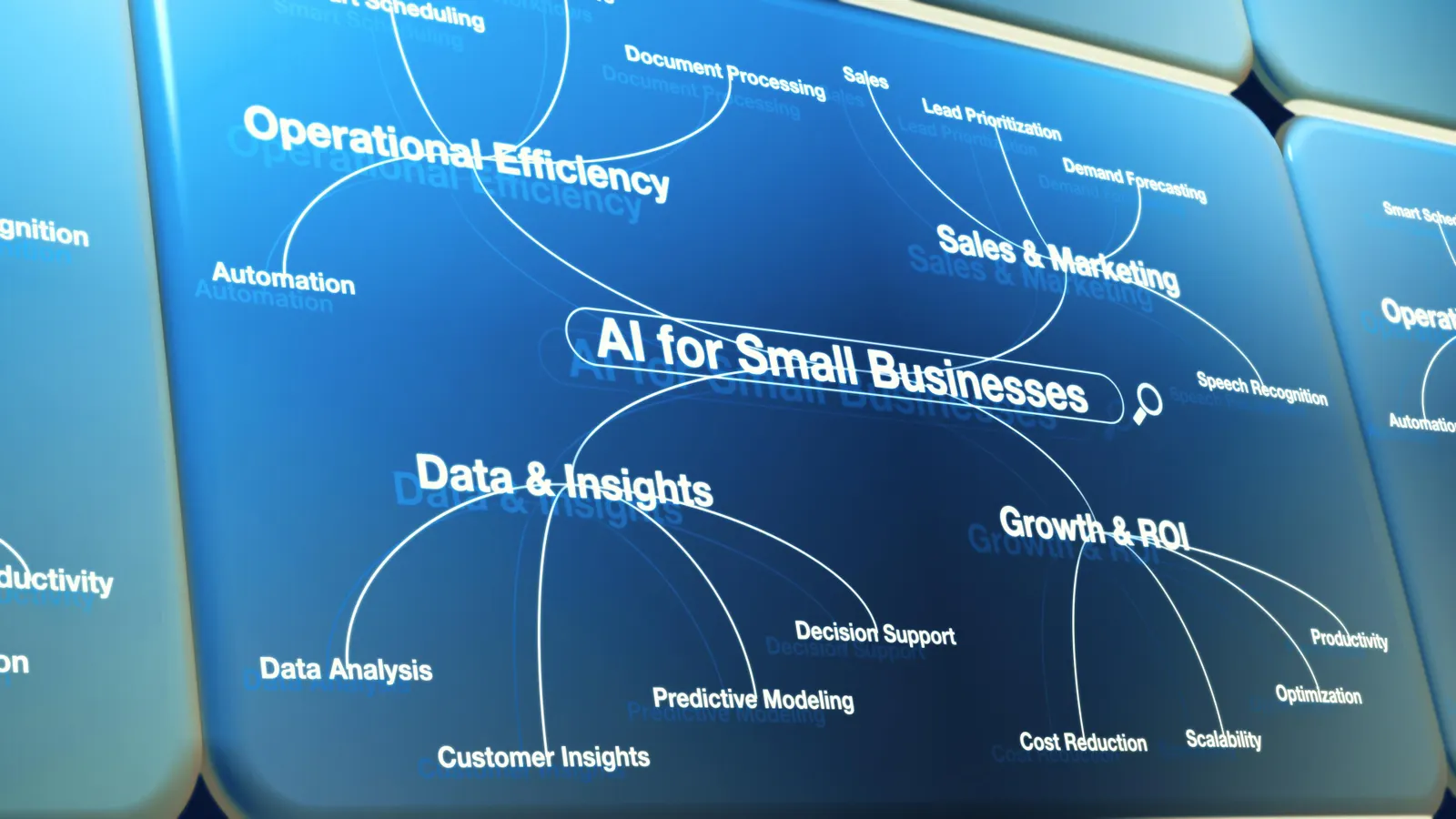
New studies from two different banks show AI adoption rates among small businesses appear to be ramping up, despite widespread uncertainty among entrepreneurs regarding the technology.
getty
There’s an artificial intelligence divide among the American small business community. A new survey of 200 small business owners finds virtually all (99%) are using artificial intelligence to some limited degree, and a minority report heavy use and big benefits.
Yet technology and AI stand out as the areas that the highest share of business owners say they feel “unprepared” to deal with. For example, while only 29% said they felt unprepared to deal with e-commerce and 35% with staffing issues, 40% said they were unprepared to deal with AI adoption and 43% with some aspect of technology or operations. (Overall, a whopping 97% “feel unprepared in at least one key area of their business,” according to the study, conducted by Wakefield Research for TD Bank.)
While 61% said their use of AI had risen “somewhat” over the past six months, only 17% said it was significantly higher. The biggest barriers small businesses say prevents them from wrapping both arms around artificial intelligence? Almost a third, 31%, said it was concerns related to data privacy or security. Nearly a quarter, 24%, cited a lack of employee training. Other rationales included the cost, lack of employer knowledge regarding AI systems, and uncertainty over how AI would add value to the business.
How has AI helped small business users? In the survey, 57% of respondents said that utilizing AI saved time, 55% said it had improved cash flow decisions, 52% said it had helped increase sales and revenue, 42% said it was helpful in reducing overhead, and 41% said it had helped in detecting fraud.
Among small businesses that have willingly embraced AI, 17% reported using the technology had allowed them to significantly increase head counts–an outcome that other small business AI boosters have previously touted. While there are growing concerns about economy-wide job loss, particularly in certain white-collar and entry level positions, that doesn’t mean that specific small businesses which successfully harness AI can’t grow their share of the revenue pie enough to hire more workers.
Indeed, there’s evidence in the TD Bank study that businesses do see themselves–happily or not–in a race for AI adoption. Some 62% of the businesses said they expected to seek new financing in the coming months. Of those, the top reason for needing financing (23% named it), was new equipment or technology; the second most cited reason (at 20%) was the need to invest in AI. Only 8% said they’d be using the financing for a new location or market.
The need to cover AI investment could spur more activity by Small Business Administration deal brokers and lenders. A tightening of SBA lending criteria led to a decline in business loans guaranteed by the agency between the 2025 and 2026 fiscal years. The agency recently revamped its regulations that govern federal business loans–in general, it tightened the rules further, though at the last minute it decided to keep a low paperwork option for small loans below $350,000.
Similarly, a study from Citizens Bank released last month also found that small businesses are ramping up spending on technology and AI in general despite misgivings. In the bank’s fourth quarter Business Pulse, it also found that, among small firms that have embraced AI, 94% have eliminated spending on at least one outside service.
The survey found that, among small businesses using AI, 60% cut spending on marketing services, 39% slashed budgets for external data and analysis, and 38% cut expenditures on bookkeeping or accounting. It also found that, among small firms using AI for multiple purposes, 44% are expecting to hire more full-time staff, compared to 22% of all small businesses surveyed that said they’re also likely to hire more employees.
AI adoption has also had an impact on small business optimism in general, the Citizens Bank study found. Among companies that have embraced AI, 74% are expecting revenue increases in coming months, compared to 54% overall that have the same expectation.
In the TD Bank survey, it’s clear that even those who aren’t seeing huge benefits from AI, haven’t given up on it. When they were asked how they’d want to utilize AI but haven’t been able to figure out so far, 50% said they’d want AI help on improving productivity, 47% said they’d want better customer service, 37% said they’d ask for increased sales, and others said they’d want AI assistance with managing staffing needs, managing finances, attracting new customers, preventing fraud, and cutting costs.
Want to be more successful? Subscribe to the weekly Forbes Careers newsletter to get insider tips and insights.
















Leave a comment