


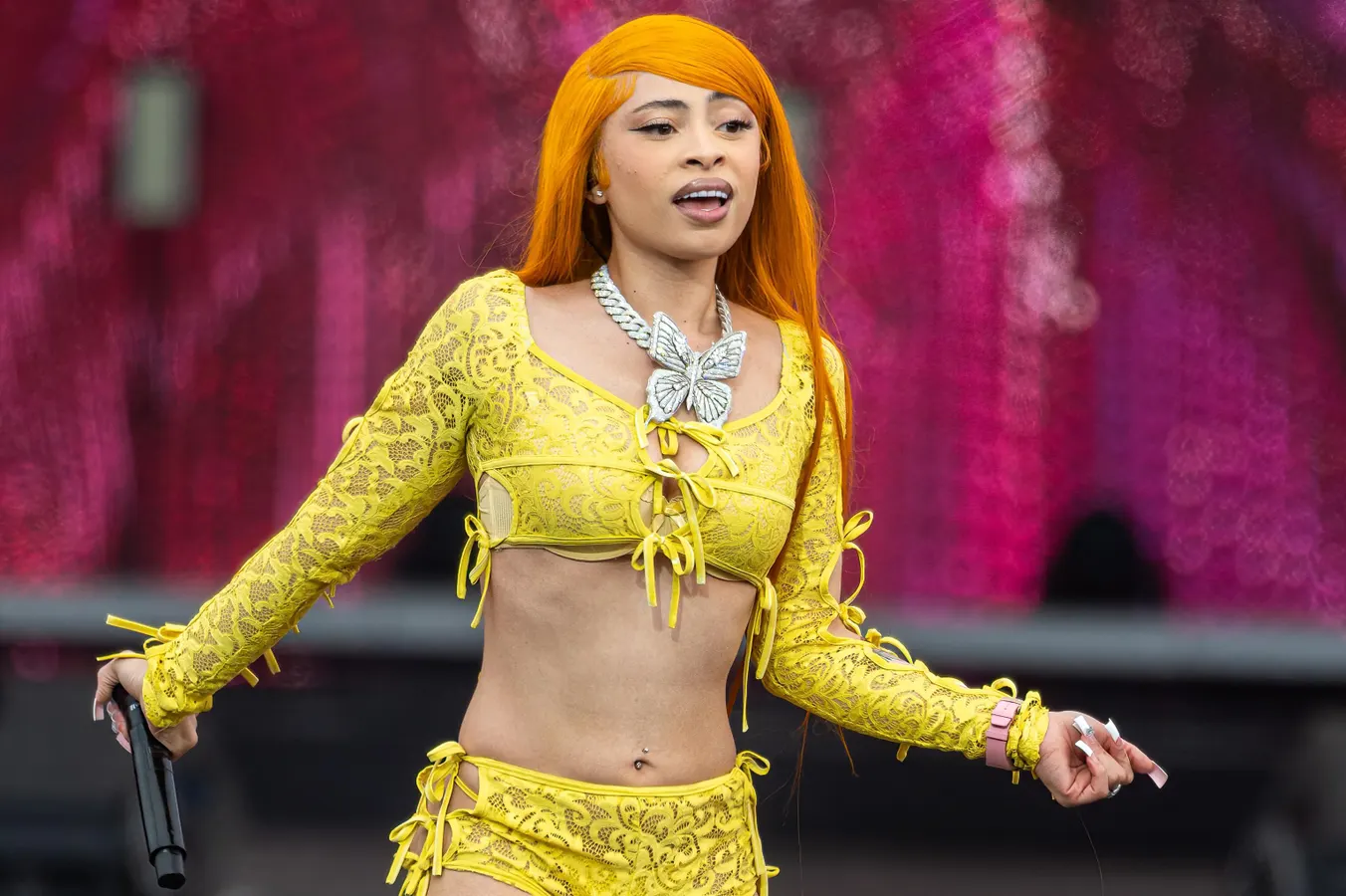

LONDON, ENGLAND – JULY 12: (EDITORIAL USE ONLY) Ice Spice performs during day one of Wireless Festival 2024 at Finsbury Park on July 12, 2024 in London, England. (Photo by Joseph Okpako/WireImage)
WireImage
A chain dripping in diamonds and worth tens of thousands of dollars can be more than a flex. In music, jewelry is a language of its own—a symbol of success, a canvas for personal stories and a signature of an artist’s identity. From hip-hop’s diamond-encrusted pendants to the show stopping pieces worn by pop, rock and country stars, what musicians wear can set trends, turn heads and make waves far beyond the stage.
Behind the glitz and gleam is a multibillion-dollar industry where celebrity commissions turn personal style into serious business—and custom jewelry into a potential investment. Beyond the gold and diamonds lies a deeper value: the story set in stone, the heritage woven into its design and the cultural power of the artist wearing it. More than a flex, a chain can become a lasting asset, holding financial value long after the flashbulbs fade.
LAS VEGAS, NV – SEPTEMBER 12: Recording artist Drake attends the after party for his concert at Hakkasan Las Vegas Nightclub at MGM Grand Hotel & Casino on September 12, 2016 in Las Vegas, Nevada. (Photo by Gabe Ginsberg/Getty Images)
Getty Images
How Celebrity Jewelry Became Big Business
Jewelry has long been a symbol of success in music, with artists using custom pieces to express everything from personal identity to cultural heritage. For designers, those commissions offer a chance to turn an artist’s influence into a lucrative business opportunity.
The global jewelry market is a major economic force. Fortune Business Insights valued the market at $242.79 billion in 2025 and projects it will reach $387.36 billion by 2034.
Moreover, music is a significant cultural engine within that luxury landscape. The Recording Industry Association of America reported record U.S. recorded music wholesale revenue of $11.5 billion in 2025. While music revenue and jewelry sales represent different markets, artists’ reach across recordings, live performances and social media creates opportunities for their personal style to reach audiences globally.
For Leo Stark, founder of Kejsar, a custom jewelry business that works with artists, these pieces represent more than aesthetics. “It represents success,” he says, comparing jewelry to the medals athletes earn. Custom designs can also reflect an artist’s roots, neighborhood or record label, turning personal identity into something tangible.
But creating jewelry for musicians takes more than precious materials and an eye-catching design. It begins with understanding the person behind the music.
Leo Stark, founder of Kejsar, works with Moroccan rapper ElGrandeToto to design a custom jewelry piece tailored to the artist’s vision.
(Photo Courtesy of Kejsar)
When Jewelry Becomes Identity—And Investment
Creating custom jewelry for artists starts with understanding their vision and what sets them apart. Stark researches each artist’s work and personal story to inform the design. “I usually get some kind of vision directly from the artist, then it’s time for me to do some homework on their music, articles and Instagram to add some personal details to the project and getting to know what would suit them best,” he says.
That research shapes the cultural references and symbols incorporated into each design.
Materials and styles are evolving, too. While gold and diamonds remain staples, colored gemstones are gaining attention, and rising gold prices are prompting some buyers to consider silver. According to the World Gold Council, global gold jewelry demand reached a record $172 billion in value in 2025, up 18% year over year, even as the volume purchased fell 18% to 1,542 tonnes. Rising prices are reshaping the economics of jewelry. “The latest trend is to use colored gemstones a lot more than just white diamonds, and I believe that trend will continue,” Stark says.
As artists seek to distinguish themselves through style as well as music, originality matters. Stark says designers continually develop new patterns, diamond shapes and settings, while cultural and religious symbols add personal meaning.
Beyond The Diamonds: How Jewelry Tells A Story
Beyond its craftsmanship, jewelry can carry deeply personal meaning. Stark recalls creating a memorial pendant for Moroccan rapper ElGrandeToto in honor of his late mother, Saida, who died when he was young. The piece later gained traction on social media, appearing in visuals at some of Morocco’s biggest concerts and on national television. “It was a deeply personal piece for the artist,” Stark says.
A custom memorial pendant created for Moroccan rapper ElGrandeToto in honor of his late mother, Saida, transforming jewelry into a deeply personal tribute.
(Photo Courtesy of Kejsar)
Stark also cites a pendant created for Danish artist Icekiid featuring Gye Nyame, a traditional Adinkra symbol from Ghana, his home country. Representing the power of God, the symbol connects the piece to a heritage that travels with him, even far from home.
In these moments, jewelry becomes more than adornment. It becomes a way to carry faith, heritage and personal identity into the spotlight, transforming a precious object into something deeply meaningful to the person wearing it.
Danish rapper Icekiid showcases his custom jewelry by Kejsar, featuring designs that reflect his personal style and cultural identity.
(Photo Courtesy of Kejsar)
Grammy-nominated producer Peter Munzo says his Bighead Music Group chain recognized his behind-the-scenes work. “Receiving a chain made me feel like I was part of a family and that the work I was putting in meant something to the people around me,” he shared. “As a producer, a lot of what we do happens behind the scenes, so recognition means a lot. I think artists spend so much on chains because they represent success in a way you can actually wear.”
The Real Cost Of The Flex
Behind the diamonds, custom jewelry is a high-value business. According to Stark, a typical custom chain made by Kejsar costs approximately €50,000 (about $56,000), though, as he puts it, “it really has no limits,” with some clients spending “ridiculous amounts.” Clients typically pay a deposit followed by the remaining balance when the jewelry is finished, though some pay in full upfront.
These commissions require more than precious metals and gemstones. They demand design expertise, meticulous craftsmanship and the ability to translate an artist’s vision into a piece that feels entirely their own.
Celebrity commissions represent one facet of the global jewelry economy, illustrating how a custom piece can serve as a luxury product, cultural statement and potential long-term investment.
In music, the flex captures attention. For designers, the value extends beyond the moment, where craftsmanship meets identity and personal stories become part of the shine. Though jewelry’s financial value may fluctuate, its significance as a collectible, a marker of success or a link to personal roots can outlast the trends that shape the market.













Leave a comment