


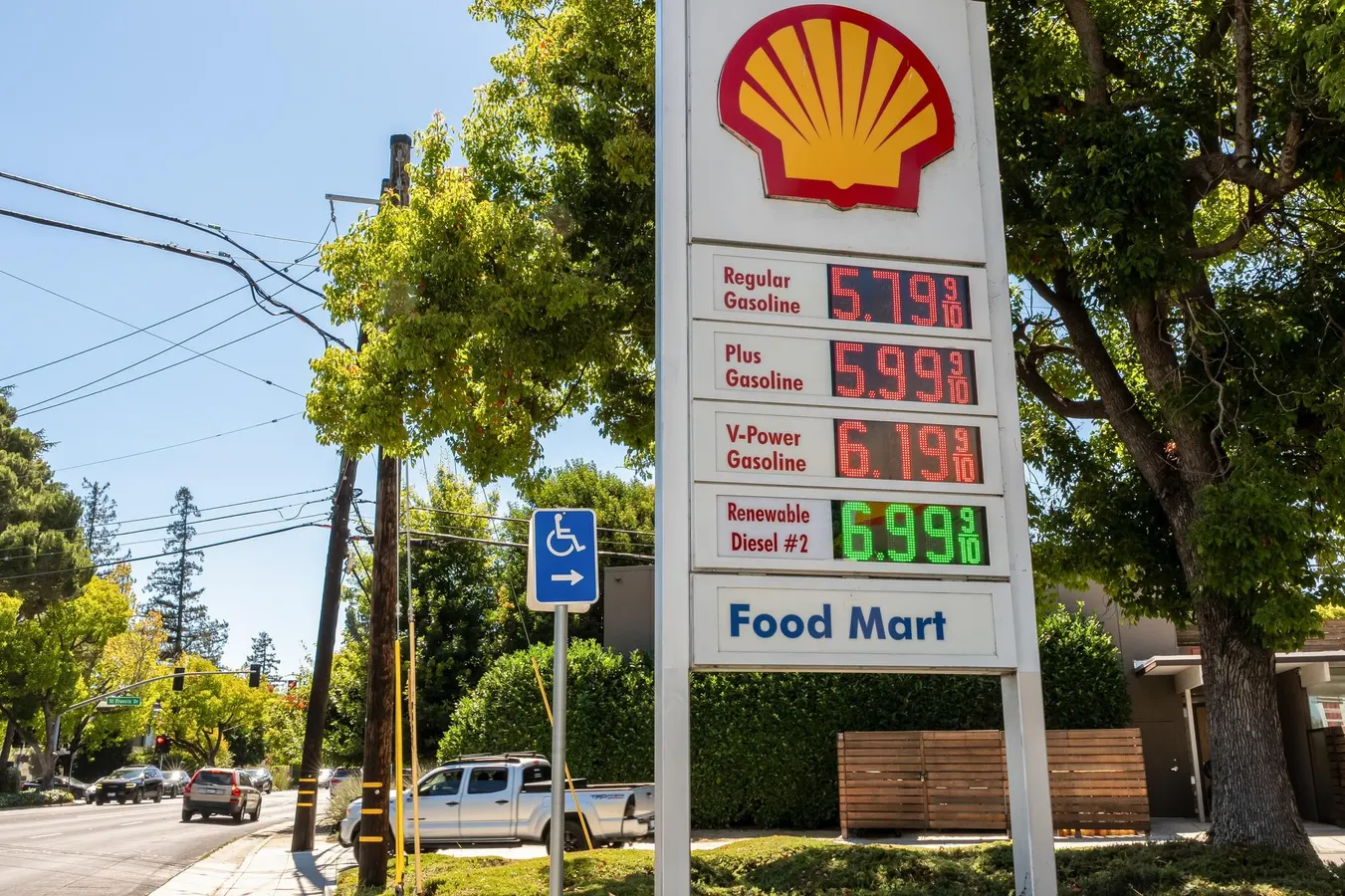

A sign displays fuel prices at a Shell gas station in Palo Alto, California, US, on Tuesday, July 21, 2026. US gasoline prices at the pump climbed back above the $4-a-gallon mark as the Middle East conflict intensified, threatening to exacerbate a global crunch for transportation fuels and stoke inflation. Photographer: David Paul Morris/Bloomberg
© 2026 Bloomberg Finance LP
Tuesday’s White House meeting with executives from big and small refiners called by President Donald Trump apparently ended without tangible result. The meeting had been advertised in advance by White House as a search for solutions to wring more refined products out of the domestic refining industry. But it broke up without holding a press availability, a tip-off that attendees had been unable to come up with real solutions.
This is exactly the result everyone should have expected for reasons which are fairly obvious. After all, it is hard to wring more production out of a domestic industry that has been running at around 97% capacity – well above historic norms – for the last 6 months. It’s like trying to extract blood from a turnip.
Increasing Refining Capacity Takes Years And Billions
It is also unreasonable to expect the industry to be able to increase its overall capacity anytime soon. After all, the federal government has made it near-impossible to build any new greenfield refineries for almost half a century now due to heavy EPA regulation and glacially slow permitting timetables. If Mr. Trump wants that to change, he’d do better to lean on EPA Administrator Lee Zeldin than browbeat refining executives.
One company I wrote about earlier this year – America First Refining – is building a new plant at the Port of Brownsville, Texas, with plans to go live as soon as 2027 thanks in large part to a major investment by India-based Reliance Industries. But even that company consumed seven years in obtaining its permit from the EPA and Texas Council on Environmental Quality. Amazingly, that is near record time for getting that done.
Getting the permits in place, along with the capital dollars needed for a big expansion of existing facilities is somewhat more doable for U.S. refiners, and many have done so over the last four decades. But even doing that is a major endeavor consuming years of time and billions of investment dollars. But several refiners have successfully brough in major expansions in recent years. For example, ExxonMobil added 250,000 barrels of new capacity designed to refine Permian Basin light, sweet crude at its Beaumont facility in 2023, making it the nation’s fourth largest refinery. So, it can be done – it just can’t be done next week, or even next year.
Some are suggesting that President Trump could help ease gasoline and diesel prices at the pump by imposing an executive order temporarily banning exports of those products. While it is true that tight domestic inventories of those products – especially diesel – are partly the cause of lingering high retail prices, such a presidential order would likely cause major economic disruptions across Europe and Asia, where supplies are even tighter. Such disruptions would negatively impact the U.S. economy as well. It’s a zero-sum game.
No Easy Answers To The Refining Dilemma
Simply put: There are no easy answers here.
In reality, the multiple supply crises related to gasoline, diesel, jet fuel and other refined products have war as their origins. The Russia/Ukraine war has done the most to create the crises related to diesel and jet fuel as successful Ukrainian drone strikes on an array of Russian refineries has force that country to dramatically cut its exports of those fuels. The supply crisis related to gasoline is largely an artifact of global disruptions stemming from the Iran Conflict.
Pump prices for gasoline tend to rise and fall in conjunction with crude oil prices. Crude jumps whenever the United States and Iran resume fighting, as we witnessed again this week after Iranian tanker attacks in the Strait of Hormuz. Drivers have seen the same pattern many times since early March. AAA estimates the national regular average at over $4 per gallon, with diesel hovering near $6. No amount of White House pressure on Gulf Coast refiners can change the risk premium oil traders attach to a shooting war astride one of the world’s major export routes.
Last Friday’s Venezuela deal announcement is being sold in some quarters as if extra heavy crude will magically appear at U.S. refinery loading docks next week. That isn’t going to happen. That deal – as I explained in a previous piece – is a long-term energy security play. If all goes to plan, it can make a real difference in years to come. It will have no meaningful effect on gasoline prices in the coming days and weeks.
U.S. Refining Is Not The Enemy
None of this means President Trump is wrong to look for ways to lower fuel prices. Voters do pay attention to prices at the pump and tend to blame any current occupant of the White House and his political party when they move higher.
The error here is aiming the pressure at the wrong lever. U.S. refiners aren’t sitting on some secret store of spare capacity they refuse to deploy out of spite. They are running flat out, delaying needed maintenance turnarounds, and telling the administration that EPA biofuels blending requirements are adding to their costs. The president would be more productive to treat these realities as good advice rather than insubordination.
The U.S. refining industry is not an enemy of the people or the White House. It is in fact the industry which has worked overtime to ensure American drivers were able to enjoy their vacations throughout this summer without suffering even spot shortages of fuel for their cars. Citizens in other countries around the world have not been so fortunate.
If the goal here is lower prices by November, then use the levers that are available rather than pounding on executives to wring more blood out of their company turnips. If the goal is more refining capacity, then find ways to fix the permitting process that is set up to prevent it from being built.
And if the goal is to deal honestly about why gasoline and diesel prices are where they are, then start with the two major wars which have created them – not with a closed-door meeting with refining executives that ended without anyone willing to walk to the microphones and provide details about real solutions.















Leave a comment