


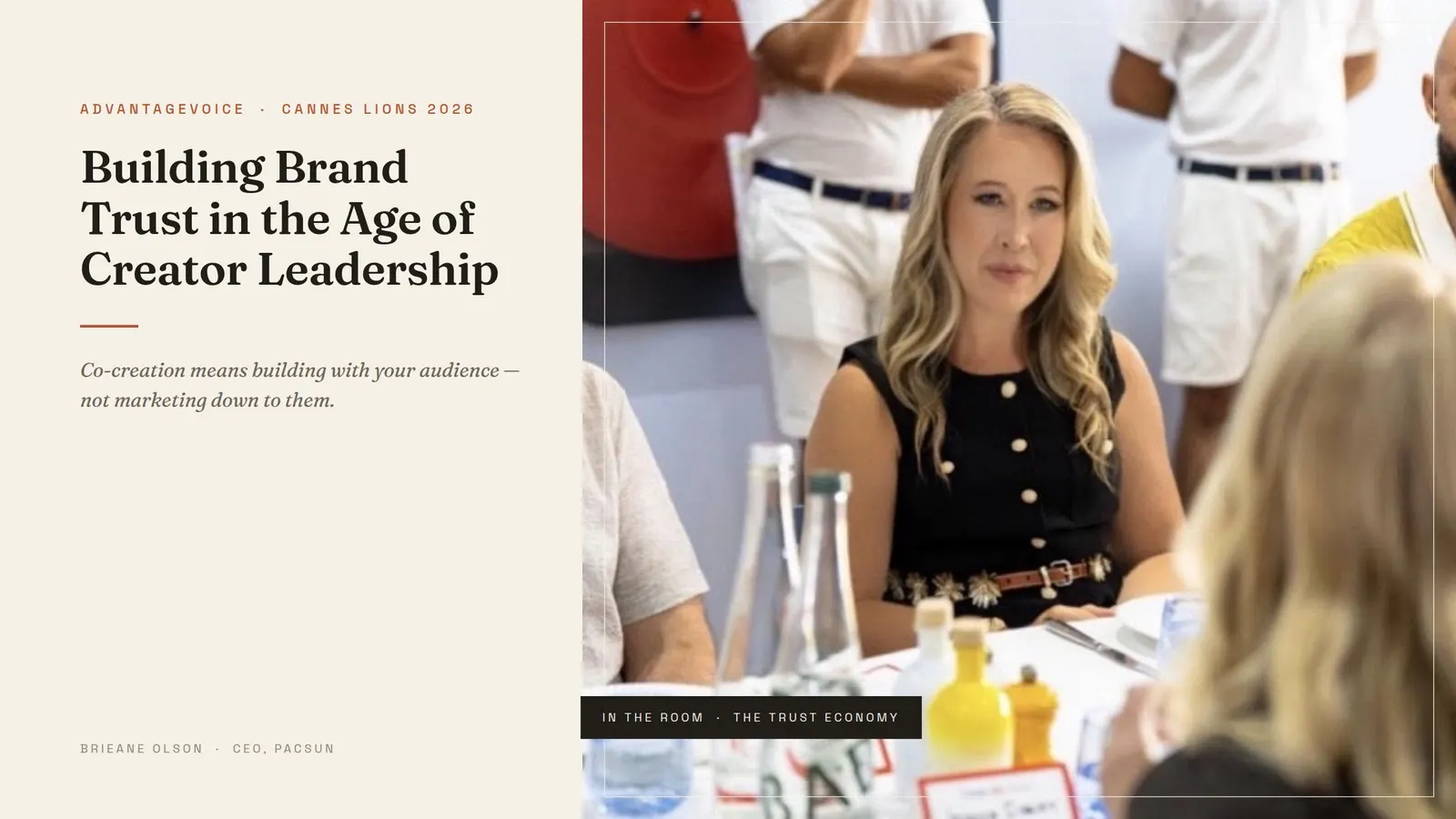

Cannes Lions 2026 was defined by thoughtful discussions centered on brand trust.
Brieane Olson
There was an undeniable change in the atmosphere at Cannes Lions this year, the annual gathering widely considered the global benchmark for creativity and brand building. More than 500 creators attended, a number of them commanding the main stage alongside the C-suite executives and CMOs who once ran the show. And instead of topics like media buying or algorithmic reach, many meaningful discussions centered on brand trust.
The challenge facing brands today is no longer just about reaching people. It’s about reaching them in a way that feels credible. We’ve entered the trust economy, and the implications for how we build brands and interact with consumers are significant.
No Longer Just a Media Partner: Creator Trust Is the New Currency
The old playbook was straightforward: Find someone with a large following, pay them to feature your product, and measure the impressions. That model is changing. “Influencers” helped brands distribute messages. Today’s creators help brands shape them. And part of what they’re shaping is brand trust, from how it’s won and shaped to what it takes to preserve it.
The proof was everywhere at Cannes. Oprah Winfrey accepted the LionHeart Award and told the room that influence is built not through scale but through intention. Meanwhile, when Jay Shetty took the stage, he emphasized consistency, noting that it’s by showing up regularly that he’s become one of the most trusted voices in personal development. Media mogul and creator alike arrived at the same conclusion: In today’s attention economy, trust is the currency that compounds the most.
Brands are picking up on the shift, with the most competitive organizations no longer asking, “Who has the biggest audience?” but “Who has earned the greatest trust?” I’m seeing this in my company as well. We are no longer partnering exclusively with celebrities, as we once did, when famous faces were the tastemakers of the time. Our research—and the broader data—confirms that younger consumers are more influenced by people they can relate to. What brands are really buying when they choose the right creator partner is credibility.
How Brands Actually Build Trust With Creators
Building brand trust alongside creators requires rethinking these relationships, shaping them to become less transactional and more intentional. We work exclusively with collaborators whose missions align with our commitment to community empowerment, accessibility, and positive cultural impact. That values-first approach ensures that every partnership strengthens the brand’s overarching purpose rather than creating disconnected promotional moments.
It also requires relinquishing control. We’ve discovered that when creators and customers self-select into partnerships because they genuinely love the brand, the resulting content and engagement is far more authentic and impactful than anything we could orchestrate. For example, we invite creators into the conversation not just to promote a product, but to help shape storytelling, inform our understanding of culture, and provide perspective on where things are heading. Co-creation, in essence, is taking your audience and not treating them as a recipient—not marketing down to them—but actually building with them.
Brand Trust Is a Practice
If I had to cite one takeaway from Cannes, I’d say it’s that brand trust is a practice, something that is built through intentional, consistent work. It can’t be bought with a flashy campaign or a single high-profile creator partnership. The brands that will hold consumer trust going forward are the ones treating creators not as a media buy, but as genuine collaborators, choosing them for shared values and giving them real creative freedom. The brands that get it right will build the kind of trust that builds communities—and keeps them coming back.













Leave a comment