


Topline
Yemen’s Iran-backed Houthi militia attacked four Saudi cities and energy facilities on Tuesday, a development that could widen the U.S.-Iran war as oil prices near $100 a barrel and threaten further disruption to Gulf energy supplies if attacks on the region’s infrastructure continue.
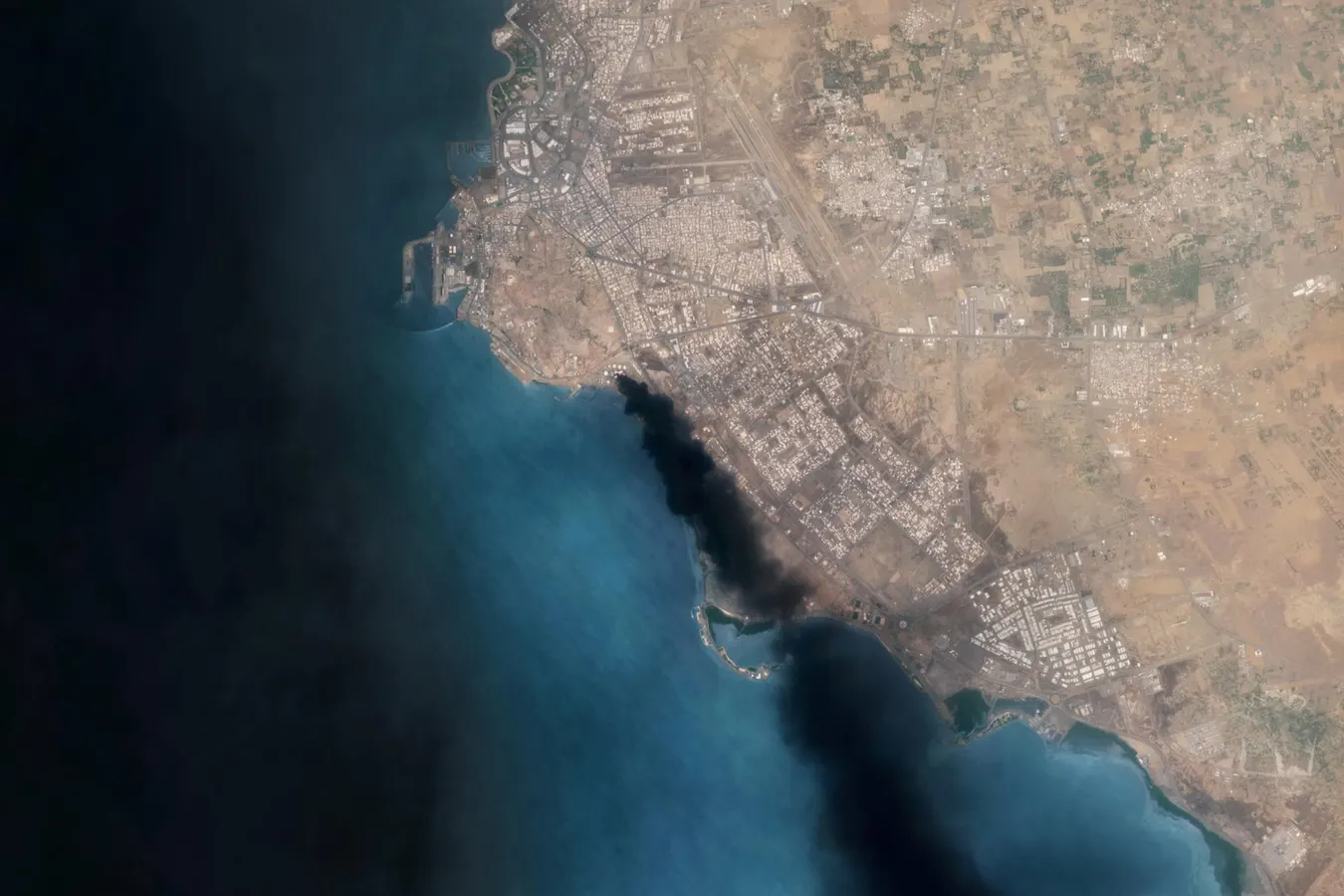
JIZAN, SAUDI ARABIA – 26 JULY 2026: Smoke plumes rise over the Aramco oil terminal at Jizan/Jazan, Saudi Arabia, after Houthi missile strikes launched from Yemen. The site is part of Saudi Aramco’s Red Sea infrastructure. The strikes are part of Houthi efforts to pressure Saudi oil flows routed through the Bab al‑Mandeb strait, a critical global shipping chokepoint. Satellite image 26 July 2026. (Photo by Gallo Images/Orbital Horizon/Copernicus Sentinel Data 2026)
Gallo Images via Getty Images
Key Facts
The Houthis attacked four Saudi cities on Tuesday, targeting energy facilities and wounding 73 people, marking an expansion of the war in Iran across the Middle East.
Brent crude neared $100 a barrel on Tuesday, reaching about $99.46, its highest since July 24, while U.S. WTI crude reached $94.73 a barrel, its highest since June 8.
Tehran has warned that Gulf energy infrastructure is vulnerable, and has threatened both “economic warfare” against the U.S. and to create a maritime exclusion zone across the Persian Gulf.
Saudi Arabia is one of the world’s largest oil producers, and sustained attacks on its energy infrastructure could remove additional crude or refined fuel from global markets, with Tuesday’s attacks already halting some operations.
The Houthis have threatened shipping at the mouth of the Red Sea, meaning the escalation could put another route for Middle East energy shipments under pressure as traffic continues to be significantly slowed in the Strait of Hormuz.
U.S. stocks fell on Tuesday as higher oil prices worsened inflation concerns, and if oil prices remain up long-term the Federal Reserve could be moved to keep interest rates high.
KEY BACKGROUND
The Houthis are based in Yemen and receive substantial military, financial and logistical support from Iran. Saudi Arabia is one of the top oil producers, ranking third in crude oil production, so sustained attacks on its energy infrastructure could remove additional crude or refined products from global markets. Traffic through the Strait of Hormuz also slowed on Monday after Iran threatened retaliation for further U.S. attacks, in addition to the Houthis targeting shipping around the Red Sea. The Federal Reserve is already weighing whether to raise interest rates in September after a stronger-than-expected August jobs report, and rising oil prices could add to inflation pressure.
WHAT WE DON’T KNOW
Saudi Arabia halted operations at some energy facilities on Tuesday after the attacks, but it is not yet clear how much energy production was affected.
FURTHER READING
Buckle In America — Iran War Costs Are Steep And Growing (Forbes)
















Leave a comment