


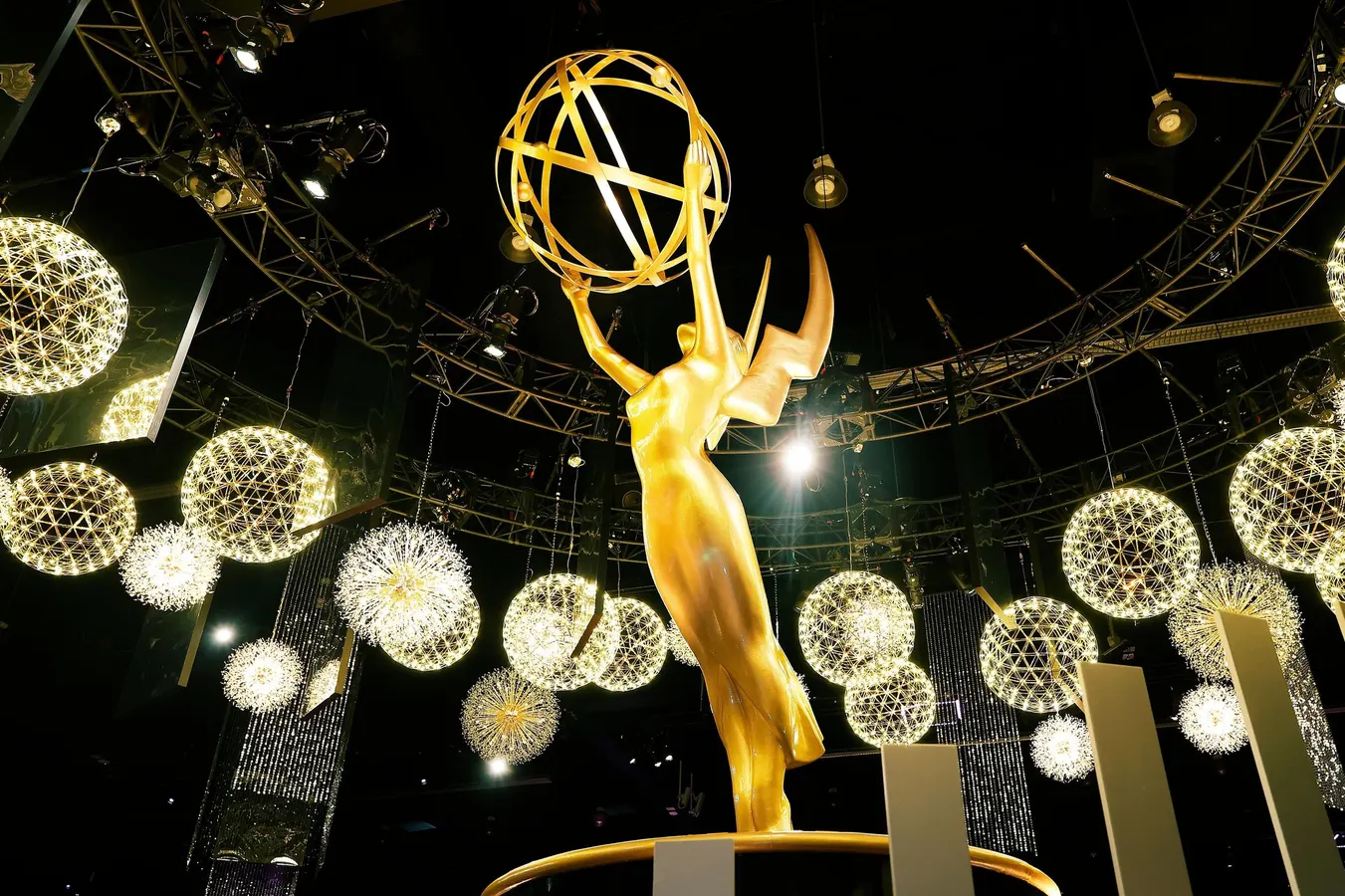

LOS ANGELES, CALIFORNIA – SEPTEMBER 11: A view of the Emmy statue is seen during the 77th Primetime Emmys Press Preview at Peacock Theater on September 11, 2025 in Los Angeles, California. (Photo by Frazer Harrison/Getty Images)
Getty Images
The 78th Primetime Emmy Awards, hosted by Mariska Hargitay, air September 14 on NBC. But the most important negotiation happening around the biggest night in television is about who gets to broadcast the show next, not who wins.
Since 1995, the broadcast of the Primetime Emmy Awards has rotated under a “wheel deal” among ABC, CBS, Fox and NBC. The current deal expires this year.
The Television Academy must decide what broadcasting looks like moving forward at a moment where last year’s show drew 60.9 billion potential impressions on social media and only 7.42 million broadcast and streaming viewers.
The Deal That Built The Modern Emmys
The Primetime Emmy Awards bounced between exclusive arrangements and rotating deals for decades.
When Fox locked up exclusive rights from 1987 to 1992, ratings dropped. When ABC got exclusivity from 1993 to 1994, there was concern that rival networks would be less likely to promote the show. The Television Academy learned to give everyone a turn, so everyone stays invested.
The wheel deal has been in effect since 1995. Each network reportedly pays around $10 million annually in license fees, plus production costs when it’s their turn to air. In exchange, the networks receive promotional leverage and industry goodwill.
The arrangement worked well for a world where television meant broadcast. But that world has changed.
Why The Old Deal No Longer Fits
Last year, the four broadcast networks under the wheel deal—ABC, CBS, Fox and NBC—received a combined total of 99 Emmy nominations, whereas HBO / Max received 142, Netflix received 120 and Apple TV+ received 79.
NBC won 11, CBS won 4, ABC won 3 and Fox did not win any. HBO / Max won 30, Netflix won 30 and Apple TV+ won 22.
The broadcast networks are paying millions to celebrate a night they’re largely losing. That tension alone could be enough to force a renegotiation. But the more fundamental problem is where the audience currently lives.
7.42 million people watched the 77th Primetime Emmy Awards on CBS and streaming on Paramount+. 60.9 billion potential impressions happened on social media platforms like TikTok and Instagram, where acceptance speeches, red carpet moments and viral clips traveled instantly and, in some cases, without any formal arrangement or revenue sharing with the Television Academy.
The broadcast deal was built for the 7.42 million broadcast and streaming viewers. The next deal has to reckon with the 60.9 billion potential impressions on social media.
What’s Reportedly Being Discussed
The Television Academy has already held talks with broadcast networks and streamers, according to Deadline. Options range from an expanded wheel that includes streaming platforms to a simulcast approach where multiple outlets air the show simultaneously.
HBO Max, Netflix and Apple TV+ are examples of natural streaming platform candidates. The SAG Awards already moved to Netflix, which is proof that prestige awards shows can survive outside traditional broadcast. That precedent matters as the Television Academy weighs its options.
But the more interesting discussion involves the roles social media platforms play in the biggest night in television.
The Emmys In The Clip Economy
Emmy moments are already on TikTok, Instagram and YouTube. Acceptance speeches, red carpet arrivals and viral presenter exchanges flow to social platforms, sometimes without any formal arrangement, licensing agreement or revenue sharing.
Earlier this year, the National Academy of Television Arts and Sciences partnered with YouTube to stream the 47th Sports Emmy Awards and the 47th News and Documentary Emmy Awards live on YouTube. The Academy of Motion Picture Arts and Sciences is going further by moving the Oscars to YouTube from 2029 to 2033.
For TikTok and Instagram, the model looks different. These platforms don’t pay broadcast-style license fees. A formal arrangement might look closer to what FIFA did with TikTok: official content access in exchange for promotional partnership. Disney struck a similar deal giving TikTok creators access to Marvel and Star Wars assets.
Both FIFA and Disney recognized that the clip economy was happening with or without them. They chose to formalize it. The Television Academy faces the same choice.
What The Next Deal Must Decide
Emmy moments posted to social media without authorization exist in a legal gray zone. Short clips from acceptance speeches may qualify as fair use, particularly when shared for news or commentary purposes.
But the Television Academy holds the underlying copyright and has seemingly chosen not to test those boundaries, likely because the promotional value outweighs the legal exposure. That’s a business choice, not a guarantee of protection.
The wheel deal was built for a broadcast world. The next deal gets negotiated in one where 7.42 million people watch the Emmys via broadcast and streaming and 60.9 billion potential impressions happen somewhere else.
How the Television Academy values both audiences and who it invites to the table will say something important about where it thinks the future of television actually lives.







Leave a comment