


Topline
Federal health officials are reportedly expected to close the books Thursday on the worst cyclosporiasis outbreak ever recorded in the United States, a months-long crisis that swept across 20 states after parasite-contaminated shredded lettuce reached millions of Americans and sickened more than 11,000 people.
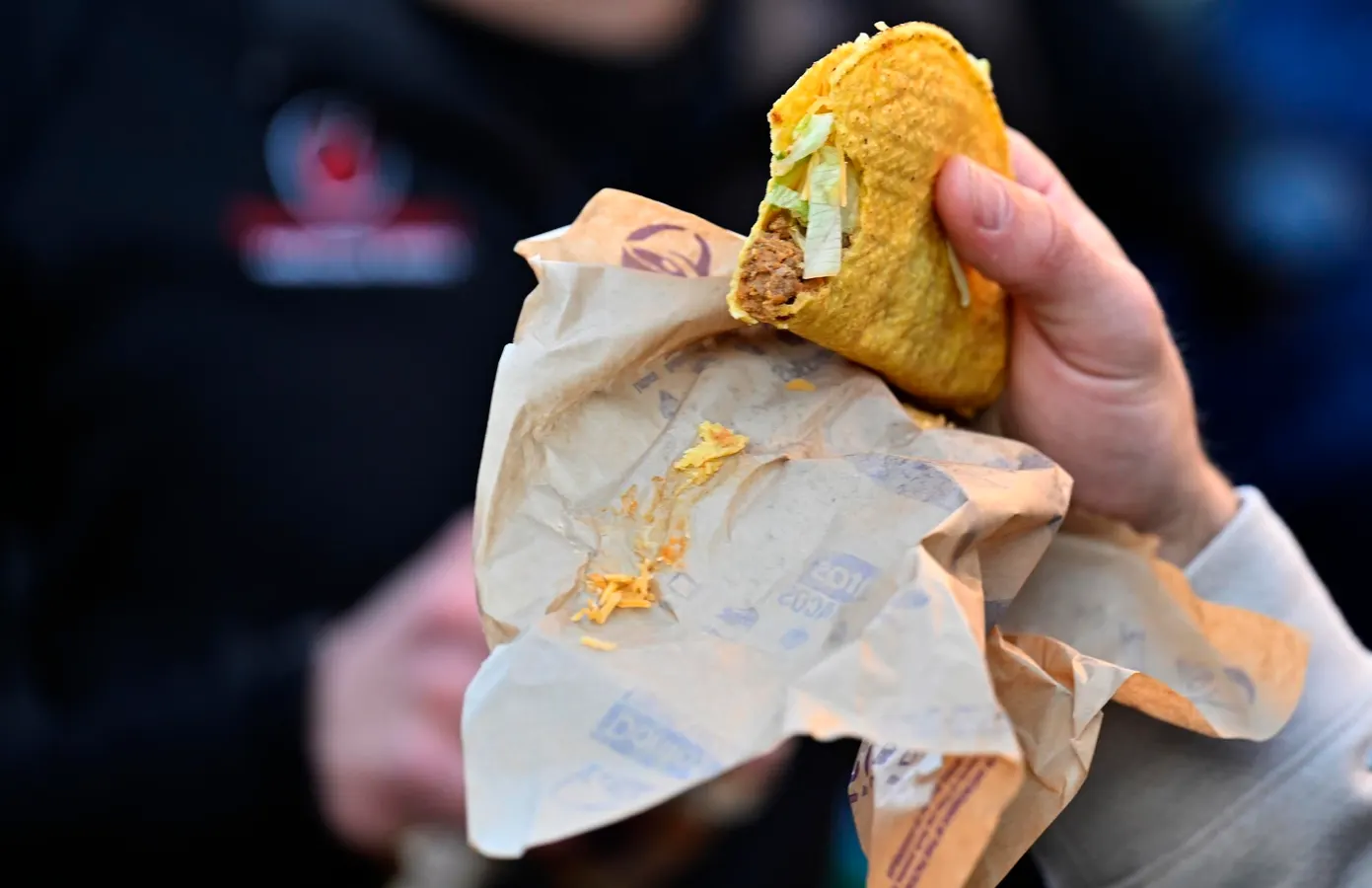
A Taco Bell taco with shredded lettuce.
The Washington Post via Getty Images
Key Facts
Federal officials are expected to declare the outbreak over as soon as Thursday, according to two unnamed sources who spoke to the Washington Post.
The outbreak, the largest of its kind on record in the U.S., was traced to shredded iceberg lettuce grown in central Mexico and processed by Taylor Farms, but no produce ever actually tested positive for cyclospora, a notoriously hard-to-trace parasite.
Taylor Farms voluntarily pulled its products from the market in mid-July after federal investigators established the link, but Centers for Disease Control and Prevention (CDC) data shows more than 11,000 people still fell ill and close to 500 required hospitalization.
Food and Drug Administration enforcement records show the recalled Taylor Farms products were packaged for nine food service and retail operations, including Subway and Yum Brands—the parent of Taco Bell, KFC and Pizza Hut—meaning the contaminated lettuce reached consumers through some of the country’s most widely visited restaurant chains.
The outbreak resulted in a record price plunge for lettuce, sales of packaged salads and leafy greens fell 26%, Yum! Brands reported a “meaningful near-term sales impact” in its quarterly earnings and total food and beverage sales fell almost a whole percentage point as consumers avoided produce, according to Circana research.
Key background
Thousands of people came down with cyclosporiasis, an illness caused by the cyclospora parasite, across two months before investigators were able to find a cause. The so-called “explosive diarrhea parasite” had sickened more than 7,000 people by July, with Michigan the apparent epicenter of the outbreak. There had been little progress in finding the source of the cyclosporiasis outbreak until mid-July, when investigators said they believed it was linked to produce supplied to Taco Bell in five states after thousands of the sick patients reported having eaten at the restaurant. Taylor Farms then voluntarily recalled thousands of packaged salad products that combined shredded iceberg lettuce with other vegetables before being shipped to major U.S. restaurant chains. The FDA’s investigation hit an early stumble when regulators were forced in July to retract a faulty test result they had claimed found cyclospora on a sample of the company’s lettuce. Despite that error, FDA officials maintained confidence that the Guanajuato, Mexico, farm was the source of the parasite—a conclusion Mexican food authorities have disputed, saying they found no positive samples or other warning signs at the site.
TANGENT
The cyclosporiasis outbreak raised serious consumer concerns about food safety that have persisted despite its looming end. The sheer magnitude of the illness left shoppers increasingly wary of buying raw, pre-packaged leafy greens and shined a light on deficiencies in the U.S. food safety industry. Broad workforce reductions and funding cuts at the CDC led the agency’s specialized parasitic diseases team to lose nine out of 11 core staff members, significantly slowing the initial tracing of the outbreak to a rate not seen in 15 years. A PBS News investigation found international inspections of foreign food sites by FDA agents have dropped nearly 35% compared to 2019 levels. FDA inspectors hadn’t visited the Taylor Farms complex in Guanajuato since 2019 until their visit during the outbreak, and it took nearly four weeks after the initial recall for them to arrive. Two of three major United States Department of Agriculture projects dedicated to studying the cyclospora parasite were defunded in the FY2026 federal budget, and the third remaining project faced severe disruptions due to an agency reorganization forcing staff relocations from Maryland to the Midwest.
















Leave a comment