


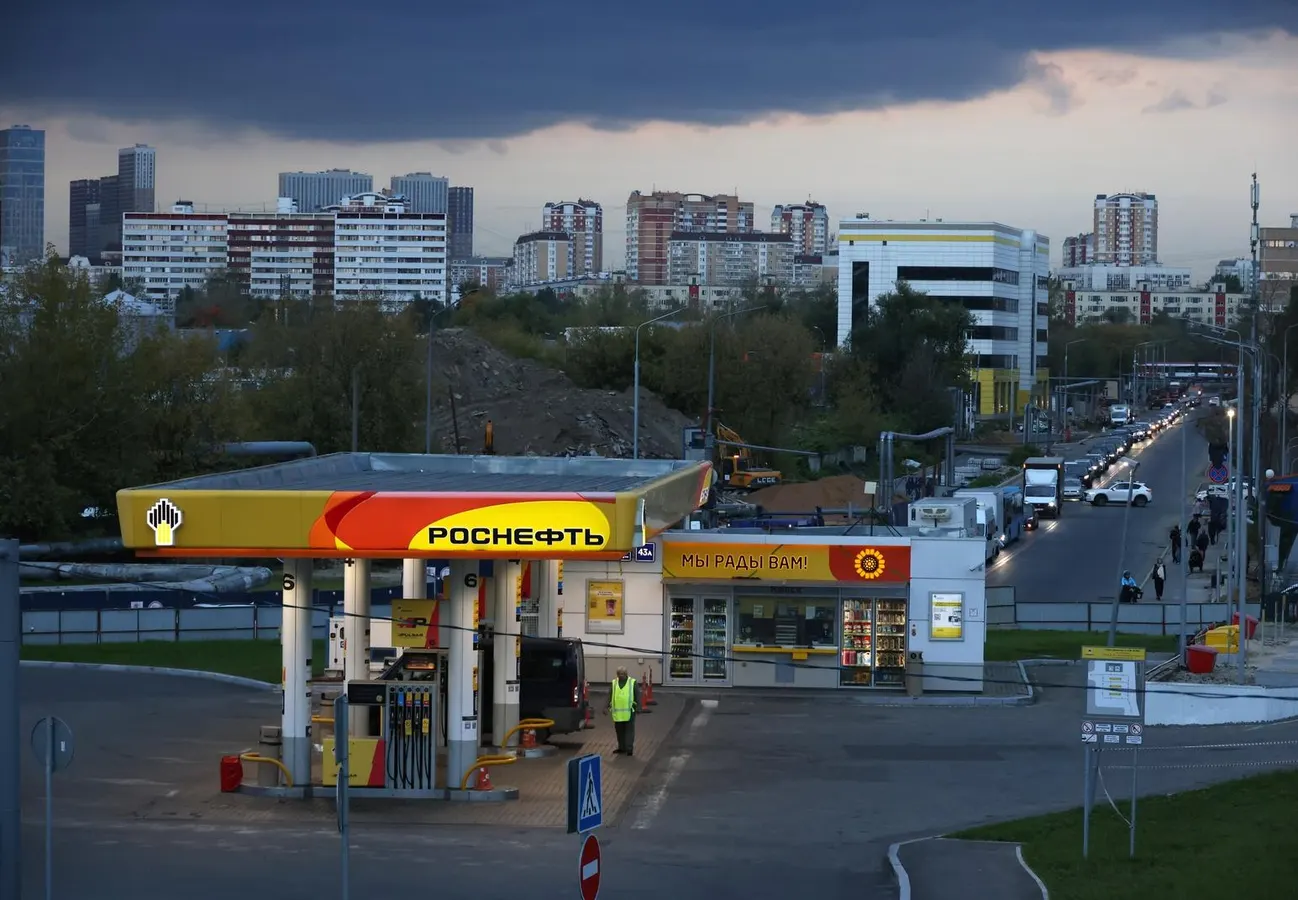

Ukraine’s attacks on Russian refineries are colliding with disrupted Gulf shipping, longer voyages and policy risk for Asian buyers. The immediate problem is not simply crude supply. It is the growing strain on the fuels and logistics that keep the physical economy moving.(Photo by Contributor/Getty Images)
Getty Images
Ukraine’s strikes on Russian refineries are landing in an oil market already under pressure around the Strait of Hormuz. The immediate result is not necessarily an imminent shortage of crude. It is a more fragile global diesel market, where the cost of turning oil into usable fuel and moving that fuel to customers is rising at the same time.
The story is better understood as a refined-products disruption than a crude-supply shock. Refinery outages directly affect diesel and other fuels even when crude can still be exported, stored or redirected. Diesel matters because it runs freight networks, farms, construction equipment, mines and much of the industrial machinery behind daily commerce. Gasoline, jet fuel, marine fuel and gasoil are also part of the picture. A refinery does not selectively lose only one product.
Stress is moving through the market in a particular sequence: disrupted Gulf supply, impaired Russian refining, redirected crude and political pressure on major buyers. The question is not whether the world runs out of oil tomorrow. It is whether buffers in diesel, shipping and trade finance are getting thinner.
Russian Refining Adds A New Pressure Point
Reuters reported that three of Russia’s six largest diesel-producing refineries had halted or sharply reduced output after Ukrainian drone strikes. Those six plants account for roughly half of Russia’s diesel production. Kirishi was shut, while Volgograd and NORSI were operating at around a quarter of capacity, according to the report.
This is a major refining-outage problem, not a marginal annoyance. It does not mean all of that capacity is permanently offline, or that Russia has stopped producing and exporting crude. Repair schedules, alternative plants, domestic inventories and storage all matter. The more defensible conclusion is narrower: a major part of Russia’s diesel system has been pushed out of normal operation, prompting export restrictions and domestic fuel-protection measures.
Reuters reported that the government had decided to extend restrictions on diesel exports through the end of October. Moscow can use such controls to protect domestic consumers and priority sectors. The same decision removes product barrels from international trade at a time when buyers already face more difficult routes and less predictable delivery.
That is the market relevance of the strikes. It is not necessary to decide whether they are strategically wise, decisive or self-defeating to see their effect on refining output. The attacks are making Russian fuel balances tighter. Whether that makes Ukraine stronger is a different question, and one this article does not need to settle.
Hormuz Is Adding Friction, Not Standing Still
The second pressure point is in the Gulf. Preliminary shipping data reported by Reuters showed four commodity vessels transiting Hormuz on September 16, against a 10-day average of 18. Traffic has not stopped. But passages have repeatedly fallen far below recent norms.
That changes the economics of replacement supply. Tankers waiting to transit, altering loading schedules or taking longer routes are unavailable for other voyages. War-risk insurance, freight rates and trade-finance requirements increase the delivered cost of a cargo before it reaches a refinery or terminal. The U.S. Energy Information Administration identifies Hormuz as the world’s leading oil-transit chokepoint because of the volumes that normally pass through it. The exposure begins well before a formal closure.
Markets do adapt. Reuters reported that marine-fuel pressure had eased at major hubs as trade patterns adjusted. That adjustment is not cost-free. Freight and insurance are likely to act as a persistent tax on flows, even if the market partly adapts. Longer voyages use more tanker time, tie up working capital and make contract fulfillment more fragile.
This is the context in which Hormuz is becoming a fee-and-permission regime. Access is not only a matter of whether a map shows a strait as open. It depends on whether owners, insurers, banks and crews accept the price and risk of using it.
Asia Cannot Absorb Everything
China is central to the next stage of adjustment, but it is not simply a stabilizer. If Chinese demand weakens or policy changes, its balancing role can fade quickly. Its refiners can absorb Russian crude when Middle Eastern supplies are less certain, yet price, margins, freight, domestic demand and political risk set the limits.
Reuters reported that Russian ESPO crude rose above $120 a barrel as Chinese refiners increased purchases during disruption to Middle Eastern supply. That offers a concrete measure of China’s role without turning it into an ideological story. China is a conditional source of demand for barrels displaced or repriced by war and disruption, not an unlimited buyer of last resort.
The Asia story is not only that China buys more. The Asian crude basket is being reshaped by longer voyages, higher freight and more fragile contract fulfillment. Reuters reported that some Asian buyers were reluctant to lift cargoes from Egypt’s Sidi Kerir terminal because rerouting lengthened voyages and raised freight costs. India faces an additional constraint. Russian crude remains commercially attractive, but new U.S. tariff powers reported by Reuters turn each purchase into a broader calculation about trade exposure, banking and access to Western markets.
Those powers do not make penalties automatic. Enforcement, scope and timing remain political choices. Their effect is already part of the price mechanism. A cargo’s discount is only one element of its value once the buyer must also consider compliance, financing, shipping and the risk of future tariffs.
A Diesel Stress Cycle
The world is entering a diesel stress cycle. Russian refinery damage has taken a large part of a key producing system out of normal operation. Hormuz has raised the cost and uncertainty of moving energy. Asian demand can absorb some displaced crude, but not without changing prices and trade patterns. U.S. policy adds a further uncertainty premium to Russian energy transactions.
There is still supply in the system. There are also routes, inventories and refineries that can respond. The issue for companies and governments is how much further stress those buffers can carry. The market has often focused on missing barrels around Hormuz. The more immediate constraint may be diesel, shipping capacity and the financial infrastructure needed to keep fuel moving.















Leave a comment