


Topline
Nine states may get a look at the northern lights Monday night, according to the National Oceanic and Atmospheric Administration, which forecasts mild auroral activity for a handful of northern states.
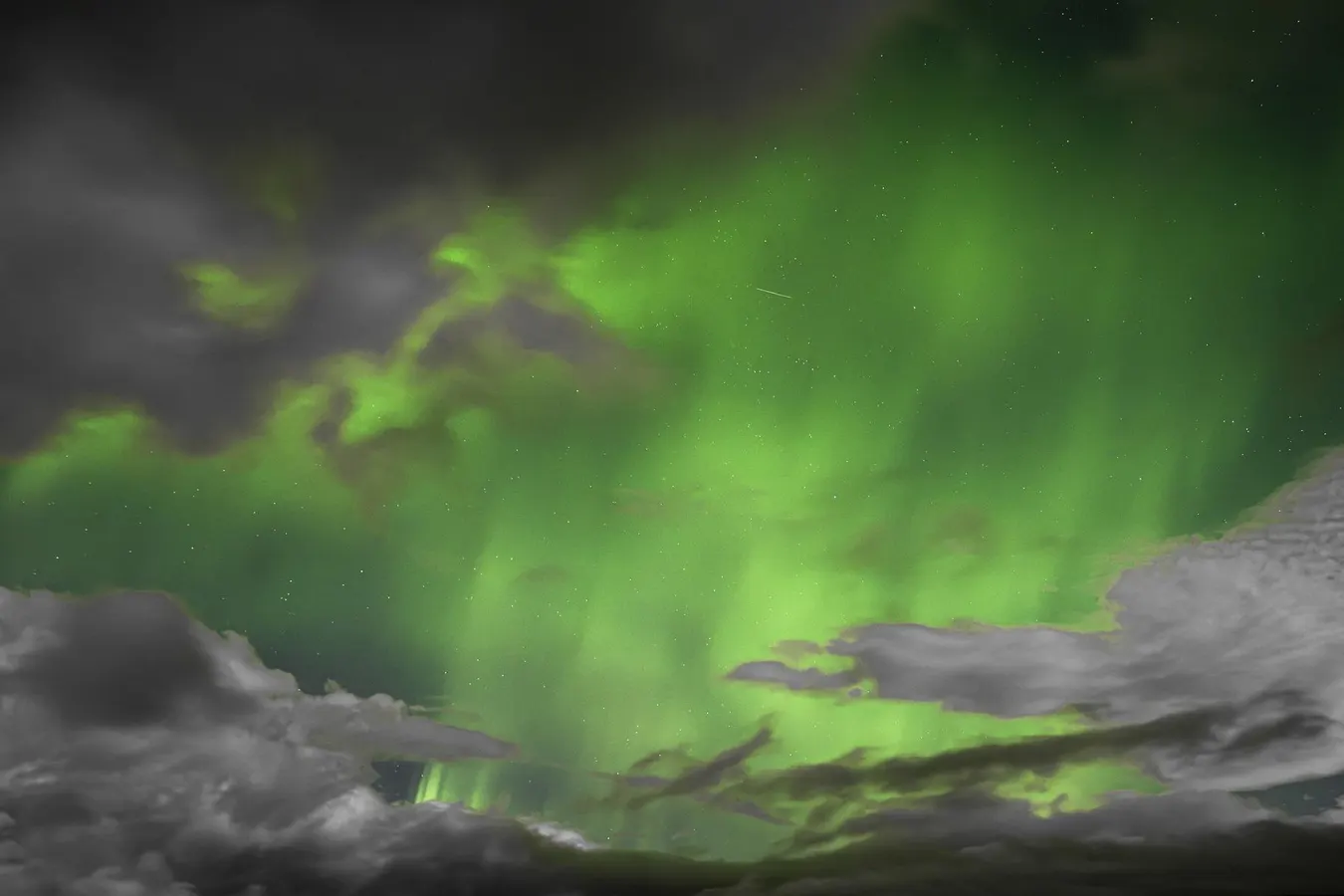
The Aurora Borealis, caused by the interaction between Earth’s magnetic field and charged particles from the Sun, is observed in the night sky over the Seltun region on the Reykjanes Peninsula in Iceland on August 31, 2026.
Photo by Muhammed Enes Yildirim/Anadolu via Getty Images
Key Facts
NOAA forecasts a Kp index of four, indicating the aurora may be “quite pleasing” to look at for those in the right areas.
Minor geomagnetic storm impacts, which can enhance auroral activity, are forecast for Monday night.
Auroral activity will significantly decrease by Tuesday night if NOAA forecasts hold, with a low likelihood of aurora expected to only stretch into Canada’s mainland and a portion of Alaska.
Where Will The Northern Lights Be Visible?
The northern lights will be potentially visible in areas like northern Washington, the northern tip of Idaho, northern Montana, North Dakota, South Dakota along its northern border, northern Minnesota, northern Wisconsin and the Upper Peninsula of Michigan. As usual, the Alaska interior will have a higher chance of seeing the northern lights than the lower 48.
Monday night’s aurora forecast.
NOAA
What’s The Best Way To See The Northern Lights?
The ideal window of time to observe the northern lights typically is 10 p.m. to 2 a.m. High vantage points and places with little to no light pollution can improve visibility of the aurora borealis. The moon will be 27% illuminated Monday night for its waning crescent phase.
What’s The Best Way To Photograph The Northern Lights?
Wide-angle lenses, tripods and low apertures can help capture photos of the northern lights. Smartphone users should refrain from using flash and instead use night mode to snap photos of the aurora borealis.
Key Background
Auroral activity reached a 500-year high in 2024 as the sun reached the peak of an 11-year solar cycle. Northern lights showings were frequent and particularly strong that year, though the more time passes from the peak of the solar cycle, the less auroral activity scientists expect.
Further Reading
Aurora Dashboard (NOAA)















Leave a comment