


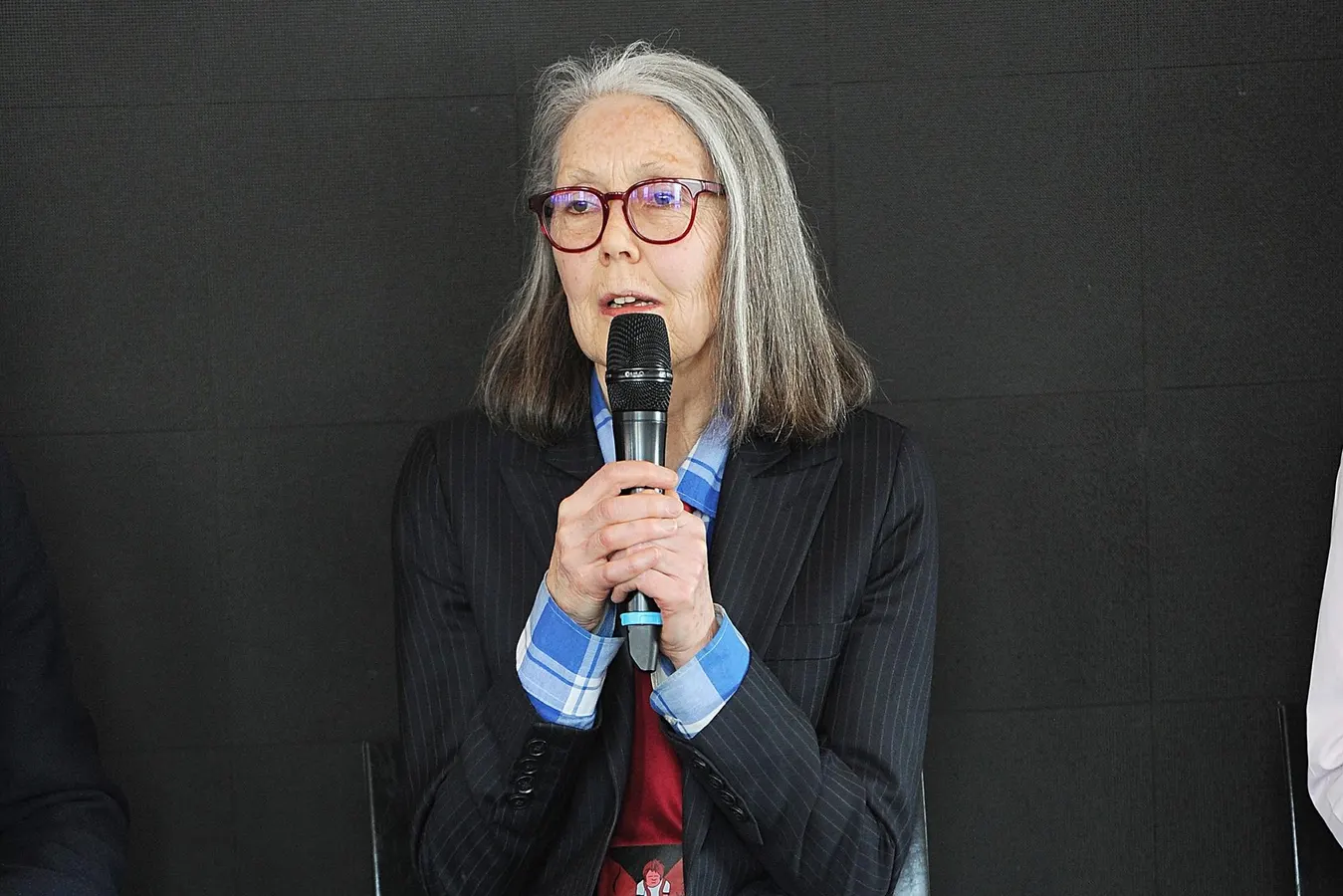

Author Anne Carson has been awarded the 2026 Nobel Prize for Literature.
Getty Images for The Shed
Canadian poet Anne Carson has won the 2026 Nobel Prize for Literature. Also an accomplished essayist and critic who has received Guggenheim and MacArthur Fellowships, Carson was considered an odds-on favorite to win the prize.
Carson is known for drawing on her classical education and blending them with modern observations. She writes on ethics, grief and desire, exploring deep themes through her poetry and prose.
Who Is Anne Carson?
A rule-bender who has incorporated visual elements into her work, Carson gained fame with her first book of criticism, Eros the Bittersweet, released in 1986. Her 1998 novel in verse, Autobiography of Red, retold the myth of Heracles and Geryon for modern day.
Another work, The Beauty of the Husband (2001), was fiction told in 29 tangos that explored heartbreak. She won the T.S. Eliot Prize for that work.
The Nobel Committee said they reached her in Iceland, where she was “listening to the wind” and that she was very taken by surprise.
This week, two top contenders had emerged according to betting markets and experts: Carson and Can Xue, a Chinese fiction writer with the political bona fides that the Nobel committee loves. No one else was really close in the odds.
Impact Of Nobel Prize For Literature Winner
Lauren Cobello, who founded Leverage with Media PR, a book-focused agency, says the commercial outcomes of a Nobel Prize are significant.
“The impact of sales can be huge for a Noble Prize winner. Not only does their current book soar in sales, but their previous books also increase in sales. They can also pick up new foreign rights deals and more book deals with higher advances. Publishers love to jump on the bandwagon and represent Noble Prize winners,” she says.
How much is “huge growth?” While many Nobel selections are big names, none of them sell like a John Grisham or Colleen Hoover. But the prize can result in a notable bump.
“One example is Han Kang selling 1 million books after she won the Noble Prize [in 2024]. The increase in activity can last for six to 12 months as they get asked for speaking engagements, more book deals, media appearances and brand deals,” Cobello says. “There is a large waterfall effect on the impact of the prize. It’s important to keep in mind that the award isn’t just for the book, it’s the work that goes work that is described in the book usually.”
Dr. Morissa Schwartz, founder of independent press GenZ Publishing, says that “from an independent publisher’s perspective, the Nobel changes the scale of an author’s discoverability: people who have never encountered the work suddenly have a reason to ask a bookseller where to start.”
Kazuo Ishiguro (2017) is the bestselling author of the past 10 Nobel selections (not counting Bob Dylan, whose 125 million albums sold don’t compare apples-to-oranges to book sales). But like Kang, authors can see long-term impact on their commercial success.
“The commercial opportunity reaches beyond the newest title. A reader’s first purchase can introduce an entire backlist,” says Schwartz. “Turning that attention into sustained sales still depends on practical publishing work: available editions, translations, clear entry-point recommendations and enough stock to meet demand. I would not assume that every book receives the same lift or attach a percentage without title-level sales data.”
She notes that the longer-term change is bargaining power and access. “Publishers, translators, festivals and universities have a clearer reason to invest attention in the author. The prize can also change how the backlist is framed and taught. That visibility brings opportunities and pressure: more people want the author’s time, while the next book may be judged against expectations created by the award,” Schwartz says.















Leave a comment