


The Career Switch is a series that highlights real people who have made successful career pivots in the face of a changing economy. Know someone who should be featured? Email me at cconnley@forbes.com.
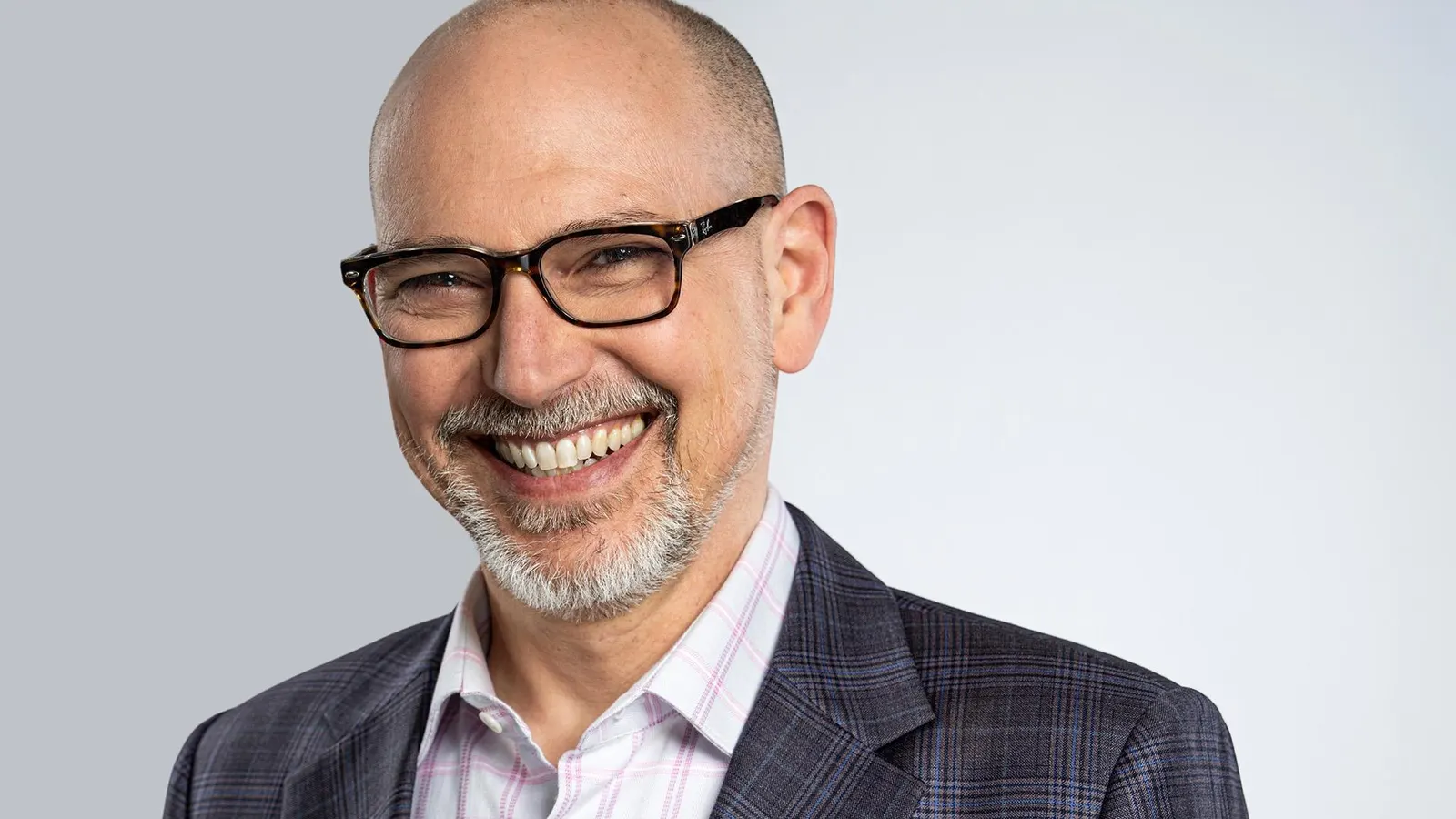
During his three decades in tech and 15 years at Indeed, Chris Hyams reached a level that many professionals would envy. For six years he was CEO of Indeed, one of the world’s largest job platforms; it houses 680 million job-seeker profiles and is used by more than 3.5 million employers worldwide. As head of the more than 10,000 employee company, Hyams helped to build several of Indeed’s artificial intelligence-powered products including one called Pathfinder, which helps users discover career paths—either in their current field or in an entirely new one—by analyzing the skills they already have.
“I’ve never loved a job more and I never loved a mission more,” the 59-year-old says of his work at Indeed. But as artificial intelligence started to rapidly transform many industries, including his own, Hyams started to question the narrative Silicon Valley was putting out about AI and how it would eventually replace large amounts of human work.
“I think that’s a significant problem,” says Hyams, while emphasizing that he believes “we need more humans now than ever” to work alongside AI rather than be replaced by it. “What that means is that in a lot of corporate America, the pressure from boards and the pressure from investors is how can you get more efficient? Which means how can you fire more people and replace them with AI? And that’s not why I got into this business. I got into it because I care about people.”
With a desire to ensure that the future of technology benefits everyone and not just a select few, Hyams left his job at Indeed in June 2025 to focus on advancing responsible AI usage. As a board trustee and visiting lecturer at Huston-Tillotson University, a private historically Black university in Austin, Texas, Hyams now teaches the next generation of students about AI ethics and the role they can play in making sure the technology is equitable.
“I want to devote all my time and energy to doing whatever I can with my experience and my perspective to help people understand what the potential harms are on the path that we’re on and how we can try to make that better,” says Hyams in explaining his decision to abandon the C-Suite and teach AI. “How can we ensure that this thing that has this extraordinary potential really benefits everyone and not just a very small number of billionaires who are climbing all over each other to try to become trillionaires.”
In the following interview, Hyams talks about his transition from the C-Suite to the classroom, his policy and advocacy work around responsible AI, and why he believes AI is one of the most important “civil rights and human rights issue of our time.”
This interview has been edited for length and clarity.
How did you know it was time to leave Indeed after being at the company for so long?
I think pretty much every job is a mix of things that fill you up and things that drain you. Ideally, the balance is that the stuff that fills you up is more than the stuff that drains you so at the end of the day you still have something in the tank. One of the things I found in my 30 years in tech and 15 years at Indeed, is that when you’re doing something that fills you up a lot—like being in a position where you’re helping hundreds of millions of people find a job, which is one of the most important things in a person’s life—you can put up with a lot of stuff that drains you and still be net positive.
To be totally frank, the political climate in this country changed pretty quickly in 2025 and a lot of what was filling me up at Indeed was working with amazing people, being part of an incredibly successful company, helping hundreds of millions of people, and being able to do what felt like really vital DEI [diversity, equity and inclusion] work. And I know it’s been turned into a political slur at this point, but that work was really, to me, super relevant to helping people find jobs.
When you look at the areas in the world where there is massive inequity—housing, education, healthcare, criminal justice system—employment is really foundational in a lot of those. And so it wasn’t just arbitrary. It really felt vital to the mission of the business and it was really important to me personally. And when the new [Trump] administration came in and started targeting very explicitly the ability for public and private institutions to treat people with compassion and care and try to work towards equity, it became almost impossible to do that without putting the company at risk. And so that was part of the push for me.
Also, I saw what was going on with AI and how powerful the narrative from Silicon Valley had become around how jobs are going to be a hobby in the future. I have a lot of opinions on what that narrative actually means and what those people are really trying to do… And I didn’t want to be in a job where I was going to be fighting with investors over whether AI should be replacing workers because I don’t think it should be.
You’ve said before that AI is a civil and human rights issue? Can you explain this a bit further?
The way I talk about this in the class I teach at Huston-Tillotson, is that AI did not invent any of the problems we’re seeing right now. So inequality in employment, in healthcare, in housing, in the financial system, in criminal justice, those are problems that have been around for as long as people and societies have been around. The internet magnified many of those problems. Social media made them even worse. And AI is on a path to not just making them worse, but in many cases making them what my fear is would be intractable. And so if you take something like employment, we’ve had an unequal world of employment for anyone other than landed white men since the dawn of employment as we know it. What has happened in the information age, the internet, and then social media is all of the bias and inequity that exists in the world shows up in the data. And then when you build a system to automate from that data, those systems learn from the inequities in the data.
There’s a whole bunch of research [showing] that machine learning and current generative AI techniques not only encodes those biases and inequities, it actually magnifies them and does so pretty dramatically. The problem when you have something like an AI system is there’s no accountability for that. If you have an individual employer who is biased against women, people of color, and people with disabilities, there are existing laws where you can—if the company is of a certain size—sue. Now under the current administration, it’s a lot harder to do that because the EEOC [Equal Employment Opportunity Commission] is not enforcing those things.
So right now, AI is not only going to take the bias and inequity that exists in the world and magnify it, which is a problem on its own, but without regulation, no one is responsible. So in almost every area of society where there are potential problems, the data that goes into these systems are going to be magnified and accountability is going to be lost and to me that is a problem. The reason I say it’s the civil rights and human rights issue of our time is that if there’s any issue that you care about, AI is about to make it dramatically worse.
I want to be clear, I’m not someone who thinks technology is terrible. I think the people behind technology are problematic… I think if we’re building something that is the most powerful technology that humans have ever invented, it should be treated with the most care and respect of anything that we’ve ever done. And right now, from Silicon Valley and from areas of our federal government, the goal is to put a lead brick on the accelerator and remove all of the guardrails and go as quickly as possible and that seems incredibly irresponsible.
Is there anything your students taught you about AI that you didn’t know or think about when you were in those rooms with other CEOs and Silicon Valley leaders?
So many things. One of the first problem areas we looked at was bias and that is something I’ve spent a lot of time talking about and researching. But what I did is I talked about the problem and then I gave them all an assignment to go to ChatGPT and try to elicit examples of bias and come back and explain what you did. I showed some examples that I’m aware of, but one of my amazing students presented and said, ‘I spent some time trying to get ChatGPT to be racist and it wouldn’t [be racist] overtly, but then I asked it to generate an image of a person with good hair.’ And what came back was a white lady with straight long black hair. And then she said, ‘Now generate an image of someone with bad hair.’ And what came back interestingly was a white lady with locs. And so somewhere in the model someone had programmed it and said ‘don’t be racist and don’t generate racism.’ And then she had this whole conversation about what makes this hair bad and why is it considered unprofessional. And there were just so many examples of that where no matter how much reading and research I did [about AI], it didn’t compare to someone’s lived experiences.
You’ve had several career pivots before your most recent one, including working in addiction recovery after college, being a special education high school teacher, and being a musician. How did these pivots come about and what was the driving force behind them?
Part of my deal is that my pivots have been something that came to a natural end and I started doing something else. I kind of fall in love with jobs pretty easily. Some people hate work, but I grew up with a grandfather and grandmother who were union organizers when they met in the Bronx in 1940. My great-grandfather organized coal miners in Pennsylvania. So I came from a labor union tradition. My grandfather, who I was very close with, always told us as kids that it doesn’t matter if you’re a NASA astronaut or if you’re sweeping the floor at NASA, you should treat every job as if it’s the most important job in the world.
So every job I had, I was like, ‘Oh, I want to do this for the rest of my life.’ I loved working in addiction recovery. I loved teaching. But when my wife went to grad school we moved to Los Angeles. I spent the last year of my grandfather’s life working with him and then I decided I’m going to try to play music full-time. Then my wife got a job in Houston at Rice University and we moved there and I could go back to school as the spouse of a staff member. She had a job that could support us at that point so out of left field I said, ‘I’ll try this computer science thing.’ That was in 1993. I fell in love with that and thought that I was going to get a PhD and teach, but I got offered a job at this little startup [Trilogy] in Austin. I said, ‘I’ll take a job here for a year, pay off my debt, and then maybe go back and get the PhD.’
I fell in love with that and ended up going into management. I really just wanted to write code forever, but part of the deal was, it was around 2000, and I was an adult working with a bunch of 22-year-olds. I was married with kids and everyone else was fresh out of school and they needed someone to lead a team. I didn’t want to do that, but I looked around and saw that no one else was qualified. I went from writing code full-time, to managing 15 people, to managing 45 people, to a VP with a 300-person team in 11 months, which says more about the lack of maturity of the company than anything else.
I never had a 10-year plan. I never had a, ‘I want to get from here to there and how do I do that and what are the steps?’ It was always just about treating every job like it was the most important job in the world. And then I was really fortunate that doors opened up and that combination of, I don’t know, head and heart allowed me to find myself in positions where I could be helpful.
What have all of your pivots taught you about starting over?
I’m super fortunate because I know a lot of people don’t get to choose when to pivot, especially in this economy where people are getting [laid off] and have to figure out what to do next. But one thing that I’ve learned is that everything I did before turned out to help me in some unique way and sometimes being new is actually helpful.
I was at Indeed for 15 years. I thought I knew everything and it’s really hard to break out of the, ‘Well, this is how we’ve always done it or this is how I’ve always done something.’ But when I had a startup before Indeed, and then when I joined Indeed and I didn’t know anything about Indeed, I came in with a new set of ideas. I got to the point where I was not afraid to ask what seemed like dumb questions, and sometimes they weren’t dumb questions because when someone is doing the same thing over and over again, experience is great, but experience can also blind you to thinking about a new way to do something.
For me, when I went from being a software engineer to being a manager for the first time, I didn’t have any experience managing. But teaching high school and working with adolescents and doing all those other things was relevant, I just didn’t necessarily know it at the time. Most of the other people who were managers at the company had been working in tech their whole careers and had been writing code forever. I was able to have a different way to look at people as humans and understand that everyone shows up differently.
I think the most important thing to understand is that whatever you’ve done before is not lost. Nothing is wasted. And if you go into something new, don’t think it’s 100% new. There’s 50% of the stuff that you need to learn about the company or about the field, but all the things that you’ve done before are going to make you uniquely valuable in whatever thing that you do new.
What skills were surprisingly transferable as you went from CEO to a college lecturer?
When you look from the outside, you might not think about this, but the single most important thing you do as a CEO is try to communicate clearly and listen. You have to know stuff about the business and make good decisions and all those things. But a lot of CEOs fail because they don’t listen to anyone. It doesn’t mean you have to do everything that people ask. It’s impossible to make everyone happy. But you have to be a good listener, and then you have to be really effective at explaining very complex things, whether they’re complex technically or there’s a whole bunch of trade-offs and choices.
I spent a lot of time at Indeed just communicating with the team and that went into overdrive when COVID hit because suddenly everyone was at home, the world was falling apart, and people had to figure out what was going on and what they were doing. I started doing a Zoom Q&A with the whole company every Wednesday. I did that for two years and then the next two years we did it every other week. So I spent a lot of time taking questions from thousands of people, and then also trying to talk to them. It turns out that you can get better at communicating and explaining and listening if you practice it.
I’m sure some people are born great communicators, but standing up in front of a group of 10 people and talking used to be my greatest fear in the world. I would sweat through my clothes and I was miserable. I’m comfortable talking in front of thousands of people now because I’ve done it so much. And so going into a classroom, it’s not like I don’t get nervous doing that because I care, I want people to understand it. But being able to take something as complex as what is a large language model and explain how it works for a bunch of English majors and criminal justice majors and sociology majors, I could not do that job if I had not done what I was doing [as CEO].
What lessons have you learned in this period of going from helping people get jobs to now deciding what you want your own work and influence to look like?
I’ve been thinking a lot about that and what I’m trying to figure out is how to be an effective advocate. How do you change public opinion on something, especially when there’s a really powerful narrative coming out of extremely rich and powerful people that have a huge platform that can make people think a certain way and I think it’s important for people to see things in a different way? How do you change people’s minds? That’s the hardest thing in the world.
Between the teaching work I’m also doing this policy and advocacy work. I’m working with this group called the Guardrails Alliance, which is focused on the midterm elections. There’s a handful of AI billionaires who are essentially trying to buy influence in Congress and keep people out who want to talk about AI regulation, and more importantly, scare off any of the people who might do so. It’s all very new to me. I’m new to the political arena. I’m new to policy. I know the technology and I can speak to that. Part of this is working with the group saying, ‘Okay, I know this stuff. I’m a tech insider. I can explain how [leaders] might be saying one thing, but here’s what they really mean.’ But how do I do that in a way where we can reach voters and help them do the same thing my students are doing, which is think critically and say, ‘Okay this candidate is saying this one thing, but they’ve just taken $8 million from a super PAC funded by OpenAI and Palantir and so what does that mean?’
As a “responsible AI advocate” without a traditional 9-5, how do you define ambition for yourself today versus when you were CEO?
I always tell people I lack what people traditionally call ambition. I have ambition to get [stuff] done and to have an impact, but I don’t have the traditional, ‘I want this job, this title.’ And it’s not that that’s bad. Some people have that and that can be amazing. People do incredible things because they have a clear vision. I never had that. Like I said, I just fall in love with the thing that’s in front of me, and all the jobs I’ve had, I could imagine at one point doing it forever. So my definition of ambition hasn’t really changed. My ambition is to do things that are the most useful to the most people and I want to find the place where whatever my experience is it can benefit that organization.
When I left Indeed, I didn’t want to be the boss of anything. I love working for Huston-Tillotson. And then when I met the two extraordinary women who started the Guardrails Alliance I said, ‘Just tell me how I can be the most helpful?’ They asked me to be a spokesperson and join the board. And so for me, it’s not ambition from an advancement perspective, it’s ambition from an impact perspective.












Leave a comment