


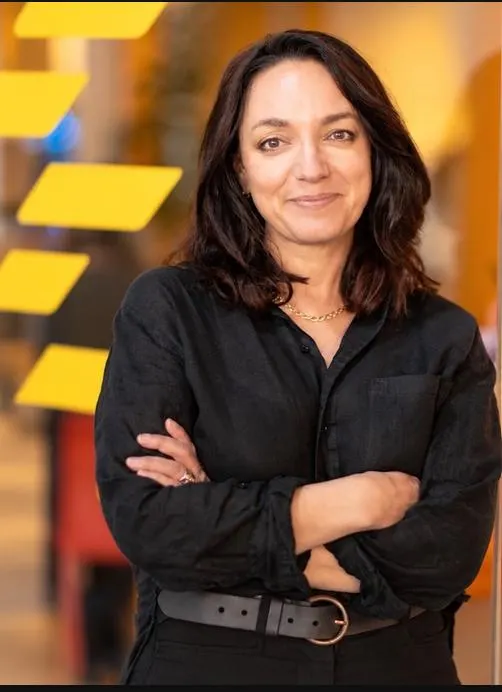

High Notes is a podcast featuring conversations on the art and business of voice, hosted by creatr, podcaster, voice actor and BRAVA CEO, Melissa Thom. From Mongolian throat singing to vocal health, accents, gaming, and more, High Notes uncovers the craft behind the business.
Melissa Thom
By now, there’s possibly no adult that has not heard about the potential and the danger of Artificial Intelligence (AI). It seems like every day brings another frightening tale of an AI agent out of control of its human overlords and attacking another computer program or government website.
In podcasting, AI tools can hallucinate facts, invent fake citations, or generate bland, confrontational scripts that lack genuine conversational depth. Synthetic voices often struggle with natural pacing, emotional inflection, chuckles, or thoughtful pauses, resulting in flat and robotic listening experiences. While AI can clean up background noise, it cannot fix root human errors like poor interview structure or distorted room acoustics. Automatically generating content, show notes, or synthetic host audio exposes creators to copyright infringement, defamation claims, and guest privacy violations.
Make no mistake. AI-generated podcasts are flooding the market, with studios producing hundreds of thousands of episodes that sound increasingly indistinguishable from human hosts.
The technology offers cost savings and opportunities for creators, but many in the industry worry AI hosts undermine listener trust and devalue premium content.
according to Sky News, Artificial intelligence is advancing at an unprecedented, exponential pace, with the capabilities of top models doubling roughly every four to seven months. Raw computing power and training compute for frontier models are growing at rates exceeding 3x to 5x per year. According to data from research groups like METR, the length of complex tasks an AI can successfully complete on its own continues to double rapidly.
AFP via Getty Images
Some popular podcasters, including Steven Bartlett, are cloning their voices for AI content, while others are pushing back against the technology’s rapid expansion.
In a December 2025 article, the Los Angeles Times reported: “Popular podcast host Steven Bartlett has used an AI clone to launch a new kind of content aimed at the 13 million followers of his podcast “Diary of a CEO.” On YouTube, his clone narrates “100 CEOs With Steven Bartlett,” which adds AI-generated animation to Bartlett’s cloned voice to tell the life stories of entrepreneurs such as Steve Jobs and Richard Branson.
Platforms such as YouTube and Spotify have introduced features for creators to clone their voice and translate their content into multiple languages to increase reach and revenue. A new generation of voice cloning companies, many with operations in California, offers better emotion, tone, pacing and overall voice quality.
Hume AI, which is based in New York but has a big research team in California, raised $50 million last year and has tens of thousands of creators using its software to generate audiobooks, podcasts, films, voice-overs for videos and dialogue generation in video games.
Los Angeles podcasting studio Inception Point AI has produced its 200,000 podcast episodes, in some weeks accounting for 1% of all podcasts published that week on the internet, according to CEO Jeanine Wright.
The podcasts are so cheap to make that they can focus on tiny topics, like local weather, small sports teams, gardening and other niche subjects.
Instead of a studio searching for a specific “hit” podcast idea, it takes just $1 to produce an episode so that they can be profitable with just 25 people listening.
“That means most of the stuff that we make, we have really an unlimited amount of experimentation and creative freedom for what we want to do,” Wright said.
One of its popular synthetic hosts is Vivian Steele, an AI celebrity gossip columnist with a sassy voice and a sharp tongue. “I am indeed AI-powered — which means I’ve got receipts older than your grandmother’s jewelry box, and a memory sharper than a stiletto heel on marble. No forgetting, no forgiving, and definitely no filter,” the AI discloses itself at the start of the podcast.
“We’ve kind of molded her more towards what the audience wants,” said Katie Brown, chief content officer at Inception Point, who helps design the personalities of the AI podcasters.
James Cridland noted In Podnews: “The same technology that makes your production workflow smoother, if used carelessly, can expose you to copyright claims, privacy violations, or even lawsuits from guests, collaborators, sponsors, and members of the public.”
Cridland adds: “What this means is that when you use an AI system to generate art, music, or text, you can’t always know where its ‘inspiration’ came from. If the tool you’re using spits out something too similar to an existing copyrighted work, you could find wind up publishing an infringing derivative work. And in the crosshairs of a costly, time-consuming and embarrassing lawsuit.”
Over one recent nine-day stretch, nearly 40% of new podcasts were likely AI-generated, according to Podcast Index, as reported by Bloomberg. One company alone, Inception Point AI, now claims to have more than 10,000 active shows, with hundreds more appearing almost overnight.
This is publishing at industrial scale. The real question is not whether AI can make podcasts. It clearly can. The question is whether people will consume them.
Alberto Betella of RSS.com was on The Podnews Weekly Review and offered useful ways to think about AI and podcasts: “Not all AI podcasts are the same and treating them as one category muddies the issue. There are AI-assisted podcasts where humans use tools to improve production. No problem. There are AI-curated utility podcasts delivering structured information. Seems fine.”
Mr. Betella continues: “Then there is spam designed to manipulate systems. This is the podcast version of fake handbags with familiar-looking names, cover art and feeds created to confuse, capture a click, or game search returns. That is simply deceptive and horrible.”
Then there is what many are calling podslop: fully automated shows produced at scale with little human judgment and even less accountability.
Betella’s useful point is that AI slop is not binary. It’s a spectrum. A weak AI podcast about golf may be annoying. A weak AI podcast offering health advice or financial guidance can become something else entirely. The point is AI itself is not the concern, it’s the potential impact.
Podcasting works because it feels human.
It is a voice you come back to, a perspective you recognize, and a sense that someone has done the work and is speaking with intention. This is where many AI podcasts break down. It can mimic tone, but rarely carries conviction, personality, or a natural human rhythm – a giggle, or an “oh my.” The delivery often feels flat and emotionally empty.
A more practical place to begin is disclosure. Identifying when a portion of a podcast is AI-generated creates transparency for listeners, flexibility for advertisers, and a basic framework for platforms.
Hitting A High Note For Human Voices
What industries are most threatened by AI? The answer is any industry in which a human voice is a vital part of the product or service offered. Customer service call centers are already bring affected, as AI voices take over for humans, leading people to scream on the phone, “REPRESENTATIVE, REPRESENTATIVE,” when the AI service rep inevitably falls to answer a customer’s inquiry.
Audiobooks are a prime target for an AI takeover. Why hire a human when AI can record an entire book in less time and for far less cost than a human? Even some terrestrial radio station are using AI DJs. No health insurance, no 401k, no vacation time, or sick days for an AI.
As we mentioned, podcast hosts are being replaced by AI impostors. One industry fully in the crosshairs of the AI apocalypse is the voiceover industry. The global dubbing and voice-over market is predicted to reach $8.6 billion by 2034, with a compound annual growth rate (CAGR) of 7.4% The demand for voiceover talent is fueled by the expansion of audiobooks, podcasts, and online content While AI is becoming more prevalent, particularly for certain types of projects, human voice actors still hold a relatively strong position, especially for nuanced and creative roles. The industry can be competitive, with a relatively small percentage of voice actors capturing the majority of work.
What specific skills does a voiceover artist need? High Notes Podcast creator and host Melissa Thom responds: “A skilled voiceover artist brings versatility, adaptability, and professionalism. On the performance side, that means cold reading, script analysis, speed reading, understanding brand values, and interpreting subtext or character backstory. On the business side, it’s just as critical – contract negotiation, handling difficult conversations, financial management, and building client relationships are all part of the job.”
Bristol (England) Academy of Voice Acting (BRAVA) offers personalized training in the art and business of voiceover. BRAVA says: “If you’re a complete beginner and have always been interested in finding out more about the world of voice acting, or if you’ve been voicing for a while, but need guidance and support, then BRAVA is for you.”
BRAVA was founded by experienced voice actor and communications specialist Melissa Thom. Joining Melissa is a highly experienced team of actors, educators, and producers from the UK and the U.S.
When we asked Melissa why she started BRAVA, she answered: “BRAVA grew out of the 2020 pandemic. When many of my drama school colleagues lost stage work overnight, I began training them in voiceover so they could continue working from home. Word spread quickly, and by 2021 BRAVA was officially launched. Since then, we’ve trained more than 1,000 creative professionals in voice, speech, and communication. It’s been both a challenge and a privilege, and something we never take for granted.”
Melissa notes: “AI has reshaped the voiceover landscape at extraordinary speed and it’s here to stay. It has driven an irreversible shift: fast, cost-effective, and adequate for functional jobs, but limited when it comes to depth, nuance, and genuine human connection. The risks are clear: fewer entry-level opportunities, ethical concerns, and the rise of synthetic competition. Yet there is also opportunity in defining the line between what AI can produce and what only a trained actor can deliver: authenticity, creativity, and emotional resonance. The future will be hybrid, with AI handling routine work, and human voices bringing the storytelling that truly connects.”
Here’s where Melissa Thom defines the line between AI and human voiceovers. “We need not look much farther than Alan Tudyk’s list of characters to understand why he has had such a long standing relationship with Disney, and why they keep casting him. From villains (King Candy in Wreck it Ralph) to tyrants (Duke of Weselton in Frozen), an all-knowing search engine in KnowsMore, to perhaps my favourite of them all, Heihei in Moana, a character with of no words, who just squawks and clucks, but who became one of the most loved parts of Moana, Tudyk knows exactly how to bring these characters to life and connect with an audience.
“What Heihei’s performance tells us is one of the most important elements of understanding voiceover. It’s not just about reading lines, it’s about serving the text or pictures in front of you and building a whole person (or chicken) using breath, rhythm, truth and intention. At BRAVA we view this skillset as a lifelong craft, which takes years to hone and refine, and often refer to the process as ‘lifting the words off the page’. This means understanding the script, connecting voice to body, finding the truth in someone else’s words and embodying all this so that the performance lands.”
Melissa has done voiceover work for numerous high-profile clients — EA, Warner, Google. Melissa explained the winding road she took to her role in the voiceover industry.
“It was almost by accident. In 1998, I moved to Brighton, UK and met someone who had recently launched a music radio station. He offered me a marketing assistant role, and before long, I was a station voice and recording commercial ads. It was an incredible first job with an inspiring team – many of whom I’m still in contact with today. That experience led me to another station, part of a much larger commercial radio group, as breakfast show host for three years. In 2007, I co-founded a podcasting startup with my husband and in 2014, shifted into communications for another of our startups, which took us to California for two years. Whilst there, I decided to commit full-time to working with voice and haven’t looked back.”
In December 2023, Melissa Thom released the trailer for High Notes. Since then, Melissa Thom has released three seasons of the podcast featuring conversations on the art and business of voice, from Mongolian throat singing to vocal health, accents, gaming, and more.
Pixar headquarters is located at 1200 Park Avenue, Emeryville, California, in the San Francisco Bay Area. It was co-designed by Steve Jobs to encourage collaboration, featuring a large central atrium.
Getty Images
One of the most memorable episodes was released in June 2025. The June 30th episode detailed how voice actors are cast for Pixar films. In that episode of High Notes, Melissa Thom chatted with Kate Hansen Birnbaum, Casting Director at Pixar, whose credits include beloved animated films such as Inside Out, Soul, Elemental, and Luca. She offers a rare look inside Pixar’s intricate casting process, highlighting the value placed on authenticity, natural vocal tone, and the ability to truly inspire the animation team.
Kate also brought the episode to life with memorable stories from her career, particularly the joy of working on Elemental — and shares thoughtful advice for aspiring voice actors.
A Season Dedicated To The AI threat
Season 4 of High Notes, launched on Thursday October 8th with episodes that will run for seven weeks. The season will see host Melissa Thom talking to leading figures on both sides of the AI debate: those whose voices have been affected by AI, and those using it for good.
In this fourth season of the podcast, Melissa Thom asks: “What happens to the human voice as AI gets good enough to replicate it?”
Melissa says: “It’s a conversation that reaches further than most people think, affecting not just performers, but anyone who’s ever recorded a voice note, sat in on a Zoom call, or had their voice used by the business they work for. If you speak for a living, work with people who do, or just want to understand what’s happening to your own voice in an AI-shaped world, this season’s for you.”
The full lineup of episodes and release dates are as follows:
Thursday 8th October
Episode 01: AI or human voice? Why brands choose both, with Mark Graeme from OCX (Omnicom Production) and Mark Eaves from Gravity Road
This episode explores when and why a creative studio chooses AI over a human voice, and when it doesn’t, from two vantage points in the advertising industry.
Mark Graeme is Head of Studio at OCX UK (Omnicom Production, part of Omnicom Group, the world’s leading marketing and sales company). Mark and his team produce work for creative agencies such as Adam & Eve/TBWA, AMVBBDO, and McCann, plus work directly with a mix of local and global brands. He has also hosted the Shiny Awards, supporting emerging directing talent.
Mark Eaves is Founder of Gravity Road, part of The Brand Tech Group, working across brands including Unilever, Booking.com and TikTok. He led Gravity Road’s build of ‘Ode,’ an AI poetry companion made in partnership with Microsoft AI and Poetry Pharmacy founder William Sieghart. ‘Ode’ is trained on Sieghart’s own voice to listen and prescribe a poem. A real actor reads every poem aloud — Stephen Fry, Harriet Walter, Dominic West and Indira Varma among them — rather than a synthetic voice.
Between them, Melissa gets the industry-wide picture and one deeply considered case study, both circling the same question creative directors are still grappling with: AI or human voice?
Thursday 15th October
Episode 02: Cloned Without Consent, with Voice Actor Faye Dicker and Equity’s Shannon Sailing
Voice actor Faye Dicker discovered her voice had been cloned and sold via a US platform without her consent. It was downloaded more than 900 times before it was taken down. She’s joined by Shannon Sailing, Industrial Official for Audio and Games, from Equity, who dealt with Faye’s case and is now handling a wave of similar claims.
Thursday 22nd October
Episode 03: UK AI Law: Unfit for Purpose? With Dr. Mathilde Pavis
In this episode, Melissa talks to Dr Mathilde Pavis, an expert in intellectual property law, ethics and new technologies, who helped build Equity’s AI toolkit and has worked directly with AI platforms including ElevenLabs. Melissa asks why the UK currently has no personality right for voice, how that compares to other countries, and whether the law is keeping up. The real value here is practical: exactly what to check, ask and do to protect your own voice, as things stand today. The landscape is changing fast, so staying informed matters more than ever.
Thursday 29th October
Ep 04: Across all sectors: Games, Dubbing, Ads and Animation with Actor and Voiceover Artist David Menkin
David Menkin is a London-based actor and voiceover artist with an impressive portfolio across commercials, dubbing, animation and gaming, including major AAA titles, Lego Star Wars, Final Fantasy XVI and Pragmata. In this episode, Melissa talks to him about how working across these four sectors creates very different relationships with AI risk. They also discuss David’s advocacy work on how studios treat performers, and whether any one sector is leading the way in AI and human voice working together.
These are the guests on season four of the High Notes podcast.
High Notes
Thursday 5th November
Episode 05: The Audiobook Pipeline with Award-Winning Director, Dan Jones
Storytelling’s as old as language, but the recorded audiobook industry is barely three generations old, and already facing real disruption. AI-narrated titles now make up around 23% of new releases in the US, and Audible alone has released over 40,000. Yet the Audio Publishers Association’s own data shows willingness to actually try AI narration has been falling, not rising. Dan Jones spent 22 years at Hachette, one of the world’s biggest publishers, including 7 as Head of Audio Services, and is now an Audio Specialist and Senior Manager at Glassboxx, and a visiting coach at BRAVA. We ask Dan how decisions get made at scale, what he wishes more performers understood about the other side of the process, and where he thinks the human voice in audiobooks is headed.
Thursday 12th November
Episode 06: Owning and protecting your voice with BAFTA award-winning actress, Cissy Jones
Melissa talks to BAFTA award-winning actress Cissy Jones, known for voicing Delilah in Firewatch, alongside performances in The Walking Dead, Baldur’s Gate 3, Fallout 4, Starfield, Life is Strange, Halo 5 and The Owl House. Cissy is co-founder and CEO of US-based company Ethovox, the only voice AI company owned and run by voice actors.
Ethovox has an agreement with SAG-AFTRA, made during the video game Interactive Media Agreement negotiations, to build a foundational voice model on a union contract. How an individual performer’s own voice replica is actually used, SAG or non-SAG, remains a separate decision made by that performer and their agent. Melissa asks Cissy what performers should check before licensing their voice, and whether her model is the exception to the rule or a preview of where the rest of the industry is heading.
Thursday 18th November
Ep 07: Negotiating AI: Inside a Talent Agency with Bonnie Nordling
AI is now a significant factor in negotiating VO contracts, so in this episode Melissa sits down with Bonnie Nordling and asks what negotiation looks like in a talent agency for 2026. Bonnie is the MD of Nordlings, representing around 200 voice actors across commercials, animation, and gaming. Bonnie talks through her agency’s approach to negotiating AI clauses, where AI and human voice are working well together across her roster, and where more work remains. She also gives her take on the agent’s role in the age of AI, and what she thinks the future holds.
Voiceover Artists Versus AI
Melissa Thom of High Notes comments: “The interesting intersection comes when AI can be a supporting tool to maximize the value of the human, cloning a voice (ethically and with consent) can allow the creatives to fix the performance in the edit without having to get the performer back into the studio. Games developers can make their worlds far richer with on the fly generated interactions with an iconic character and much loved past performers can be brought back to life to delight a new generation.”
Copyright Nick Brown Photography
Melissa Thom observes: “We’re at a moment when AI can replicate, reshape and deploy a voice in ways most of us are only beginning to understand. This season is about making sense of that change and giving everyone who uses their voice — professionally or personally — the conversation, context and tools they need to navigate what comes next.”
Melissa continues: “AI has reshaped the voiceover landscape at extraordinary speed and it’s here to stay. It has driven an irreversible shift: fast, cost-effective, and adequate for functional jobs, but limited when it comes to depth, nuance, and genuine human connection. The risks are clear: fewer entry-level opportunities, ethical concerns, and the rise of synthetic competition. Yet there is also opportunity in defining the line between what AI can produce and what only a trained actor can deliver: authenticity, creativity, and emotional resonance. The future will be hybrid, with AI handling routine work, and human voices bringing the storytelling that truly connects.”
For me, the replacement of human voices by artificial intelligence raises major concerns about ethics, economic displacement, deception risks, and the loss of emotional authenticity. Highly realistic AI voices can be weaponized by bad actors to commit phone fraud, such as pretending to be a distressed relative or an authority figure. Research shows that people hearing synthetic voices matching underrepresented regional dialects are even more vulnerable to falling for audio scams.
The human cost of AI can not be fully calculated. Entry-level and lower-paying voice-over jobs—such as corporate training, automated phone menus (IVR), and basic narration—are increasingly automated to cut costs, threatening livelihoods in the industry. Is AI a clone of globalism from the 90s, where many may benefit but millions will suffer?
Finally, there’s The Trust Gap. Audiences report feeling deceived or less favorable toward public-facing media, radio stations, and creative projects that hide the use of synthetic audio instead of using genuine human performers.
Melissa Thom of BRAVA and High Notes drives home her point about the magic of human voiceovers: “There are well-known masters of the craft. Robin Williams’s Genie in Aladdin is perhaps the most famous example of a voice performance reshaping the film and the impact of the character on an audience. His energy and improvisation changed how studios thought about casting voices for decades afterwards. Sometimes, when the voice is right it can often become bigger than the film itself; think of Mike Myers and Eddie Murphy in Shrek, Scarlett Johanssen in HER, where the voice is the entire character, with no physical body to lean on; James Earl Jones as Darth Vader in Star Wars or my own personal favourite, Andy Serkis as Gollum in Lord of the Rings. These performances go way beyond the script and embed themselves in popular culture. ”
Melissa emphasizes the value of human voiceovers: “If we go beyond animation and look at the wider creative industries we can see how voice brings these performances to life. In games, the voice often carries players through dozens of hours of story, and it’s the performance that makes them care whether a character lives or dies. In TV and film, a narrator sets the emotional temperature of an entire documentary. Just think of Morgan Freeman in March of the Penguins. In advertising, a voice can become a brand’s identity in a few seconds.”











Leave a comment