


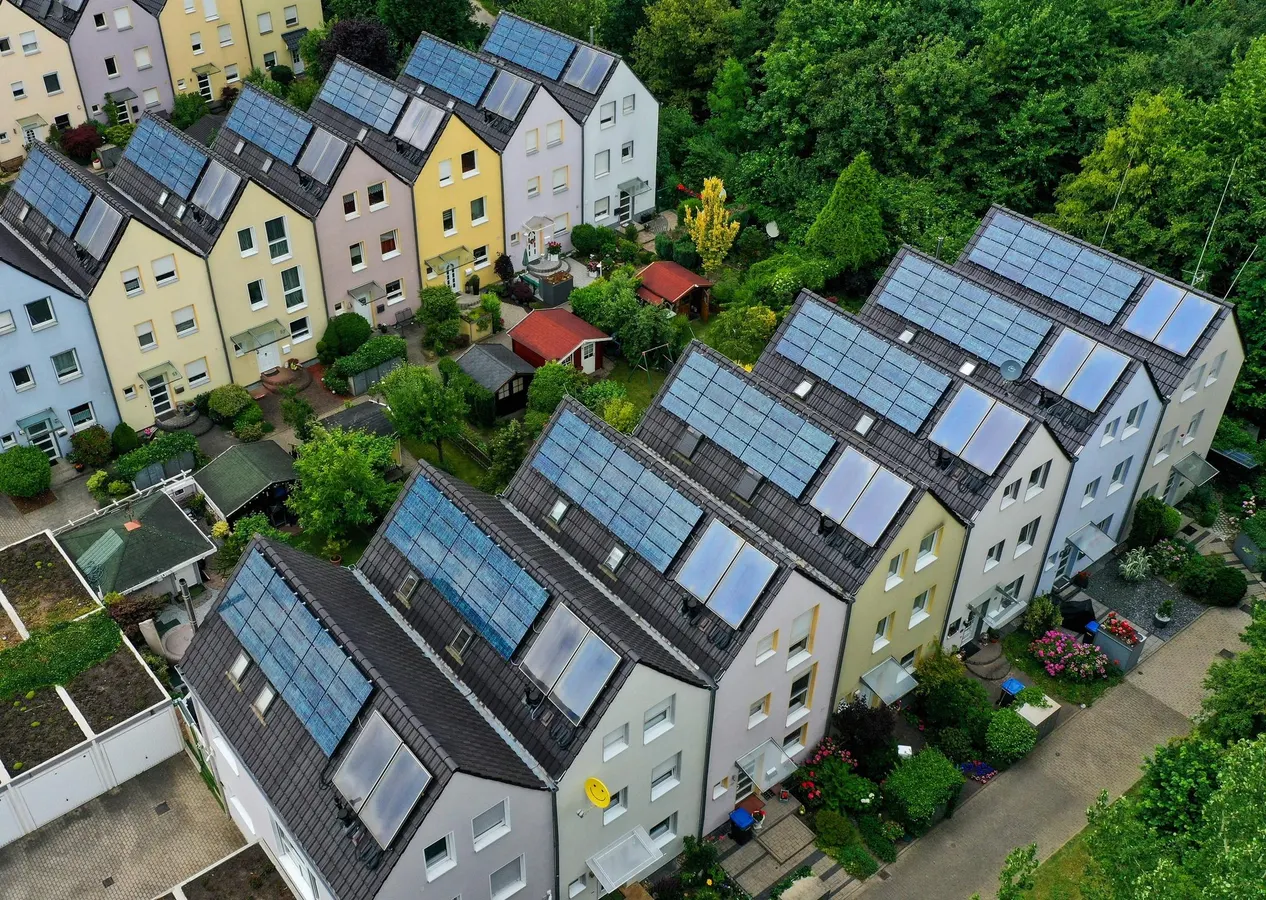

Residential Solar
AFP via Getty Images
A U.S. utility recently told 49,000 customers their power supply would be cut in order to feed an AI data center. For nearly a century, reliable, affordable electricity for everyone, from rural farms to urban apartments, has defined American utility regulation. That cornerstone is fracturing. Ironically, the unintended consequence may be the very thing sustainability advocates have pushed for decades: distributed solar and batteries for homes and businesses.
The Bargain We Made
NV Energy informed Liberty Utilities, which serves forty-nine thousand Lake Tahoe customers, that it will reduce power to that community by 75% starting May 2027. It will redirect that electricity to an AI data center instead.
In the mid-1930s, nearly ninety percent of American farms had no electricity, while ninety percent of urban households did. The disparity sparked the Rural Electrification Act, which enshrined the principle that reliable, affordable power was a public good everyone deserved.
That foundational principle has guided grid regulation ever since. It is now on shaky ground. The Lake Tahoe situation is an acute version of a broader problem. Whether power is being redirected to data centers or simply failing to keep up with demand, consumers across the country are increasingly on their own as they contend with an aging grid now facing the largest electricity surge in a generation.
The Grid Was Never Built for This
AI data centers already consume electricity at scales previously reserved for entire cities. The pipeline of new facilities will multiply that demand. In 2024, U.S. data centers consumed 25 gigawatts of power. McKinsey projects that will more than triple to 80 gigawatts by 2030.
The grid is straining under this load, layered on top of aging infrastructure that was already failing before data centers entered the picture. The U.S. grid averages more than 335 minutes of annual outage per customer. That is roughly twenty times worse than Japan and ten times worse than Germany. Now add surging demand from AI data centers and the question becomes, who gets power in times of scarcity?
When the Grid Fails, Who Keeps the Lights On?
Congress is debating whether to declare AI data centers critical national infrastructure. Proponents argue that three hyperscalers now control more than 65% of the cloud market, creating a systemic vulnerability. If data centers win that designation, load-shedding hierarchies will shift. The February 2021 Texas blackout forced grid operators to shed load in order to keep critical infrastructure such as hospitals and water treatment plants online. 4.5 million homes and businesses lost power and at least 245 people died. If data centers get critical infrastructure status, they will have similar priority over residential customers.
The Economics Have Shifted
As grid reliability deteriorates, households will seek alternatives. Residential electricity prices have risen 37% since 2020, reaching a national average of 17.65 cents per kilowatt hour, according to the U.S. Energy Information Administration. Solar and battery costs have dropped steadily over the same period. Unlike generators, these systems require no fuel, which insulates households from price volatility and supply disruption. The payback period on a full solar and battery system shortens with every rent increase. The resiliency choices that were once driven by ideology are now justified by economics and necessity.
The Irony
For two decades advocates encouraged homes and businesses to install rooftop solar and battery storage. Ideology motivated some and policy helped, but adoption was slow. Now widespread adoption may be the unintended consequence of AI data centers that are poised to upend nearly a century of grid regulation. Sometimes the most transformative outcomes arrive from the most unexpected directions.












Leave a comment