


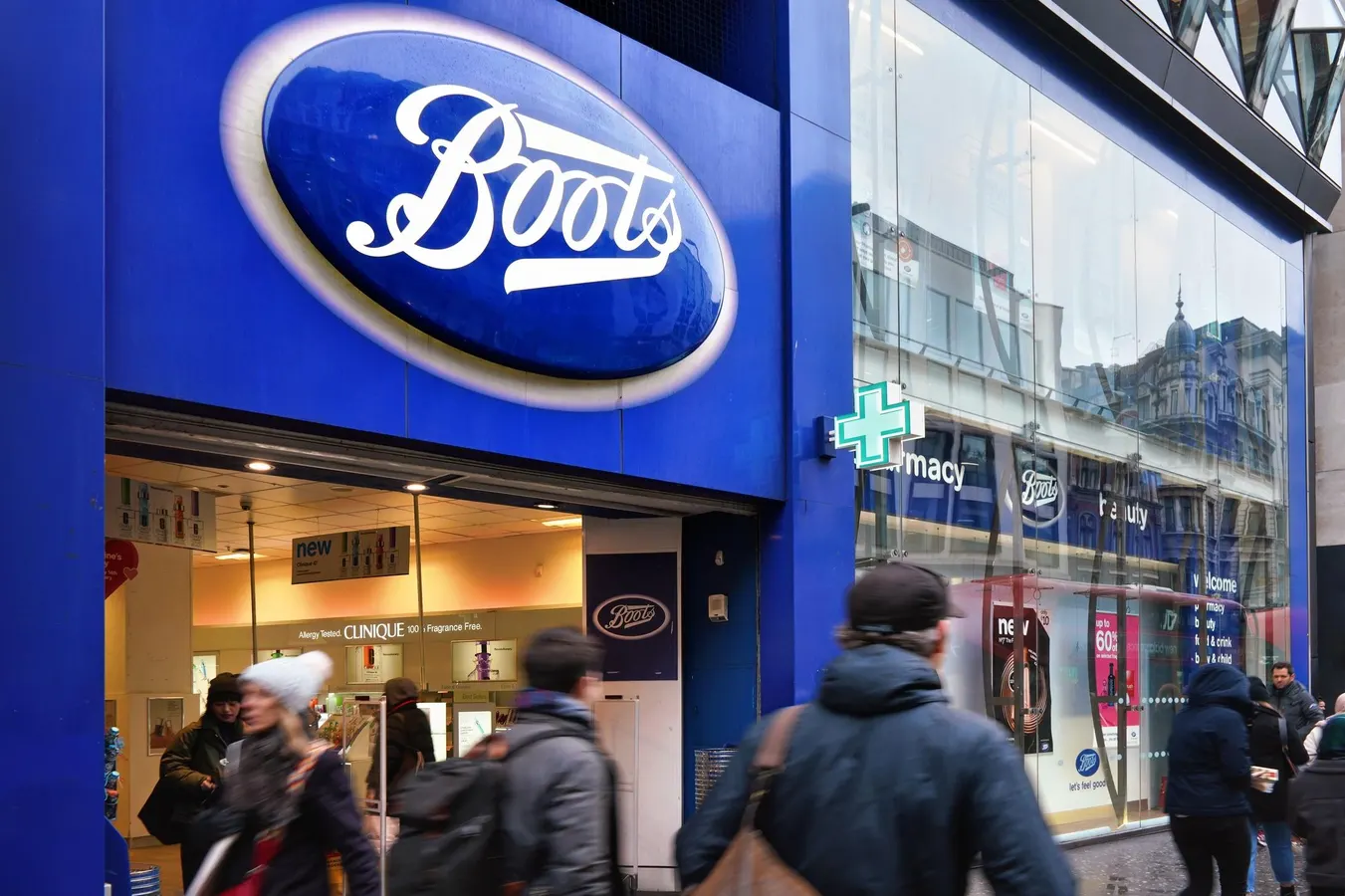

Sigma has pulled out of a possible bid for Boots.
getty
Australia’s Sigma Healthcare has abandoned early-stage discussions to acquire the U.K. pharmacy and health-and-beauty chain Boots, ending a potential deal widely estimated at around $10 billion.
It also prolongs uncertainty over the future ownership of one of Britain’s most recognizable and longstanding retail brands.
The decision draws a line under talks that had only recently emerged, but which would have marked a major international expansion for Sigma following its transformation into a larger pharmacy and retail platform through its merger with Chemist Warehouse.
Instead, Sigma said Boots no longer fits its strategic priorities or capital allocation framework, signalling a renewed focus on its core Australian and Asian growth pipeline.
Bosses at Sigma said the company had “elected to withdraw its interest and cease discussions immediately”, having engaged in the sales process for Boots as it provided a “potentially unique opportunity” to accelerate U.K. operations.
Indeed Boots, which operates roughly 1,800 stores across Britain, has been repeatedly positioned as a strategic asset within global pharmacy consolidation, but has remained in limbo since being formally put up for review in 2022.
The withdrawal of Sigma extends that holding pattern for a business that has cycled through multiple owners, restructurings and strategic resets over the past two decades.
Boots Roots In Nottingham
The chain’s modern corporate history reflects the broader consolidation of European pharmacy retail. Founded in Nottingham, in England’s East Midlands, in 1849 by John Boot, the company expanded steadily through the 20th century as a dominant U.K. high street chemist, before a wave of dealmaking reshaped its structure in the 2000s.
A merger with Alliance UniChem in 2006 created a pan-European pharmacy group, which was then acquired by private equity firm KKR in 2007. Five years later, Walgreens Boots Alliance began taking control, acquiring an initial 45% stake in 2012 before completing full ownership in 2014, integrating Boots into a global pharmacy network spanning the U.S. and Europe.
That global parent has since grappled with structural headwinds across pharmacy retail, including reimbursement pressure in the U.S., margin compression in dispensing, and the growing importance of retail health services and private-label beauty as profit drivers.
Last year Boots was snapped up by private equity firm Sycamore Partners after the U.S. investment giant acquired parent firm Walgreens Boots Alliance for $23.7 billion and in August Sycamore split Boots from the U.S. operations.
The new U.K.-based Boots business included Boots U.K. and Ireland, Boots opticians, No7 Beauty company and pharmacies in Thailand, Mexico and Germany.
Boots Goes For Higher Margin Products
Boots has been increasingly repositioned around higher-margin health and wellness categories, including beauty, dermatology-adjacent services and weight-management treatments, alongside its traditional prescription dispensing business.
In its latest reported year, Boots delivered revenues of about $9.6 billion, with pre-tax profit rising 25% to around $430 million equivalent. Growth was supported by strong demand in beauty and surging sales of weight-loss medications, which have become a fast-growing category across U.K. pharmacy chains.
Boots has diversified and could yet see an IPO rather than agree to be acquired. Photographer: Chris Ratcliffe/Bloomberg
© 2026 Bloomberg Finance LP
The group remains a major U.K. employer with around 51,000 staff, including around 6,000 based at its Nottinghamshire headquarters in Beeston, reinforcing its position as a significant domestic retail and healthcare infrastructure operator.
The collapse of talks also highlights continuing uncertainty around strategic ownership options for Boots. The chain has attracted recurring interest from global retail and investment groups seeking scale in pharmacy and consumer health, including parties linked to Canada’s Weston family interests, which already own Shoppers Drug Mart and grocery group Loblaw.
Those discussions have underscored Boots’ appeal as a mature, high-footfall healthcare retailer with strong brand equity, but also the complexity of its cost base and regulated revenue mix, and it is understood that Sycamore is still considering a potential initial public offering for Boots on the London stock market.
For now, however, the withdrawal of Sigma leaves Boots once again in strategic limbo: a 177-year-old retail institution still searching for a long-term ownership structure capable of unlocking its next phase of growth.
















Leave a comment