


Topline
Chinese President Xi Jinping told a delegation of top American executives Thursday that China’s door will “open wider” to U.S. companies “deeply involved in China’s reform and opening up,” according to Chinese state news agency Xinhua.
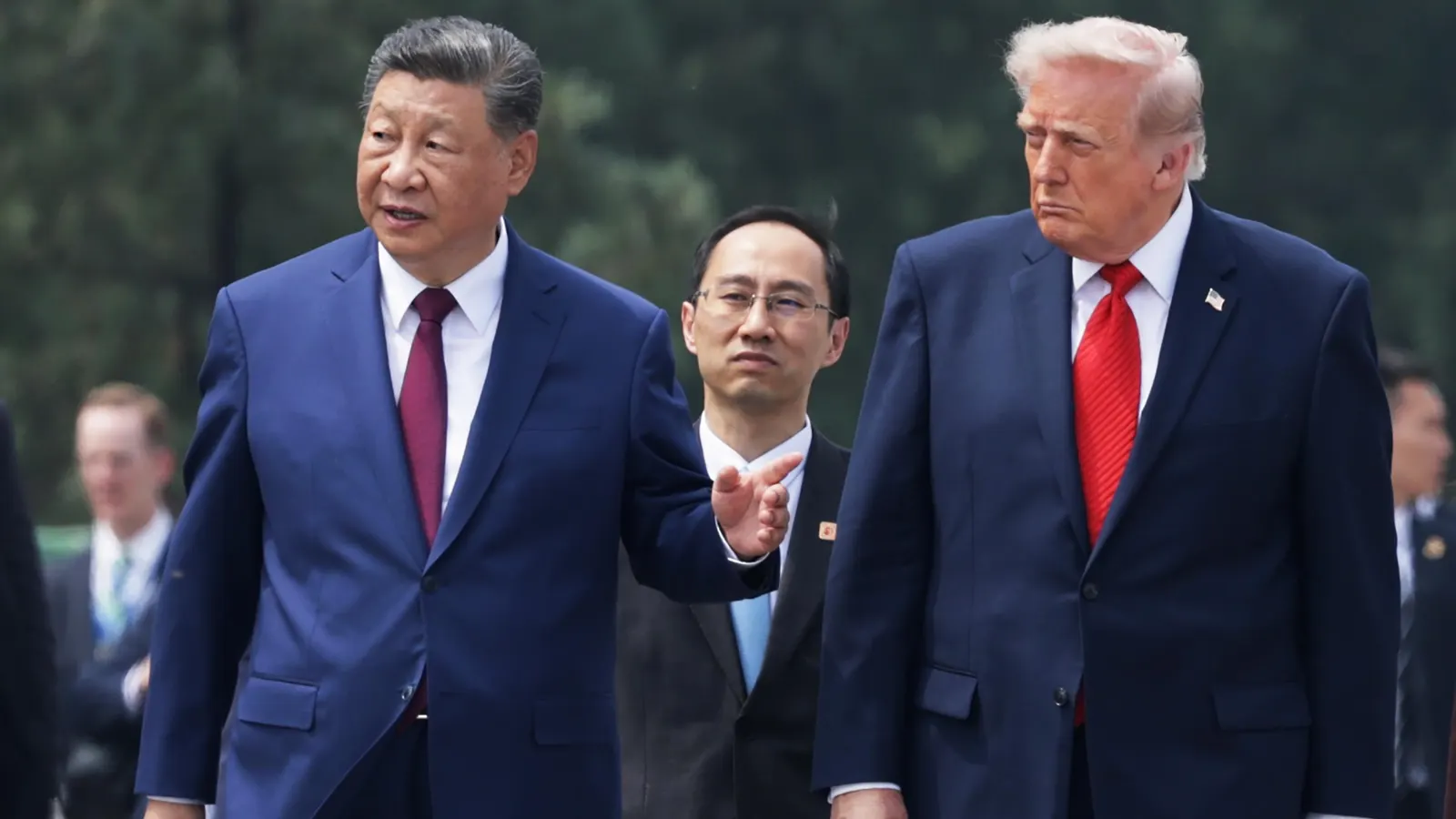
BEIJING, CHINA – MAY 14: U.S. President Donald Trump and Chinese President Xi Jinping arrive for a visit at the Temple of Heaven on May 14, 2026 in Beijing, China. (Photo by Alex Wong/Getty Images)
Getty Images
Key Facts
Trump, who is visiting China along with a group of top U.S executives, told Xi he had brought “outstanding representatives from the U.S. business community, all of whom respect and value China,” personally walking him through the room and introducing more than 10 executives—including Tesla’s Elon Musk, Apple’s Tim Cook, Nvidia’s Jensen Huang and Boeing’s Kelly Ortberg—per the report.
The executives, in turn, said they “attach great importance to the Chinese market” and hope to expand their China operations—a notably warm posture from a group whose companies have spent the past two years navigating U.S. restrictions on selling AI chips to China, on-again-off-again tariffs and pressure to move supply chains out of the country.
The CEOs were spotted leaving in good spirits, with Musk telling reporters the talks were “awesome.”
Chinese Premier Li Qiang held a separate meeting with the executives and reiterated Xi’s message that China will continue improving the business environment for foreign companies, according to state-run news agency CGTN.
Big Number
$1 trillion. That’s the combined fortunes of the six billionaires who joined Trump on the trip, according to Forbes estimates.
Key Background
The friendly tone is a sharp turn from where the two leaders were a year ago. In 2025, Trump hit Chinese goods with steep tariffs, and Beijing fired back by restricting exports of rare earths—a group of minerals used in everything from iPhones to fighter jets that China dominates the global supply of. That fight ended in a one-year truce that expires this fall. China still processes about 85% of the world’s rare earths and makes more than 90% of the magnets that use them, meaning Beijing has serious leverage in any upcoming negotiations. The CEOs in the room have their own running tensions with Beijing. Apple, which still makes the bulk of its iPhones in China, has been racing to shift production to India and Vietnam after Covid lockdowns exposed how fragile that supply chain is. Tesla, once a darling of Chinese regulators, has watched its market share get eaten by domestic electric vehicle makers like BYD and faced its own data localization rules. Boeing has been caught in the crossfire repeatedly, with China halting deliveries of its planes during last year’s tariff fight before resuming them as part of the truce. Nvidia has spent the past two years stuck between two governments, barred by Washington from selling its most advanced AI chips to Chinese customers on national security grounds, while CEO Huang has openly lobbied to keep at least some access to the market that once accounted for a sizable share of his company’s data center sales. His last-minute addition to Trump’s China trip—followed hours later by a Reuters report that the U.S. had cleared H200 chip sales to major Chinese firms—suggests that lobbying may finally be paying off.
Tangent
Nvidia shares jumped more than 4% on Thursday on news the U.S. had cleared H200 chip sales to several Chinese firms, the same morning Huang was seated in Xi’s meeting room. The rally started a day earlier, when Nvidia closed up 2.3% Wednesday on news of Huang’s last-minute addition to the trip, while Tesla rose 2.7% and Boeing gained 1.6%. Nvidia briefly hit a record high during the U.S. session Thursday, a sign investors are betting the “open wider” rhetoric translates into real revenue—particularly for chipmakers who’ve spent two years being told China was off-limits. The broader indexes rode the same wave: the Dow, S&P 500 and Nasdaq all rose Thursday.
Contra
The warm welcome for the CEOs came as Xi warned Trump, in the same meeting, that the U.S. and China “will have clashes and even conflicts” if the issue of Taiwan, the self-governing island Beijing claims as its territory, isn’t handled carefully. Xi called Taiwan “the most important issue in China-U.S. relations.”









Leave a comment