


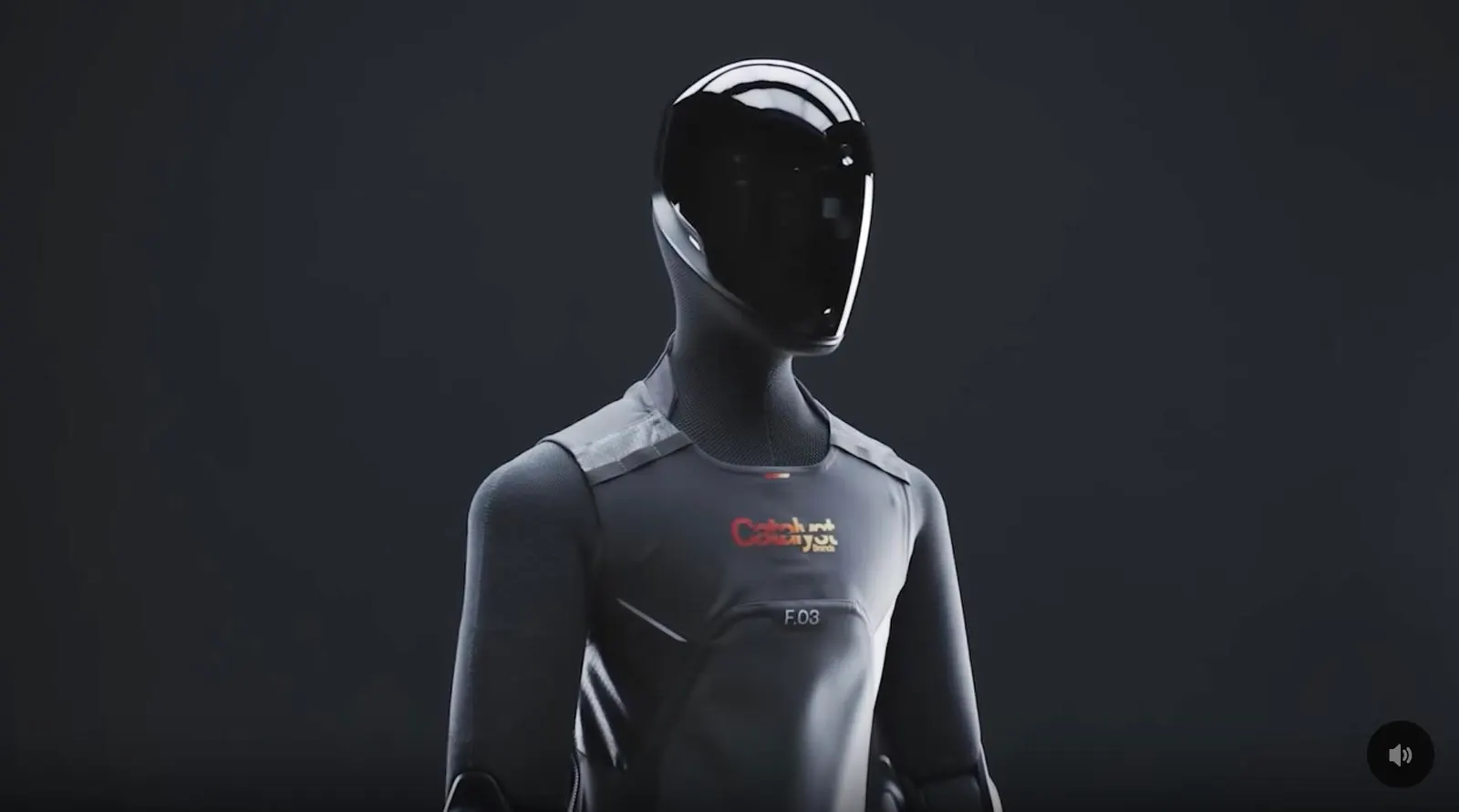

Figure 03 humanoid robot. Screenshot from a Brett Adcock tweet.
John Koetsier
Figure got a job at dad’s company. Not literally, of course, because humanoid robots don’t have dads. Or moms. But figuratively (sorry) because a key investor in Figure’s series C investment round just decided to bring in Junior to help with distribution and logistics.
The company is Catalyst Brands, a multi-brand retail holding company that owns JCPenney, Aéropostale, Brooks Brothers, Eddie Bauer, Lucky Brand and Nautica: about $9 billion in revenue and 60,000 employees across roughly 1,800 stores. It’s 50% owned by Brookfield, which was part of Figure’s $1 billion Series C at a $39 billion post-money valuation.
“This agreement marks the first commercial bridge between Figure and a portfolio company of Brookfield,” Figure said in a statement. ”As a shared investor in both companies, Brookfield’s support reflects a unified vision for the future of industrial automation.”
Where this sits in the humanoid robot get-a-job race
The “got a job” milestone has been moving fast and furious for two years now in the humanoid robots space.
In November 2024, Agility Robotics’ Digit was the only humanoid robot on the planet with a paying gig, CEO Peggy Johnson told me at Web Summit that year. Five weeks later, Figure 02 shipped to its first commercial customer, making Figure the second. In February 2026, Agility signed a robots-as-a-service deal with Toyota Canada. And just recently in April, Agibot’s wheeled G2 went live on a tablet production line in China: the first humanoid on a high-speed electronics manufacturing line.
A signed distribution-center deal in 2026 is no longer a category first. What makes Catalyst significant is breadth: six retail banners, a stated intention to deploy “across a diverse, multi-brand portfolio” and the financial structure underneath it.
Of course, there’s a lot we don’t know yet
Figure’s news is pretty light on specifics.
We don’t know how many robots Figure will ship to Reno, where they’ll start working at Catalyst’s Nevada Distribution Logistics Center. We don’t know when, though it’s presumably soon. We also don’t know whether this is a purchase, lease, or robots-as-a-service deal, or what tasks specifically the robots will do.
Figure does say its robots will start by “focusing on automating physically demanding tasks within the supply chain” and that they “can be deployed across a diverse, multi-brand portfolio instantly.”
The reaction on Threads: a sign of the times?
As we continue to see more and more layoffs where companies blame AI, the reaction on Threads has been overwhelming negative to the news. Not only has the reaction been negative, but people have interpreted this announcement as “humanoid robots in stores.”
“Any store using these will not get my business,” says Robin Forman.
“AI/Robotics cost WAY more than people and no one will shop there because NO ONE WANTS THIS,” says Amy Kemper. “I swear you learned NOTHING from self checkouts.”
Figure’s release is pretty clear: this is a logistics and distribution job. So at least some of the consternation is unwarranted.
That said, many others are concerned about unemployment being exacerbated by robots taking jobs. While Figure says the deployment will be focused on “automating routine, repetitive tasks” and thereby “enabling associates to shift toward higher-value work,” people see jobs being lost, regardless of type.
That’s something both AI and robotics companies are going to need to take into account in the future. While I’ve spoken to multiple technologists who believe that AI and robotics will ultimately open up many more new jobs for humans, that’s not proven.
And if advanced technology is going to be a net negative for human jobs, governments will have to find ways to keep people gainfully employed … or otherwise compensated. The alternatives are ugly in the extreme.













Leave a comment