


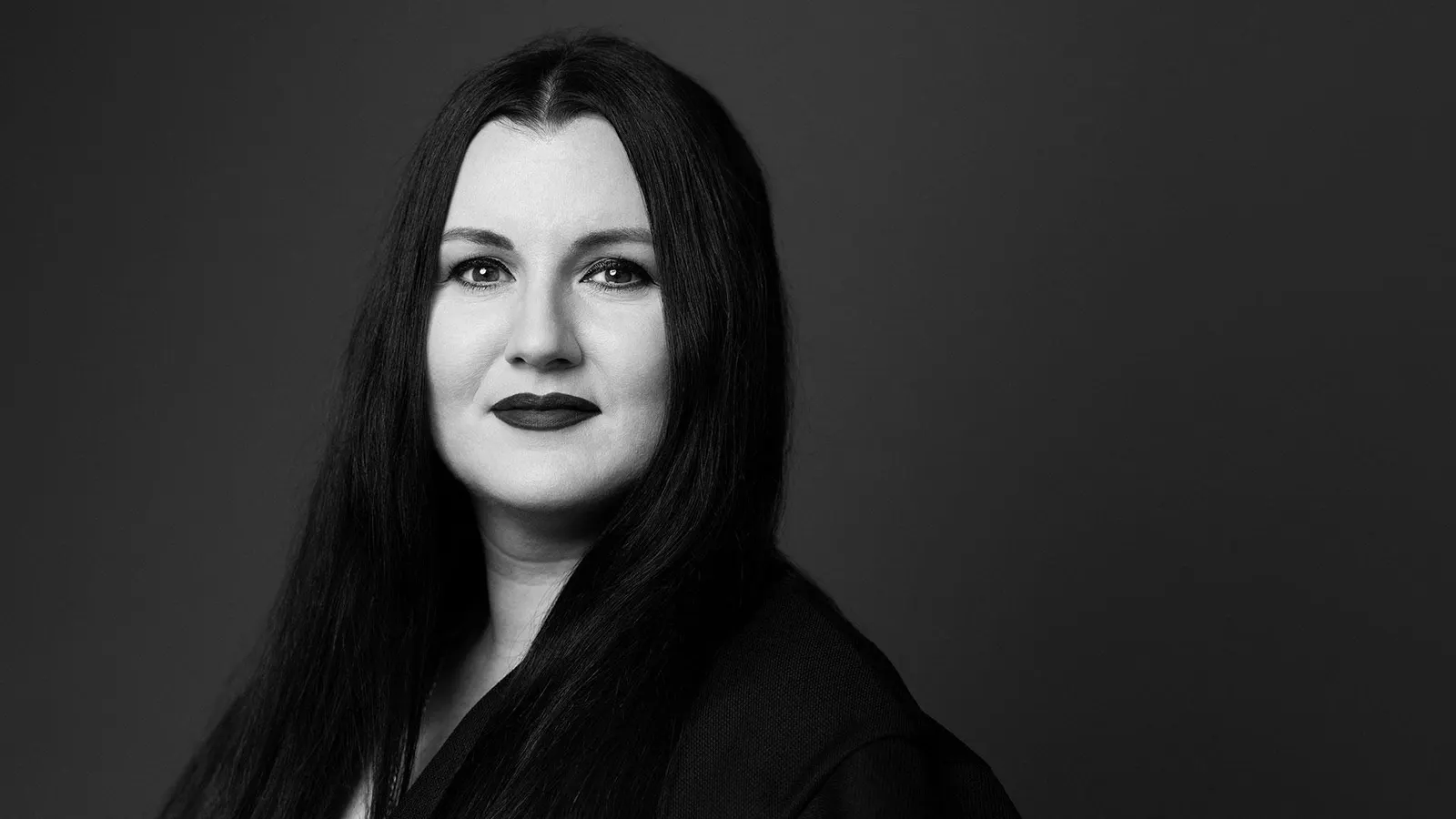
In May 2025, Fidji Simo started her dream job at OpenAI as Sam Altman’s second-in-command. But as she ramped up her work as chief executive of applications and then of AGI deployment, privately she was suffering from a devastating health condition.
She’d been diagnosed six years earlier with postural orthostatic tachycardia syndrome, or POTS, a frustrating chronic condition in which moving from lying down to standing, or even to sitting up, can cause a racing heart and dizziness. But after starting at OpenAI, her condition worsened, and she found she could no longer keep up with the frenetic schedule the AI startup demanded. This July, Simo stepped down from the company, though she remains an adviser there.
“Unfortunately, it’s very, very hard for me to stand without passing out. I can’t sit or stand so long—more than five or 10 minutes, I pass out, which is very inconvenient to say the least,” she says.
For the last year, Simo, 40, has been working on ways to use AI to attack chronic health conditions like her own. In March 2025, while still at OpenAI, she launched a startup called ChronicleBio with Rohit Gupta, who had previously overseen biobanks at Stanford and UCSF, and Rishi Reddy, a managing director at Tarsadia Investments. While Simo is a cofounder, Gupta is the company’s CEO. Reddy, whose firm gave the company a few million dollars as its first seed funding, is executive chairman.
Their goal: To sort through the thicket of symptoms underlying chronic immune-related diseases like POTS, long COVID and myalgic encephalomyelitis/chronic fatigue syndrome, known as ME/CFS (the term “chronic fatigue syndrome” has fallen out of favor for trivializing and stigmatizing a debilitating health condition). Taken together, perhaps 250 million worldwide suffer from this set of chronic conditions, Gupta estimates.
The company is gathering blood from patients with these complex chronic conditions in the United States (at sites in Utah, Arizona and Texas with more in the works) and in India (where Reddy’s family owns a hospital) to do a comprehensive analysis of what’s going on biologically for them. In August, it also began working with mobile phlebotomy trucks to reach people who are homebound or bedbound and can’t get to a clinic.
To date, ChronicleBio has collected nearly 200 terabytes of data—roughly four times the amount in OpenAI’s early GPT-3 model—from more than 1,000 patients, with nearly 9,800 tubes of blood that have yielded 40,000 vials of specimens stored in its biobank. From those samples, ChronicleBio measures more than 1 billion data points, including 2,000 metabolites, which are small molecules your body makes when it digests food, repairs cells or performs other functions, and 1,000 proteins that carry out almost every biological function in the body.
Its goal is to first tease out differences among people who are currently lumped together under one header for diagnosis and insurance company purposes. By differentiating those who have subtypes of these chronic conditions, ChronicleBio hopes to provide frustrated patients with more information and treatment.
“We think these conditions are names that doctors have put on symptoms, and we think there is a lot of heterogeneity,” Simo says. “If a condition is really 10 conditions, it’s much harder to develop a drug.”
While ChronicleBio is early-stage, it has raised $20 million from investors that include Breyer Capital, Wisdom Ventures and Proximal Ventures, as well as individual investors like Stripe’s Patrick Collison. The Menlo Park, California-based startup plans to raise more funds later this year or early next.
Like Simo, both Reddy, 39, and Gupta, 44, have personal experience with autoimmune disease: Reddy was diagnosed with psoriasis as a child and has dealt with a slate of immune-related symptoms post-COVID. Gupta’s wife suffers from a variety of debilitating autoimmune symptoms that they’ve struggled to find answers for. “Right now, patients present with these crazy symptoms and doctors don’t know what to do with them,” Reddy says. “I don’t think any three people want to solve this problem more than we do. We want it so bad, for ourselves and for our kids, because there is a genetic predisposition to this, and because there are millions of people out there.”
The cofounders started by homing in on ME/CFS, which affects an estimated 3.3 million people in the U.S., and found five subtypes of the disease. They then ran analyses on adjacent conditions, like POTS, on the theory that the names of these conditions are less important than their underlying biology. So far, they’ve identified 13 different subtypes across chronic illnesses. If that holds up in further testing, they believe it could change how clinical trials are set up.
The majority of all drugs fail during clinical trials, with a 2019 study finding that 30% fail in phase II because they show insufficient efficacy to treat the condition for which they’re being tested. ChronicleBio’s hope is that some potential treatments that have failed or stalled out could succeed for smaller, targeted groups of patients once those subtypes have been identified. Eventually, the firm hopes to figure out the root causes of these debilitating diseases and develop its own drugs to treat them.
“I don’t think any three people want to solve this problem more than we do.”
ChronicleBio is one of a flood of companies that are looking to use AI and data to develop new therapies more quickly, including for diseases previously considered “undruggable.” Alphabet-founded Isomorphic Labs raised $2.1 billion earlier this year to build out its own pipeline, while VC-backed startups like Chai Discovery and Manifold Bio have signed agreements with major drug companies. Even OpenEvidence, the AI clinical tool used by the majority of U.S. doctors, is now looking to bring drugs for rare cancers into clinical trials, helped by data on genetic variants of cancer from Memorial Sloan Kettering.
ChronicleBio’s difference is that it is focused squarely on chronic diseases like POTS, long COVID and ME/CFS that have long stymied scientific researchers. These conditions receive far less attention and funding than, say, cancer. That’s why it’s building its own biobank to make sense of them.
“The idea behind it is that for complex conditions like mine, we don’t understand the biology well enough to develop drugs yet,” Simo says.
ChronicleBio hopes that by creating subtypes of complex chronic conditions like POTS and ME/CFS, it can better match smaller groups of patients with therapies that could help them.
Courtesy ChronicleBio
Simo, who was born in France and served as head of the Facebook app and CEO of Instacart before joining OpenAI, first received the POTS diagnosis in 2019. In conversations with biotech and pharmaceutical executives, she was surprised to learn just how little they knew about the condition. Like many chronic neuroimmune disorders, POTS has neither a known cause nor a cure. People who have it—the vast majority of whom are women—have to simply learn how to manage it. Those who suffer from these conditions often spend years banging their heads against the wall of the existing medical system that doesn’t know what to do about their amorphous, yet debilitating, symptoms.
In April 2023, Simo cofounded a health clinic and research center focused on neuroimmune conditions called the Metradora Institute in Salt Lake City (where its medical cofounder and CEO was based). But running the clinic “was very hard,” she recalls with a laugh. Metradora’s patients were all facing complex diseases with uncertain treatments. “You’d have patients who came in with thousands of pages of records, and insurance pays for 15-minute visits,” she says. She realized that focusing on research rather than treatment was a more promising approach, and it closed in June 2025.
“We think these conditions are names that doctors have put on symptoms.”
By the time Simo started Metradora, the pandemic had receded, but more 15 million people in the U.S. (and perhaps as many as 400 million worldwide) had developed long COVID. Meanwhile, others who already had autoimmune conditions found COVID made their symptoms worse, even when they recovered from the virus.
“Pre-COVID there wasn’t much attention on it,” Gupta says, noting that doctors would often dismiss patients with ME/CFS (the majority of whom are women) as simply being stressed out or needing to exercise more. “Now you are starting to see more attention on post-viral conditions,” he says.
Some of the Metradora patients joined a clinical trial on the use of a blockbuster immune system drug. Called Vyvgart, it’s used to treat the chronic autoimmune neuromuscular disease myasthenia gravis. The trial was testing if it would also work for people with long COVID-associated POTS. For some, being in the clinical trial was a game-changer. Some had regained their lives after being bedbound. Mia Della Gatti, who was then a college student at Brigham Young University and had been diagnosed with POTS, says that while she was in the trial through Metradora she went from missing half her classes due to being bedridden to taking 18 credits in one semester. “It was life-changing,” says Della Gatti, who considers herself lucky because her condition has improved since then, though she still has flares. “I went from barely being able to go to the grocery store to being able to be outside.”
ChronicleBio CEO Rohit Gupta previously ran biobanks for Stanford and UCSF.
Courtesy ChronicleBio
But in June 2024, Vyvgart’s maker, European pharma giant Argenx (market cap: $60 billion) canceled the study. The company said at the time that “patients had no clinically meaningful improvement compared to placebo,” and that it would “not move forward with development” in post-COVID POTS in order to prioritize the nearly 50 active clinical trials it had in its expanding pipeline. (“We understood there were patients who reported feeling better. We didn’t see any evidence in the data that that was because of Vyvgart,” says Argenx spokesman Ben Petok.)
The trial’s end was heartbreaking for a group of patients who had gained access to the study. After the trial stopped, a group of 53 patients in the study published a public letter in The Sick Times in October 2025 asking for a redesigned trial of the drug for people with long COVID POTS. “Most of us have now relapsed,” they wrote. “But we’re not just grieving what we lost; we’re demanding change. Long COVID research must evolve. Without urgency, patients like us will continue to suffer.”
Simo points to that failed trial as an example of the problem of complex neuroimmune conditions for both patients and drug companies. For a clinical trial to succeed, and a therapy to get FDA approval, the drug’s creator has to match the therapy with the right group of patients. But to do that, it needs to understand and find the patients who are most likely to respond. “It was magical for a subset of people, but the clinical trial still failed,” Simo says. “This is a story that happens often. The clinical trial fails, but it could have helped 20% of patients.”
“We want to be precise with our work and not just buzzwording about ‘precision medicine’ and ‘personalized therapies.’”
ChronicleBio (which inherited Metradora’s research assets before it closed) hopes that by identifying different subsets of these chronic illnesses, it can save some of these therapies from the dustbin for smaller groups of patients. A lot of its initial research has been in ME/CFS, where roughly one-quarter of people with the ailment are so severely affected that they are housebound. The worst among them can’t get out of bed.
To date, ChronicleBio’s researchers have identified five different subtypes of disease, and are now working on mapping patients with each subtype to different potential therapies. For one subtype, there are three or four shelved therapies that line up with the biological underpinning, Gupta says. The type of analysis that goes into creating these subtypes of patients is only achievable because of advances in both AI and in the vast volume of biological data that is now possible to get.
“We want to be precise with our work and not just buzzwording about ‘precision medicine’ and ‘personalized therapies,’” he says. “The last thing a patient needs in our space is for us to go after these things so aggressively and not select for the right patient or the right asset and have another failed trial. Every time there’s a failed trial, it’s a big letdown.”
Simo says that ChronicleBio is in discussions with pharma companies (which she declined to name) about shelved assets that might work for certain subsets of patients. The company is considering different business models, including buying potential therapies that it would develop itself or working in partnership with a drug’s maker to get it through clinical trials. Gupta plans to start the first trials in ME/CFS this year, with the next trials beginning early next year. Longer term, ChronicleBio hopes to be able to uncover the root causes of these chronic conditions, and to set up its own pipeline of therapies.
In many ways, the approach echoes what preceded cancer treatment breakthroughs over the past decade. The number of cancer drugs has proliferated so that patients can receive therapies based on the specific biomarkers of their disease, rather than simply where a tumor happens to be located in the body. Simo hopes to spur a similar movement in complex chronic conditions like POTS and long COVID.
For Simo, who has been very open about her own health struggles, those targeted cures can’t come soon enough. “I think we are finally at a point where precision medicine can expand to chronic illness,” she says.
















Leave a comment