


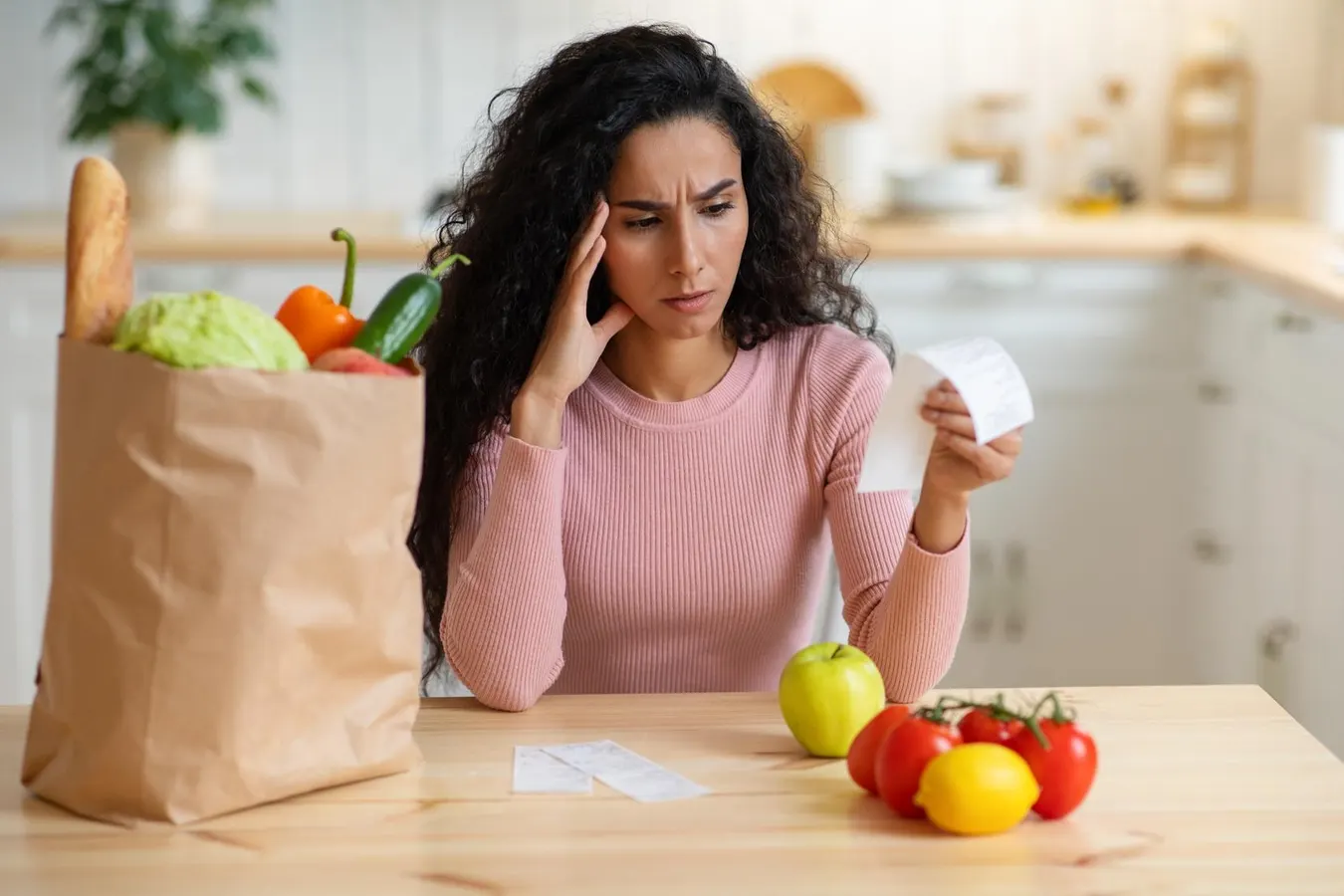

The ability to pay after covering housing, utilities and other essential expenses is more important than grocery prices alone.
getty
Texas has some of the nation’s least expensive groceries. Mississippi does too. Yet millions of families in both states struggle to put food on the table. The paradox is simple: even where grocery prices are relatively low, grocery affordability can remain out of reach.
Consumers don’t buy groceries with inflation statistics. They buy them with whatever money remains after paying the mortgage or rent, utility bills, insurance, transportation and other essential expenses. As grocery prices remain elevated and food inflation continues to pressure household budgets, that’s why millions of Americans continue to feel financially squeezed even as inflation has moderated. Perhaps we’ve been measuring the right number, but focusing on the wrong problem. The real question is no longer simply what groceries cost. It’s whether families can still afford them as the broader cost of living continues to rise.
For years, economists, policymakers and the media have relied on inflation as the primary measure of consumers’ financial well-being. Inflation is important because it tells us whether prices are rising or falling. Consumers feel this every time they shop. As I wrote earlier this year, geopolitical events such as the Middle East conflict can quickly push grocery prices even higher. A typical grocery basket today costs more than 50% more than it did in 2020.
But those statistics answer only one question: How much have prices risen? They don’t answer the more important one: Has a family’s Ability to Pay kept pace? That’s the difference between measuring inflation and measuring affordability. Inflation measures what happens at the checkout counter. Affordability measures what happened to a family’s paycheck before they ever walked into the store.
North Carolina illustrates why.
Although the state does not rank among the nation’s most expensive grocery markets, nearly 41% of households either live in poverty or earn above the federal poverty line yet still struggle to afford basic necessities, a group commonly known as ALICE (Asset Limited, Income Constrained, Employed). At the same time, housing and energy costs have continued to outpace wage growth, while approximately one in six North Carolinians relies on SNAP to help purchase food. For many working families, the issue isn’t simply what groceries cost; it’s whether enough income remains after paying for life’s other essentials to put food on the table.
North Carolina is hardly unique.
Across the country, states with relatively modest grocery prices often have lower incomes, higher poverty rates or greater dependence on nutrition assistance. Conversely, some higher-income states can absorb higher food prices more easily because household purchasing power is stronger. Looking only at grocery prices obscures these differences and helps explain why national inflation statistics often fail to reflect consumers’ lived experience.
Consumers have already adjusted to this new affordability reality. Some shoppers are looking for the lowest cost per serving, stretching their grocery dollars by purchasing larger family sizes or warehouse-club packs. Others simply need the lowest price they can afford today, even if it means buying a smaller package with a higher cost per ounce because that’s all the week’s budget will allow. Increasingly, food manufacturers and retailers are designing products, package sizes and promotions for both types of shoppers.
HOW BUSINESSES ARE RESPONDING TO CONSUMERS’ ABILITY TO PAY
Retailers and food manufacturers have already begun adapting to this new affordability reality. As consumers become more price-sensitive, private-label products have grown to nearly one-quarter (24%) of all U.S. grocery sales, a remarkable shift from being viewed primarily as low-cost substitutes to becoming brands that compete on quality, innovation and value. Walmart has rolled back prices on over 250 items, doubling down on its Great Value brand, while refreshing packaging, improving product quality, and reinforcing its value positioning. Kroger has responded by lowering prices on thousands of everyday staples, simplifying promotions, and testing broader price reductions as shoppers increasingly favor predictable everyday value over complicated coupon programs.
Large national food manufacturers are adjusting as well. PepsiCo has reduced prices on selected Lay’s, Doritos and Cheetos products while using AI-driven analytics to target promotions more precisely. Others, including Kraft Heinz, are redesigning package sizes and opening price points so shoppers can buy trusted brands without making larger up-front purchases. General Mills and Conagra are investing more heavily in promotions and simplifying product portfolios to emphasize products that clearly communicate value.
These are not simply reactions to inflation. They are responses to declining affordability.
The implications extend well beyond the grocery aisle. As I’ve written previously in Forbes.com, affordability is increasingly influencing consumer confidence, household decision-making and even voter priorities. When families struggle to afford everyday necessities, economic statistics become less meaningful than their lived experience.
If affordability is now the defining challenge, policy solutions should focus on strengthening households’ ability to pay while reducing unnecessary cost pressures throughout the food system.
In the near term, policymakers should avoid actions that unnecessarily raise food costs, including tariffs on key agricultural inputs, while ensuring a stable, legal agricultural workforce so fruits and vegetables can be harvested efficiently rather than becoming more expensive because of labor shortages. Nutrition assistance should also remain responsive during periods of elevated food inflation so the nation’s most vulnerable households, especially those with children, do not lose purchasing power when they need it most.
Over the longer term, the solution extends beyond individual policies. We need better ways to measure the financial health of American families. Inflation tells us what prices are doing. Affordability tells us whether households can still purchase what they need after paying for housing, energy, transportation, healthcare and other essentials.
For decades, inflation has been the nation’s economic scoreboard. Today’s challenge is different. Prices remain elevated while millions of Americans struggle to keep pace, not simply because groceries cost more, but because too little income remains after paying life’s other essential expenses.
Inflation will always remain an important economic indicator. But for millions of American families, the more meaningful question is no longer whether prices are rising. It’s whether they can still afford the essentials of everyday life. This article proposes an Ability to Pay framework for assessing grocery affordability, one that focuses on whether households can still purchase life’s essentials after meeting their other financial obligations. Until we begin measuring that reality with the same rigor that we measure inflation, we’ll continue to misunderstand the financial pressures facing American households.











Leave a comment