


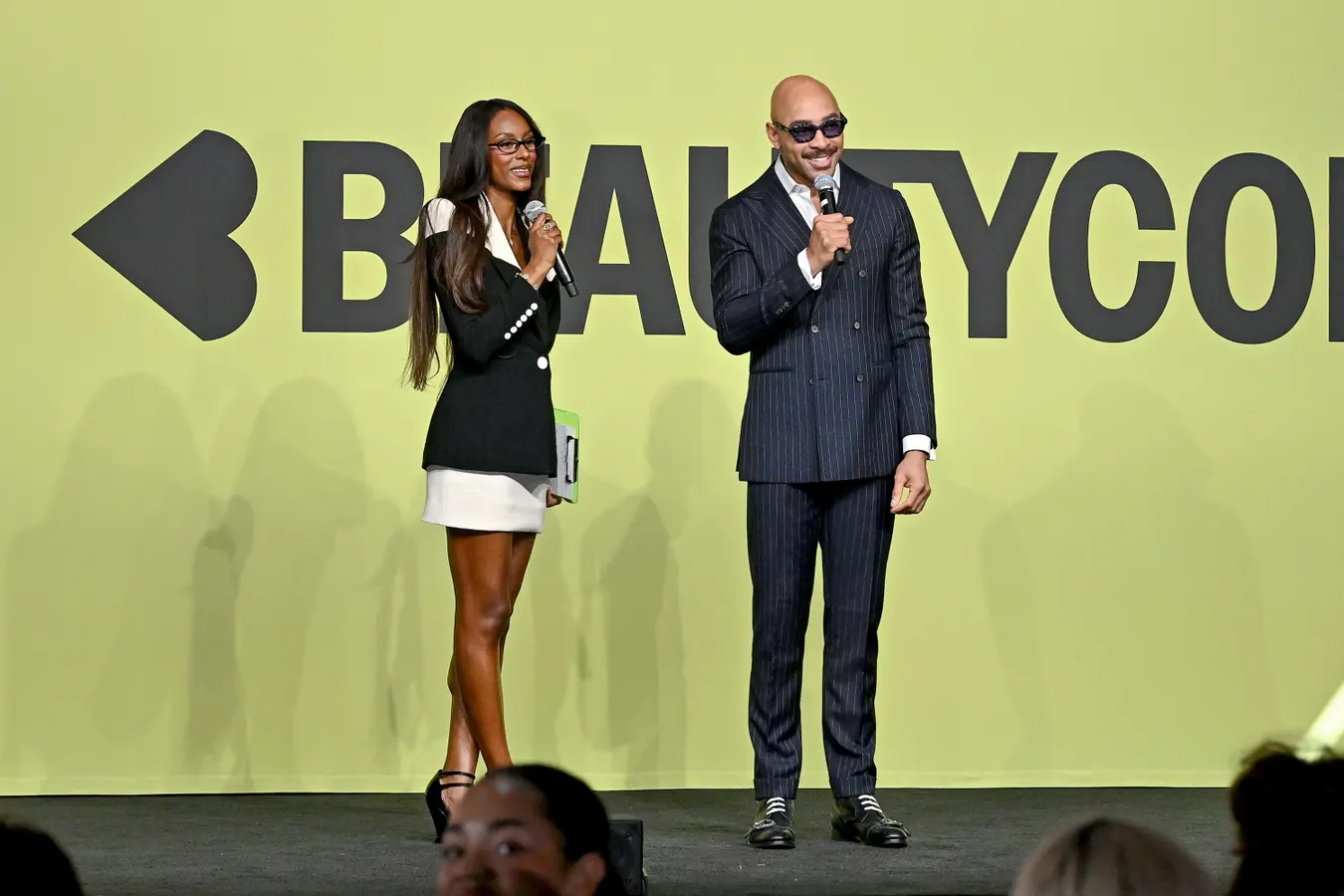

LOS ANGELES, CALIFORNIA – SEPTEMBER 19: (L-R) Brooke DeVard and Sir John speak onstage during 2026 Beautycon University powered by Refinery29 at Rolling Greens DTLA on September 19, 2026 in Los Angeles, California. (Photo by Paras Griffin/Getty Images for Beautycon/Sundial Media & Technology Group)
Getty Images for Beautycon/Sundial Media & Technology Group
In Hollywood, a celebrity’s influence can extend far beyond the screen, red carpet or stage—and increasingly, into the beauty aisle. Beautycon 2026 offers a window into how that star power is translating into a larger business opportunity: turning celebrity fandom into consumer demand.
As entertainment talent and creators expand into beauty, the industry is tapping into something more powerful than name recognition alone: the emotional connection fans have with the personalities they follow, the products they champion and the communities they help build. In an increasingly competitive beauty market, that connection is becoming one of the industry’s most valuable currencies.
LOS ANGELES, CALIFORNIA – SEPTEMBER 19: Cardi B attends 2026 Beautycon University powered by Refinery29 at Rolling Greens DTLA on September 19, 2026 in Los Angeles, California. (Photo by Paras Griffin/Getty Images for Beautycon/Sundial Media & Technology Group)
Getty Images for Beautycon/Sundial Media & Technology Group
The Business Behind Celebrity Fandom In Beauty
For celebrity beauty brands, influence can be a powerful introduction. But what makes consumers invest in a product and remain loyal beyond the initial excitement of a launch?
At Beautycon University, Sir John, the program’s Head of Class and Professor of Face, explored beauty through identity, emotion, color and confidence. For the celebrity makeup artist and creative director, that connection between identity and perception extends to fandom. “I believe that being a fan of a celebrity or any person alters the window in which you see all of their work, their beauty, what they do, what they don’t do,” he says.
That perception can carry significant value for beauty brands built around recognizable personalities. But Sir John believes fandom extends beyond a celebrity’s image. “There’s so many people who have a massive fan base, and they can do no wrong because they can’t separate the craft, usually, from the person,” he says.
For Sir John, what sustains that connection is something deeper than star power: character. “All of this can go away tomorrow,” he says, referring to the fame, attention and influence that can come with celebrity. What remains, he argues, is character—and that can determine whether an audience connection has staying power.
For an industry increasingly turning to celebrity and creator influence, a recognizable name can generate awareness. Lasting brand value, however, comes from turning that attention into a relationship consumers want to maintain.
LOS ANGELES, CALIFORNIA – SEPTEMBER 19: Sir John speaks onstage during 2026 Beautycon University powered by Refinery29 at Rolling Greens DTLA on September 19, 2026 in Los Angeles, California. (Photo by Paras Griffin/Getty Images for Beautycon/Sundial Media & Technology Group)
Getty Images for Beautycon/Sundial Media & Technology Group
Representation Is Part Of The Beauty Business
The relationship between beauty and fandom extends beyond celebrity-founded brands. For content creators and advocates, visibility can shape how consumers understand beauty and who feels represented within the industry.
At Beautycon 2026, content creator and alopecia advocate Chloe Bean emphasized the need for greater representation of people whose experiences have historically been overlooked. Reflecting on her own journey, she says, “I think an affirmation for me is that beauty goes beyond hair.”
For Bean, representation means giving people the freedom to define beauty on their own terms. “I love makeup. I love wigs. I love changing the way I look, and I think that’s beautiful,” she says. “You can love yourself bold, and you can also love yourself in… anyway that you feel beautiful in.”
LOS ANGELES, CALIFORNIA – SEPTEMBER 19: Lauren-Ashley Beck and Chloe Bean speak during 2026 Beautycon University powered by Refinery29 at Rolling Greens DTLA on September 19, 2026 in Los Angeles, California. (Photo by Paras Griffin/Getty Images for Beautycon/Sundial Media & Technology Group)
Getty Images for Beautycon/Sundial Media & Technology Group
Bean points to the visibility surrounding Jada Pinkett Smith’s public discussion of alopecia as a moment that helped bring greater awareness to the condition. But she believes more representation is still needed. “Everyone now knows how to say Alopecia,” Bean says. “But I still think there should be more information.”
For beauty brands, that visibility can shape who feels seen and engages with their products. Bean’s perspective underscores the need to move beyond awareness and toward representation that consumers can recognize in the campaigns, products and experiences brands create. As she puts it, “You go to Sephora, Ulta, any store, and you see models who shave their hair for campaigns. But why not use a girl with alopecia?”
Beautycon Examines The Business Behind Celebrity Fragrance
Fragrance offers another perspective on the relationship between celebrity and consumer identity. Unlike many beauty products, perfume is closely tied to memory, personal taste and emotion, creating an opportunity for celebrities and creators to connect with consumers on a more personal level.
At Beautycon 2026, scent sommelier Asia Grant was joined by Jackie Aina, founder of FORVR Mood, for a live episode of Refinery29 and eos’ Nose Dive podcast, exploring the business of personal branding, influence and the creator economy.
Grant sees celebrity fragrance as another form of creative expression. “I love when celebrities come out with their perfumes. I think it’s so fun, especially as artists, to be able to explore different medium,” she says. She also believes fragrance should be rooted in genuine creativity rather than simply commercial opportunity: “it’s such a personal expression and fun process that it can’t be a money grab.”
LOS ANGELES, CALIFORNIA – SEPTEMBER 19: (L-R) Asia Grant and Jackie Aina speak onstage during 2026 Beautycon University powered by Refinery29 at Rolling Greens DTLA on September 19, 2026 in Los Angeles, California. (Photo by Paras Griffin/Getty Images for Beautycon/Sundial Media & Technology Group)
Getty Images for Beautycon/Sundial Media & Technology Group
The category’s business potential is significant. NielsenIQ found that fragrance was one of the two largest celebrity beauty categories in 2023, with celebrity brands accounting for 2.9% of total fragrance dollar sales. More broadly, Circana reported that U.S. prestige fragrance sales grew 12% in 2024, making fragrance the fastest-growing prestige beauty category that year.
As celebrities and creators continue entering the category, fragrance offers another way to transform personal identity and cultural influence into a product consumers can experience for themselves.
Building A Brand Around Community, Not Just An Aesthetic
While celebrity can attract attention, building a beauty brand that resonates with a broad audience requires understanding who it serves. For Mitchell Halliday, creative director and founder of Made By Mitchell, inclusivity and community are central to that process.
“I try not to focus too much on an aesthetic, because I think an aesthetic really limits the people that can be a part of it,” Halliday says. Instead, he wants to create a brand where consumers can express themselves freely. “Beauty should be for everyone,” he says.
Halliday also sees community as a foundation for customer growth. “Community before a customer,” he says. “If you’ve got a strong community, you will eventually get a customer.” That philosophy extends beyond marketing, including a brand trip that brought together 12 loyal customers across different ages, skin tones and backgrounds.
For Halliday, the goal is ultimately to make people feel represented and seen—not simply encourage them to buy. “They can literally just be an overseer and just maybe they join in to just be represented and seen because so many people haven’t been for so long.”
LOS ANGELES, CALIFORNIA – SEPTEMBER 19: Mitchell Halliday speaks during 2026 Beautycon University powered by Refinery29 at Rolling Greens DTLA on September 19, 2026 in Los Angeles, California. (Photo by Leon Bennett/Getty Images for Beautycon/Sundial Media & Technology Group)
Getty Images for Beautycon/Sundial Media & Technology Group
Celebrity Beauty’s Next Chapter: Beautycon & Beyond
The business opportunity behind celebrity fandom is not simply about how many people recognize a celebrity or follow a creator. It is about what brands do with that attention.
NielsenIQ further reported that 43 celebrity-founded beauty brands generated $1.1 billion in U.S. sales in the 52 weeks ending November 4, 2023, with sales growing 57.8% versus 11.1% for the broader beauty category. More recent NIQ data shows the beauty market becoming increasingly digital, with global sales up 10% year over year in 2026 and e-commerce growing six times faster than in-store sales.
The opportunity for brands lies in turning cultural relevance into lasting engagement. Celebrity may introduce consumers to a brand, but community, representation, personal expression and meaningful experiences can shape the relationship that follows.
As beauty brands continue investing in celebrity partnerships and creator-led businesses, the question is no longer simply whether fame can sell beauty products, but whether that initial connection can become a lasting consumer relationship. Beautycon 2026 offered a glimpse of that evolution, with Cardi B making a special appearance at the Grow-Good booth and Keke Palmer, Beautycon University’s Dean of Wellbeing, leading a Pilates session focused on wellness. In beauty’s increasingly crowded marketplace, fandom may open the door—but connection is what can keep consumers coming back.
LOS ANGELES, CALIFORNIA – SEPTEMBER 19: Keke Palmer hosts a pilates session during 2026 Beautycon University powered by Refinery29 at Rolling Greens DTLA on September 19, 2026 in Los Angeles, California. (Photo by Paras Griffin/Getty Images for Beautycon/Sundial Media & Technology Group)
Getty Images for Beautycon/Sundial Media & Technology Group










Leave a comment