


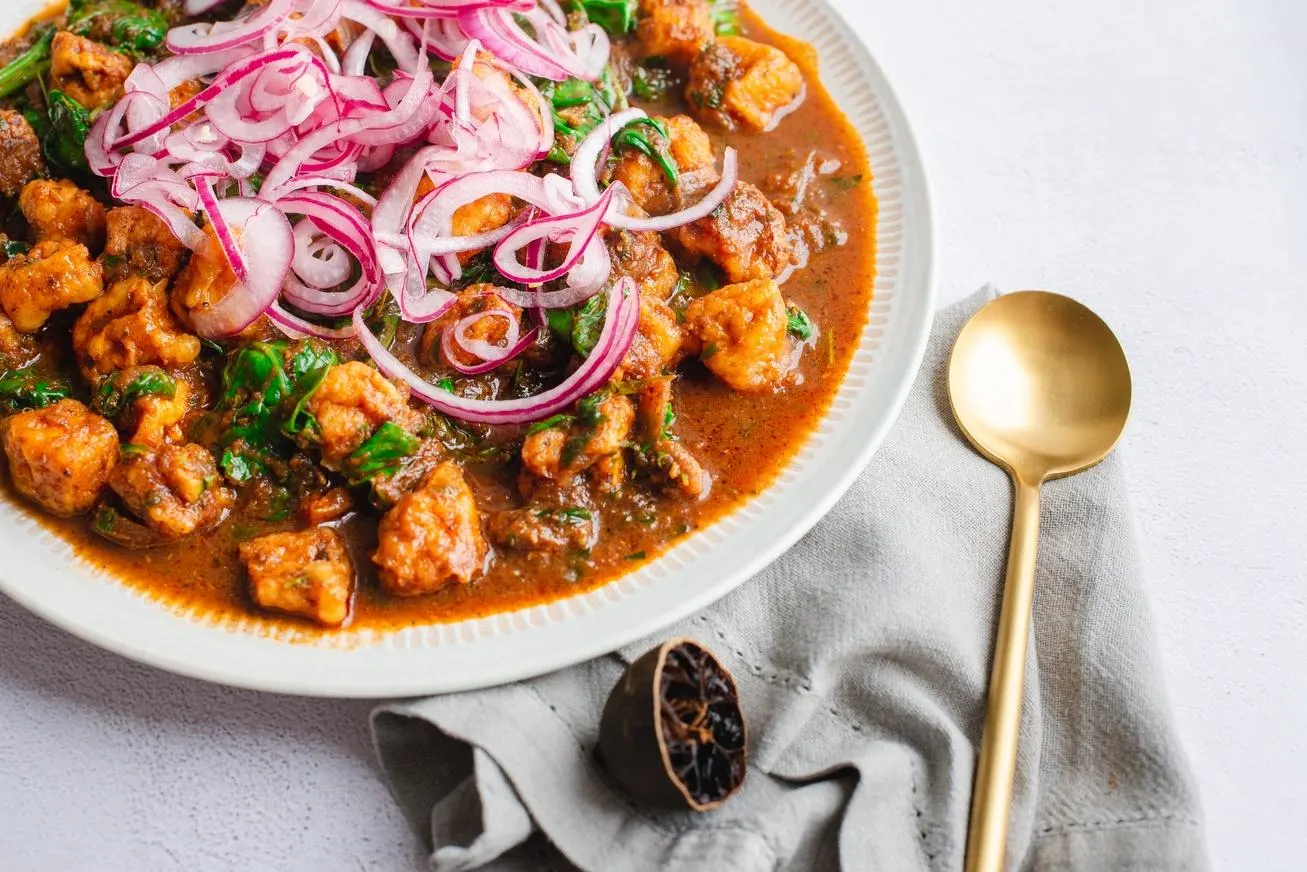

Ottolenghi’s Black Lime Tofu
getty
A colorful cookbook opened beside a chopping board, a detailed recipe bookmarked on a phone, a familiar combination of herbs, spices and vegetables being prepared for dinner. For many customers, Ottolenghi exists primarily in this form: not as a restaurant, but through cooking and eating at home. Its name has become shorthand for specific dishes—think shakshuka, roasted aubergine with tahini and the famous cauliflower cake—that have traveled far beyond the postcode where it began.
Founded as a Notting Hill food shop and deli in 2002, Ottolenghi has since grown into a network of London restaurants, a publishing business, a retail operation and an internationally acclaimed food brand. Now, more than two decades after opening its first shop, Ottolenghi is launching in a new way: taking a brand that has already traveled through books and recipes and putting it into restaurants abroad. The first international opening came in Geneva in 2025, followed by Amsterdam, and now Edinburgh this October.
So what makes a London restaurant brand successfully travel? Take Dishoom and Gymkhana, two notably popular London-born restaurants that have taken their distinctive culinary identities across continents. Dishoom, founded in Covent Garden in 2010, built its brand around Bombay: each restaurant has its own story, design and historical setting, while its cookbook, Dishoom: From Bombay with Love, shares more than 100 recipes and stories from the restaurants into home kitchens. Meanwhile, Gymkhana has built its identity around the grand dining clubs of India, pairing Northern Indian cooking with an elegant Mayfair setting. Since opening in 2013, it has grown from a single Michelin-starred London restaurant to outposts in Riyadh, Las Vegas and Dubai. In both cases, what is being exported is more than a menu, and each new city brings its own tastes, dining habits, suppliers and expectations.
Dishoom, London, England
Getty Images for SXSW London
In Edinburgh, Ottolenghi’s newest restaurant is putting Scottish produce at the center: langoustines from the east coast, crowdie cheese and heritage whisky pair with the brand’s signature vegetables, bold flavors and sharing plates. It’s a celebration of the local land and sea—a meeting of the North Sea and the Mediterranean.
Geneva offers a different interpretation. At the Mandarin Oriental, Gruyère appears alongside dishes such as celeriac shawarma, fish kofta and grilled lamb. The menu also draws on ingredients from further afield, such as kimchi, miso and furikake. Rather than reproducing a London menu wholesale, the restaurant reflects the international character of both Ottolenghi’s cooking and its new setting.
Balancing the familiar and the local may be central to Ottolenghi’s international strategy, as the brand arrives with a well-established identity, but each new location gives it an opportunity to reinterpret that identity for a different audience. Rather than a replication of London, it becomes an extension of the world Ottolenghi has created around its food.
In many ways, the expansion is a natural next step—the company that began with a small London deli has spent years building a relationship with customers at home. For a brand whose influence has often been felt most clearly in people’s kitchens, the next chapter is about bringing that experience back into the restaurant, this time on an international stage.
















Leave a comment