


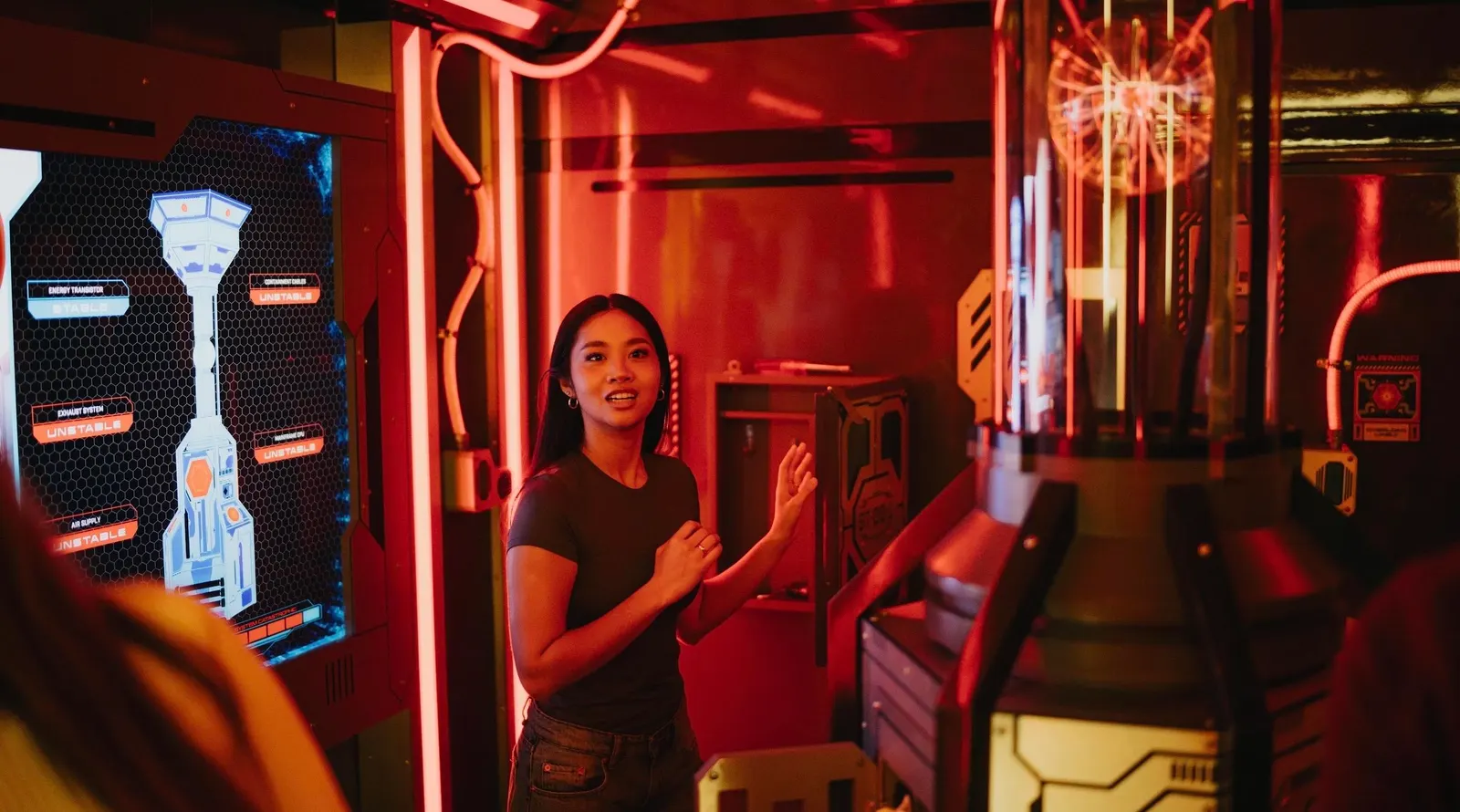

Immersion has become the product. Modern escape rooms are engineered less around puzzles alone and more around emotional intensity, sensory theatre and memory-making
The Escape Game
The modern high street has spent years searching for a convincing reason to make people stay longer. Retail alone no longer guarantees it. Streaming altered evenings, whilst delivery services have reshaped casual dining and hybrid work has permanently disrupted what was predictable footfall. Entertainment has become increasingly compressed into the same devices people carry with them all day long.
Yet against that backdrop, one category has quietly expanded from fringe amusement into serious commercial infrastructure.
The global escape-room market was valued at roughly $10.7 billion in 2024 and is forecast by some analysts to exceed $30 billion over the next decade. At the same time, broader behavioural research continues pointing in the same direction: 78% of Gen Z and 72% of millennials say they would rather spend money on experiences than physical possessions, while recent consumer insights show younger audiences increasingly prioritising smaller, emotionally rewarding “micro-experiences” over major discretionary purchases.
Retail Destinations Needed A New Reason To Gather
Only Murders In The Building: A special edition of The Escape Game in New York celebrates the hit-show. The Only Murders in the Building experience in New York demonstrates how entertainment IP is now extending beyond screens and into fully participatory consumer experiences.
The Escape Game
The traditional shopping trip once carried enough momentum on its own. People travelled to buy, perhaps stayed to eat, then left. Now shopping, hospitality and entertainment increasingly function as one fluid social experience rather than separate activities. A change that has created an opening for immersive leisure concepts capable of doing something physical retail alone often struggles to achieve: creating emotional participation.
Daniel Daher, Senior Director of Marketing at The Escape Game, described the company’s early thinking as a direct challenge to the assumptions surrounding the category. “Why can’t they live alongside high-end retail? Why can’t they be epic for everyone across all age groups and interests?” he asks. “We wanted to create that environment and to this point, we believe we have.”
That instinct proved commercially sharp long before much of the wider property industry fully appreciated where consumer behaviour was moving.
Today, premium escape-room operators sit comfortably inside mixed-use developments, lifestyle districts and major malls because they contribute something landlords increasingly value beyond rent per square foot: energy.
People build evenings around them. Dinner happens beforehand. Drinks happen afterwards, and retailers hope that shopping will fold naturally into the rhythm of each visit.
Daher sees that sequencing very clearly. “Our guests want to park once and be able to access shopping, dining and The Escape Game all in one trip,” he said. “We chose early on to create the best possible escape games we could and put those in the best shopping destinations across the country.”
That philosophy aligns neatly with the wider reinvention of physical destinations. The strongest locations no longer operate purely as retail hubs. They function as social stages.
Consumers Wanted Shared Adrenaline Again
Escape rooms increasingly tap into something many consumers feel is missing elsewhere in modern life: shared problem-solving, collaboration and genuine collective experience.
The Escape Game
The timing of the category’s rise also says something revealing about modern leisure.
The home has become the centre for everything over the past decade. Films arrived instantly. Food arrived instantly. Entertainment became endless, personalised and frictionless. Yet alongside that convenience came a growing appetite for experiences capable of interrupting routine in a more visceral way.
Escape rooms cut directly against passive entertainment because they require participation. They ask people to collaborate, improvise, compete, communicate and occasionally panic together. The customer is not watching the story unfold, but is part of the cast.
Daher describes that dynamic in strikingly human terms. “Screen-free entertainment is a rare commodity now,” he said. “We offer a place for people to get immersed in a story, feel the success of overcoming challenges, and walk away with memories they’ll talk about for a long time.”
That replay value matters commercially. Consumers increasingly spend on experiences that continue socially after they end. Escape rooms perform unusually well there because the emotional arc is compressed so tightly into a shared hour. The memory becomes part of the product itself.
The category also benefits from unusual flexibility. Birthdays, double dates, work events, family outings and tourism work inside the same format without any one audience feeling excluded from the experience.
Daher believes that universality helped accelerate broader adoption. “We wanted to create the opportunity for guests to have those moments where they live on a regular weeknight,” he said. “Not have a really memorable experience be exclusively available when someone is travelling.”
The Production Values Changed The Category
The strongest operators also understood early that immersion required more than puzzles alone.
Early escape rooms often resembled hobby projects: functional but visually thin. The modern premium operators behave much more like entertainment studios, borrowing openly from theatre production, gaming, hospitality and cinematic storytelling.
The Escape Game says its development process for new concepts averages around 10 months, with some original games taking closer to a full year from concept to launch. That timeline reveals how dramatically expectations have evolved. Consumers are no longer paying simply to solve clues. They are paying to feel convincingly transported.
“Storytelling and immersion is the absolute key to our in-game experience,” Daher explained. “We really pride ourselves in getting a guest lost in a brand-new world for 60 minutes.”
That language places escape rooms inside a much broader movement shaping leisure globally. Consumers increasingly seek environments capable of creating temporary emotional relocation, spaces where the outside world recedes long enough for immersion to feel complete.
The same instinct sits behind immersive theatre, interactive exhibitions, challenge arcades and increasingly ambitious live entertainment concepts. The audience is no longer satisfied simply observing. They want to enter the narrative, and grab a selfie for the socials as a proof point.
Intellectual Property Became A Shortcut To Trust
Partnerships with entertainment brands accelerated the category further because they lowered the psychological barrier around participation.
Keen-eyed fans will recognise the name Savage part of the trio of pod-casting sleuths in Only Murders In The Building. Charles-Haden Savage’s (played by Steve Martin) apartment door inside the Only Murders in the Building themed experience, blending fandom, storytelling and physical theatre into a high-demand attraction.
The Escape Game
The Escape Game’s collaboration tied to Only Murders in the Building gave audiences immediate familiarity with the emotional world they were entering. Consumers may not fully understand escape-room mechanics before visiting, but they already understand tone, humour and narrative stakes attached to a recognised cultural property.
Daher sees those collaborations as expanding the category’s reach naturally. “A partnership with a brand they love gives them the perfect opportunity to take that leap,” he said. “It gives people who aren’t familiar with our work confidence that we make quality experiences.”
The commercial significance of that idea stretches much wider than escape rooms alone. Across the modern experience economy, the strongest concepts increasingly combine novelty with emotional familiarity. Consumers want surprise, but they also want reassurance that the effort of leaving home will feel worthwhile.
The Mall Became A Social Environment Again
The rise of immersive entertainment ultimately says something larger about the future of physical destinations themselves.
For years, many ‘experts’ blamed the decline of traditional retail almost entirely on the rise of e-commerce. The more revealing issue was emotional relevance. Consumers stopped needing physical spaces purely for transaction. What they still needed them for was participation, stimulation, memory and social connection.
That distinction reshaped the economics of place.
Daher believes immersive entertainment already sits naturally alongside cinema and dining as part of modern destination planning. Retail environments increasingly succeed when they create emotional sequencing rather than simple purchasing opportunity.
“There’s a whole group of people who don’t want to make plans around shopping but want to spend their time making memories with experiential entertainment,” Daher said. “You don’t have to travel or go on vacation just to have that experience – you can do it at your local mall.”
That may be the clearest explanation for why escape rooms escaped their niche so successfully.
They arrived at precisely the moment consumers stopped measuring value by what they owned and started measuring it by what genuinely felt memorable in a life moving increasingly fast.















Leave a comment