


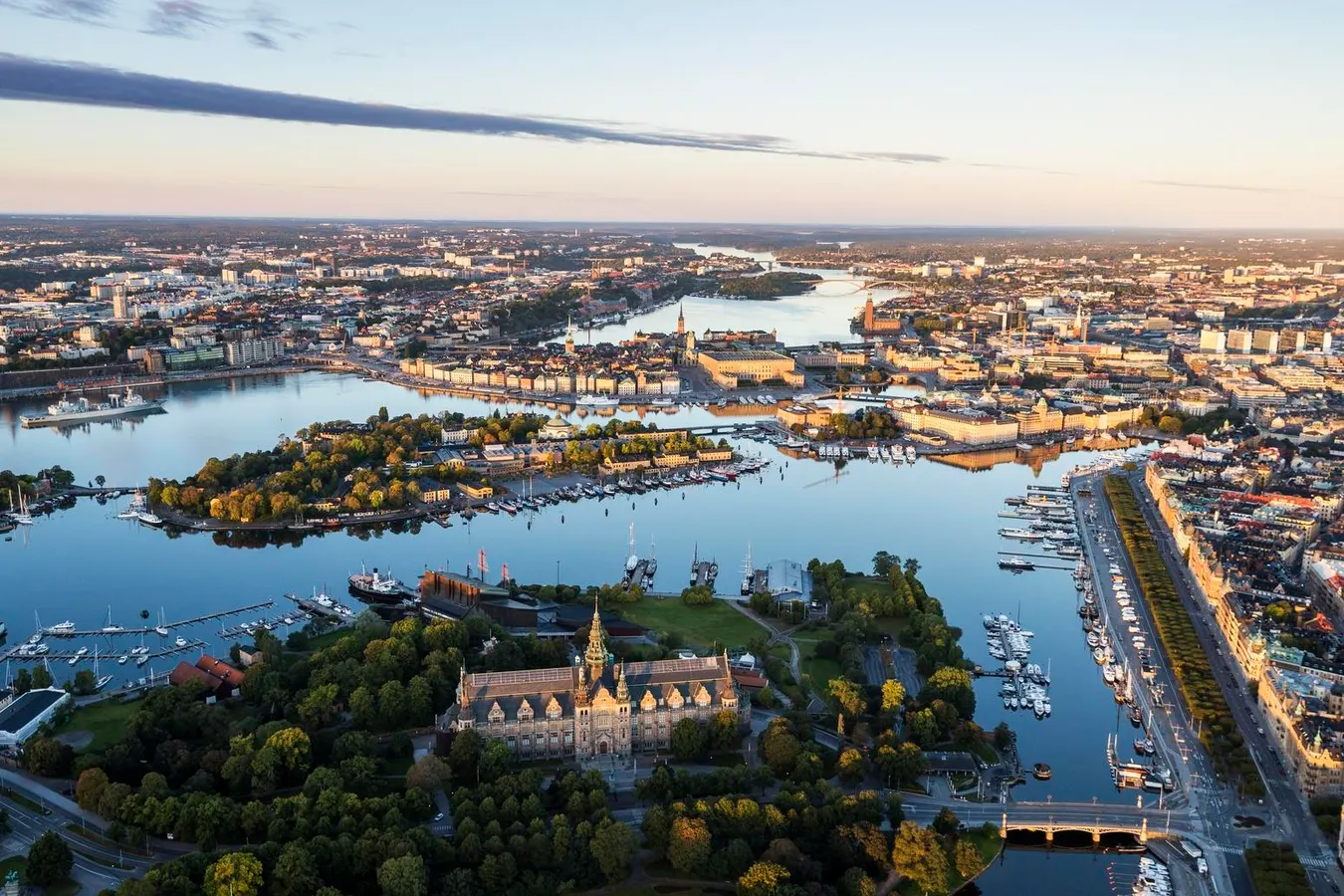

Stockholm’s retail offer is expanding as visitor numbers increase.
Henrik Trygg, Stockholm Business Region
Swedish capital Stockholm is quietly becoming one of Europe’s more interesting luxury retail markets. It may not have the scale of London, Paris or Milan, nor the density of luxury stores found in nearby Copenhagen, but its mix of tradition, understated Swedish style and growing tech bro community is transforming the city’s retail offer.
To start with, Stockholm has a wealthy domestic customer base, a growing international visitor economy — currently boosted by the rise in coolcations as Europeans look to escape the heat domes across the continent — and a retail district that is being physically reconfigured.
What was once a collection of relatively distinct shopping destinations — the famous department store Nordiska Kompaniet (NK), Hamngatan, Norrmalmstorg and Bibliotekstan — is increasingly becoming a connected premium retail quarter.
And the most important change may ultimately happen not inside a store but on the streets between Stockholm Central Station and the established luxury core.
While visitors arriving at Stockholm Central today are only a few minutes walk from NK and the premium streets around Bibliotekstan, the experience does not yet feel like a single luxury destination. However, the proposed transformation of the station district, the redevelopment of individual blocks and the opening of new projects such as RGNT could close that gap.
Stockholm recorded almost 16 million guest nights in 2025, an all-time high, according to Stockholm Business Region, up 4% on the previous year.
And the international element is becoming particularly important. During summer 2025, Stockholm city recorded 3.28 million guest nights, including 1.57 million from international visitors, up 16.3%, with the U.S., Germany, Norway, the U.K. and Finland among the largest international markets.
Stockholm Business Region CEO Staffan Ingvarsson said that it remains early days for direct evidence of a lasting impact from the coolcation trend but said he feels that Stockholm and the wider Swedish tourism offer have begun to resonate with visitors.
“Sweden, also in cooperation with the other countries in Northern Europe, has become a much more attractive proposition for visitors and the less extreme summer temperatures certainly play a part in that. What we are trying to do is work with private landlords to help link what is a very compact city center and create a real destination for those visitors,” he said.
Stockholm’s Luxury Area Expands
Stockholm already has a credible and expanding luxury retail proposition. Biblioteksgatan and the surrounding Bibliotekstan district have become the city’s traditional premium shopping area, with international fashion, jewelry, beauty and lifestyle brands alongside Swedish names.
Biblioteksgatan was ranked 27th globally in Cushman & Wakefield’s 2025 Main Streets report and the most immediate catalyst to bring the city’s luxury and premium offer up is RGNT, a new mixed-use development at Regeringsgatan and Mäster Samuelsgatan being built by U.S.-based real estate developer Pembroke.
With the offices opening in fall 2026, the project includes space for nine stores at ground and first floor level, with a direct internal link to the womenswear floor within NK. The site, which will open next year, also sits directly opposite Mood, itself a gamechanger when it opened 15 years ago.
Its architecture, frontage and retail specification are designed to make the intersection a destination rather than simply another central-city crossroads and the idea is to create U.S.-style double hight frontages and contemporary spaces that provide retailers with the type of units they cannot currently access in streets lined with heritage buildings.
The new RGNT will create space for nine stores between NK and Mood shopping center.
Pembroke
Stockholm’s premium market has historically been relatively compact and space is at a premium, so RGNT should boost international retail through a high-visibility presence while remaining inside the luxury catchment.
“The luxury retail offer was originally quite small in Stockholm but that has been extending and our scheme and others are making the CBD much larger and connecting the traditional retail and restaurant offer with the train station,” Kristin Willerström, Senior Regional Director Nordics at Pembroke, said.
“What we believe is important is to give the luxury and premium the type of spaces they need in a city that is rapidly running out of prime space.”
It could also help shift the centre of gravity, especially given the ongoing refurbishment of NK. Founded in 1902, the department store has long been Stockholm’s principal luxury and premium retail institution and its importance is partly commercial and partly symbolic, because it provides international visitors with an immediately recognizable destination.
But it had become quite tried and landlord Hufvudstaden, which owns the property and NK, has been reshaping its offer, with new tenants included Rimowa, Naturkompaniet and Singular Society, while jewelry and watches were transferred to specialist Nymans Ur.
The commercial objective is to make these places behave less like separate destinations and more like one district, increasing the scale of city that is quietly transforming from a market that has, after all, given the world IKEA and H&M, plus Spotify and even ABBA!













Leave a comment