


The shift towards more sustainable consumption is well documented. What is equally well documented is the gap between consumer intention and action. For retailers, the interesting question is what actually closes it.
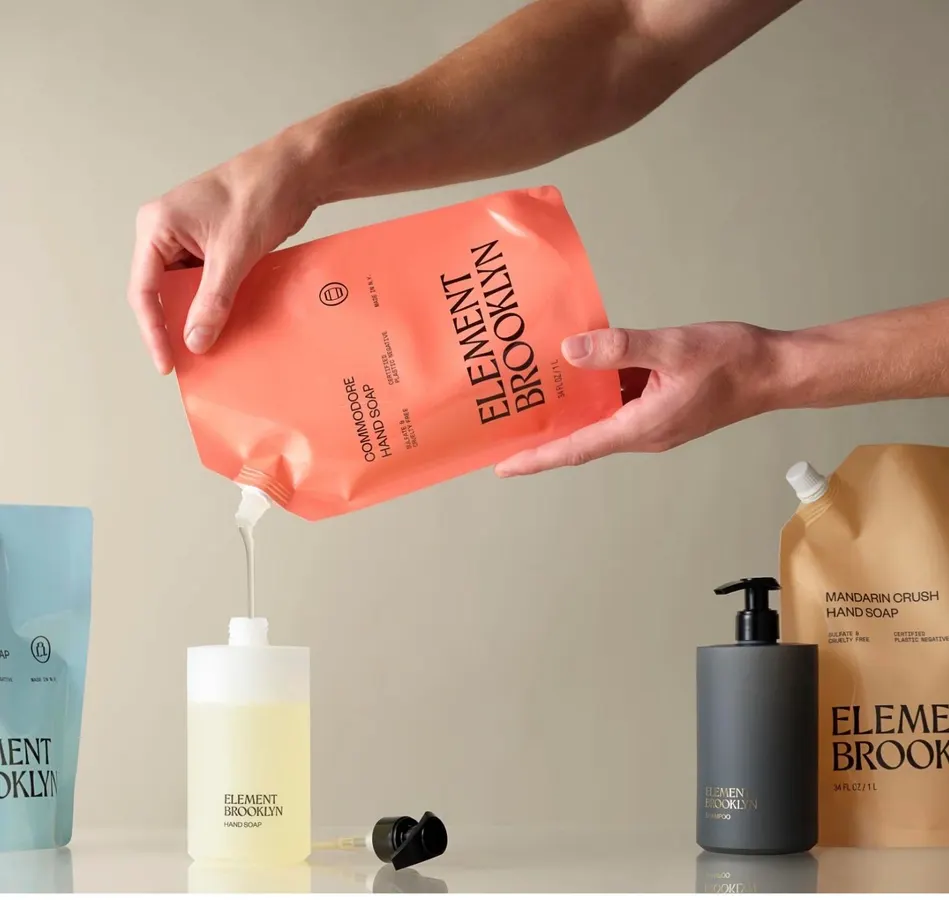
Element Brooklyn offers an interesting answer, as the refill-led home and personal care business has built its proposition around value, product performance and a refill model designed to fit how people actually consume.
The numbers are impressive: a 39% repeat purchase rate, more than 800 active B2B accounts and over 500,000 bottles kept out of landfill since 2021, according to the company’s live impact counter. Its products also average around a quarter of the per-ounce price of the luxury brands it compares itself with.
I spoke exclusively to Andrew Nicol, founder and CEO of Element Brooklyn, about what the business is learning.

Andrew Nicol, founder and CEO of Element Brooklyn, has built the business around a simple premise: sustainable refill needs to deliver on value and performance if it is to become mainstream.
Element Brooklyn
What actually persuades someone to try refill for the first time?
Andrew Nichols (AN): “Price is usually what persuades someone to try refills. The main friction is getting them to make that first purchase. Sustainability matters, but it tends to reinforce the decision rather than initiate it: people see that a refill costs much less, and once the product delivers, the reduction in waste makes the switch feel even better.
That value proposition resonates because consumers are increasingly questioning luxury markups. Our growth reflects a growing willingness to separate the quality of the product from the branding and designer ‘mystique’ surrounding it.”
How important is subscription to the model – and what have you learnt about how people actually use it?
AN: “Most of our orders are still non-subscription orders, but subscription is very important – subscribers have a significantly higher lifetime value and recurring orders improve operational efficiency because they help us anticipate what we need to make.
We have a pretty long gap, about six months on average, between a customer’s first and second order. That is mostly because our products are affordable and so people can buy multiple units at once. We are comfortable with that: in this category, a longer repurchase cycle can be a sign that the product is doing its job.
When someone pauses or cancels a subscription, the usual issue is that the product is arriving faster than the household can use it. We therefore offer longer cadences and make it easy to skip, pause, swap products or change dates. Retention depends on matching real consumption.”
Does the commercial case for refill work without the sustainability argument?
AN: “The economics of refill make sense even without the sustainability argument. A conventional product asks the customer to buy another bottle, pump, label and box every time the contents run out. With refill, the vessel becomes the durable part and future spending goes towards the product itself. That means less packaging, lower shipping weight and better value for the customer.
We see the same logic in hospitality. We have over 800 active B2B accounts and this is a rapidly growing part of the business. Hotels, restaurants, gyms and offices buy in bulk because it is economical and operationally simpler, while our closed-loop partners return empty drums to be reused.
For these customers, reducing packaging is not a symbolic gesture; it also means more predictable supply and less waste to handle.”
Element Brooklyn’s approach makes the refillable vessel part of the lifestyle proposition, with fragrance, design and performance intended to make reuse desirable rather than a consumer duty.
Element Brooklyn
How much does consumer psychology matter?
AN: “We never present refilling as a duty. We sell fragrance, performance and value first, because a model that only works when people are feeling virtuous will not work for long.
The other part is making the vessel worth keeping. At our Warehouse Fridays events at our Brooklyn warehouse, we give customers the opportunity to bring their own candle vessel for refilling.
People have brought all kinds of jars, like old keepsakes they didn’t know what to do with, or candles that were given to them as a gift for a special occasion but that have long burned down. Reuse can feel personal and considered rather than restrictive.”
What does your customer data tell you about repeat behaviour?
AN: “Our repeat purchase rate is 39%. Once a customer comes back for a second purchase, they are almost twice as likely to subscribe than they were on their initial transaction. Our live impact counter has recorded over 500,000 bottles kept out of landfill since 2021, using a methodology published on our website. This is the single most important metric we track internally.”
How big can refill become?
AN: “The ambition is for refill to stop being specialist and simply become the normal way these products are bought, not only in our existing categories but in every part of the home.
I do not think that requires persuading the mainstream consumer to become an environmentalist. It requires making the refill a better product and a better deal.
Our products average about a quarter of the per-ounce price of the luxury brands to which we compare them. That gives customers an immediate reason to switch, with the environmental benefit strengthening the relationship over time.”
What has genuinely surprised you as you have grown the business?
AN: “An important learning is that patience can be a growth strategy. We haven’t raised any outside capital and so have relied on revenue to fuel our growth, which has made us disciplined in how we’ve grown.
Direct-to-consumer businesses are encouraged to manufacture urgency through discounts, short repurchase cycles, constant win-back campaigns, and aggressive email marketing. Our customers may not return for six months because the product lasts six months.
Respecting that pace, rather than discounting or sending more than they need, or hounding them by email – has helped us build a healthier and more durable relationship with them.”
Enabling Consumers To Buy Sustainably
Retail has become exceptionally good at engineering reasons for customers to buy again sooner. Here, I found a business and a leader that is accepting that a good product may mean waiting six months for the next transaction and designing its economics and customer relationship accordingly.
It also challenges the idea that refill needs to be sold primarily as sustainable behaviour. If the better environmental choice is also cheaper, performs well and is easier for the customer or business to manage, the behavioural change requires considerably less persuasion.
That is when refill has the potential to move from an alternative way to buy to simply the way we buy, and our environmental impact better for it.












Leave a comment