


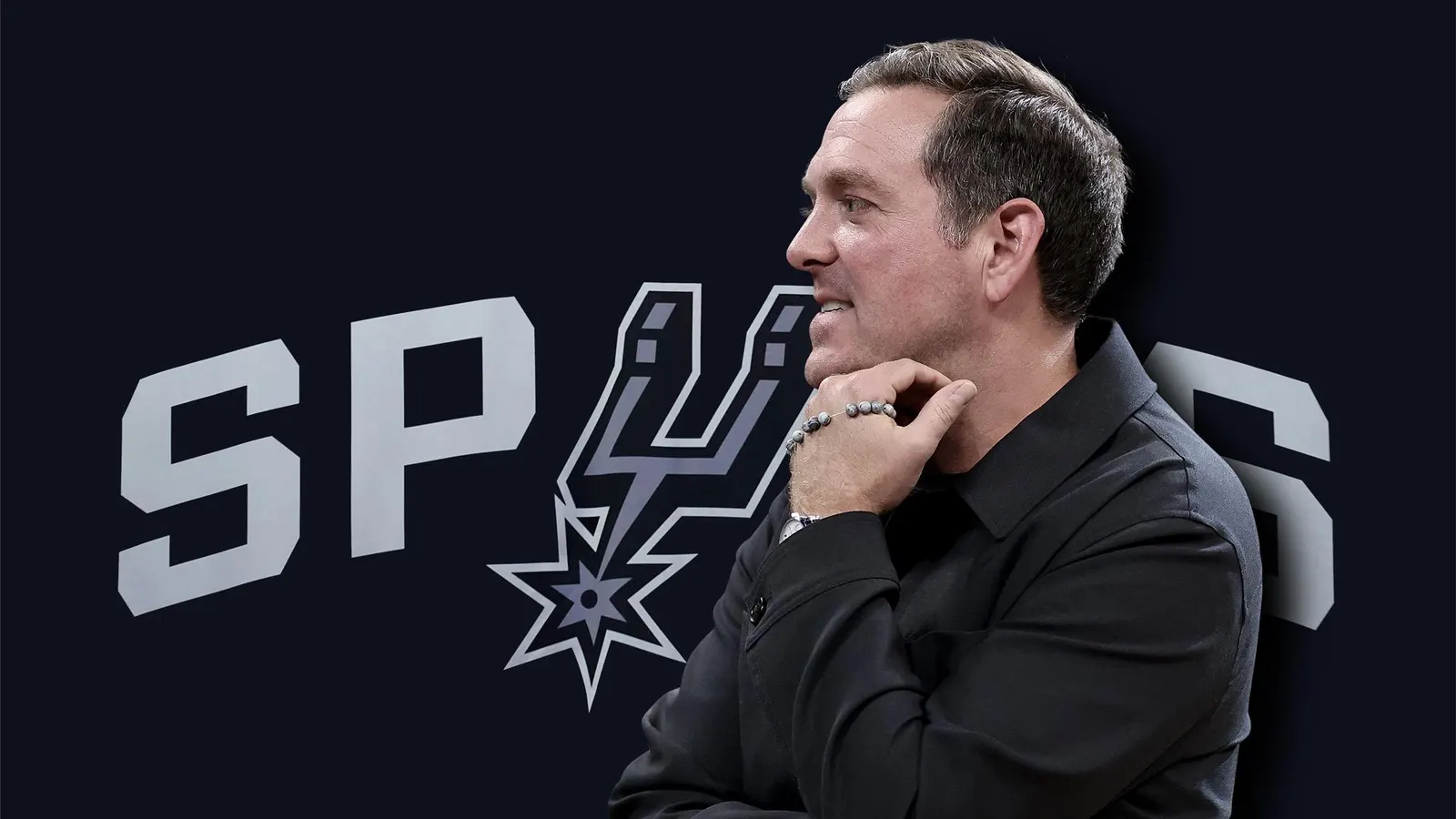
Before Peter M. Holt bought a controlling stake in the San Antonio Spurs in 1996 at a reported valuation of $76 million, there was serious doubt about whether the team would stay in the city much longer.
The Spurs’ home arena, the Alamodome, was a multipurpose facility better suited for football than basketball, built in 1993 as part of a failed mission to bring an NFL team to San Antonio. The Spurs’ leadership was also fragmented, after longtime owner Red McCombs had sold the team for $75 million the same year to a consortium of more than two dozen local investors and corporate entities in an effort to keep the Spurs in the city in the near term.
Holt, now 77, brought a sense of security, taking charge as a San Antonio-based businessman and heir to the Caterpillar construction equipment fortune, but not even the Spurs’ most optimistic fans could have expected the stability and prosperity the franchise was about to enjoy.
Under the Holt family’s stewardship, San Antonio has won five NBA championships, more than any other NBA team over the last three decades except the Los Angeles Lakers, who have six. And the Spurs are currently vying for a sixth of their own in this year’s NBA finals (although they are facing a 3-1 deficit against the New York Knicks heading into Saturday night’s Game 5 and will have to win the next three in a row to secure the crown).
Just as impressive, the Spurs have built their dynasty in one of the NBA’s smallest media markets, operated by a family that has been content to remain far more anonymous than most of its peers in sports ownership. Holt’s son, Peter J. Holt, 39, took over as the team’s chairman in 2019 after the elder Holt’s then-wife, Julianna Hawn Holt, held the top job for three years; Holt’s daughter, Corinna Holt Richter, also serves on the club’s board of directors.
Together, the Holts reportedly own more than 40% of the Spurs, a stake worth at least $1.7 billion, and their construction equipment dealership pushes their total family fortune past $3 billion, according to Forbes estimates.
The younger Holt occasionally gives interviews to local news outlets but keeps a low profile nationally and declined an interview request for this article.
The family’s fortune dates back more than a century to Benjamin Holt, who invented the first crawler-type tread tractor in 1904 as the president of the Holt Manufacturing Company and branded it as the Caterpillar. A 1925 merger with the C.L. Best Tractor Company formed Caterpillar, the public company that still exists today as a $400 billion construction giant.
Dynasty Builder: The Spurs won five championships between 1999 and 2014 with Peter M. Holt as their principal owner.
Eric Gay/AP
Benjamin’s great-great-grandchildren—Peter J. Holt and Richter, his sister—are now co-owners of Holt Cat, the family’s Caterpillar equipment dealer, serving 118 counties in Texas. With Peter also serving as CEO, the business was recently generating $1.6 billion in annual revenue, according to a 2020 marketing case study.
Their father, Peter M. Holt, was once an unlikely candidate to take over and expand the family business. In a 2003 New York Times profile during the Spurs’ second championship run, he reflected on a rebellious childhood that included arrests for public drunkenness and driving under the influence. In 1966, when he was 17, a judge in Corpus Christi, Texas, offered him the option to go to jail or join the Army to get his life straightened out.
“I never even called a lawyer or the family,” Holt told the Times. “I just figured anything was better than jail.”
So the teenage heir was sent off to Vietnam, where he earned a Silver Star, three Bronze Stars and a Purple Heart after a fragmented bullet hit his neck in 1968. His struggles with alcoholism continued upon his return home, however, and he spent years in and out of rehab clinics before becoming sober in 1986, three years after his father sold him the family Caterpillar dealership, the Times reported.
In 2004, Holt stepped back from the Spurs temporarily to enter treatment for a relapse, and the former captain of his yacht alleged this past April that his substance abuse has persisted. In a wrongful termination lawsuit, Jay Jones, who worked for Holt from 2014 until January 2026, claims that Holt asked him to illegally transport a large amount of marijuana from Florida to Texas and bring narcotics like Xanax from Costa Rica to Texas. In a counter-suit Holt filed against Jones, he denied the accusations and claimed that his former captain was exploiting his documented struggles with addiction and had extorted him by asking for millions of dollars to prevent him from taking the allegations public.
Despite Holt’s tribulations, the Spurs have been a model of consistency. During the first season of his ownership, in 1996-97, superstar center David Robinson missed 76 games with a back injury and a broken foot as the team stumbled to a 20-62 record, but the down year allowed San Antonio to earn the No. 1 pick in the 1997 NBA draft and select Tim Duncan. The 15-time All-Star and Basketball Hall of Famer became the linchpin of all five of the Spurs’ championship teams alongside Gregg Popovich, who took over as head coach in the middle of the 1996-97 season and patrolled the sidelines until 2024, when assistant coach Mitch Johnson replaced him.
The Spurs made the playoffs in Popovich’s first 22 full seasons as coach, and after a momentary swoon, they enjoyed another dose of good luck by winning the 2023 NBA draft lottery for the opportunity to add the 7-foot-4 French phenom Victor Wembanyama, the centerpiece of a new era of championship contention.
The Spurs’ first title run—in 1999, with a finals series also against the Knicks—helped them garner the support to escape the cavernous Alamodome and move into a basketball-only arena in 2002 on a 30-year lease. Now, the team—which Forbes values at $4.4 billion, 19th in the NBA, and which counts billionaires Michael Dell and Joe Gebbia and private equity firm Sixth Street among its co-owners—is making plans to build a new $1.3 billion arena and downtown entertainment district to move into by the time that lease expires.
The Spurs’ decision to play three home games in 2022-23 in Austin, Texas, and Mexico City rekindled dormant fears in San Antonio that the team could be flirting with relocation, but Peter J. Holt put those fears to rest in an open letter in May 2022.
“My family became involved in the Spurs in the ’90s because there was a real threat that the team would be moved. We would not let that happen then, and we will not let that happen now,” Holt wrote. “Spurs fans, we are here to stay, por vida”—for life.









Leave a comment