


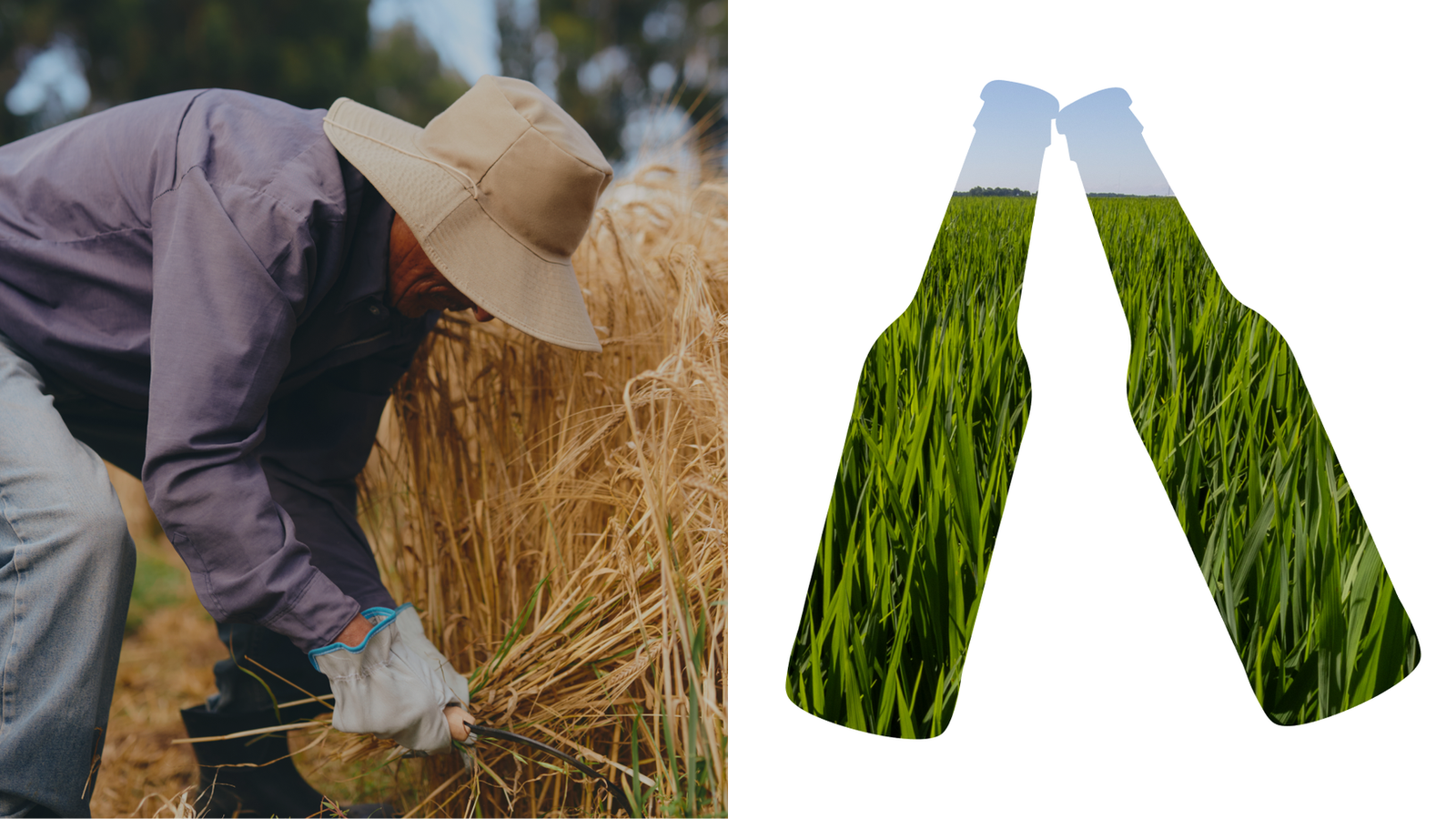
The world’s most iconic beer brands — from Budweiser to Stella Artois — all share a single root: local farmers.
“Beer always starts in the hands of farmers in their fields,” says Ingrid De Ryck, chief sustainability officer at AB InBev, the world’s leading brewer and home to eight of the top 10 most valuable beer brands.
AB InBev’s global agricultural network spans from the U.S. to Uganda, including a direct sourcing relationship with more than 20,500 farmers in 2025. More than 14,000 of these partners are smallholders, farmers who manage small plots of land. Yet despite that scale, its beer portfolio is brewed with local ingredients. For example, by partnering with local growers in Zambia, the company ensures Eagle and Mosi beers reflect the authentic flavors of the land.
“[We] may be a massive global company, but we operate hyper-locally,” says De Ryck.
Working directly with local farmers helps AB InBev brew the highest-quality beer possible. By sourcing ingredients close to where its beers are made, the company combines local agricultural expertise with world-class brewing to make beers that are both authentic to their communities and consistently high quality.
To support and celebrate the growers and communities behind its beers, AB InBev launched the Cheers to Farmers initiative, which brings its farmer network together for events, research showcases and collaboration. The campaign highlights the company’s support of local farmers, ensuring all farmers are skilled, connected and financially empowered — enabling more sustainable practices, technological innovation and higher-quality yields.
Learn how AB InBev’s partnerships help boost farmers’ livelihoods and ensure an innovative future for beer-making.
“Our beers are made by local brewmasters in local breweries with ingredients sourced from local farmers,” says De Ryck.
That homegrown connection begins right in the soil with simple, high-quality ingredients, including grains, hops, yeast and water. While you may be familiar with barley, hops, rice and maize as beer’s main crops — thank rice for Budweiser’s clean finish — AB InBev also relies on regional staples like sorghum and cassava across Latin America and Africa.
Meanwhile, in established markets like the U.S. — where some farmer partnerships have spanned generations — nearly all of the ingredients used in the company’s iconic beers are sourced from American farmers.
Beyond large-scale commercial farmers, AB InBev works closely with smallholders in countries including Ecuador, Colombia, Peru, Mexico, Uganda, and Zambia, helping to catalyze agricultural industries.
Take India, for instance: through these partnerships, farmers are growing more barley, allowing AB InBev to buy more than 16,000 tons in 2026 — a 30% jump from 2025. With our agronomic support, says De Ryck, “farmers believe it’s a crop worth growing.”
One of AB InBev’s priorities is to ensure that 100% of its farmers are skilled, connected and financially empowered — but that looks different from region to region.
“Our model is farmer-centric and context-specific,” says De Ryck. She says U.S. rice, barley and hops farmers are connected to a team of agronomists who provide one-on-one agronomic support, sharing information on varieties, the latest technologies and best practices. This engagement drives improved farmer productivity and resilience.
But De Ryck says to reach their 9,000 smallholder farmers in Uganda, the company has to get creative. Their local agronomists train local farmers, using radio broadcasts to circulate information and invest in partnership programs like financial literacy training, helping ensure farmers can thrive personally and professionally. Every year, AB InBev assesses and adapts each of these programs in an effort to ensure their impact is long-lasting.
To stay on the front lines of innovation, AB InBev operates seven model farms across the globe, where agronomists and partners pilot new crop varieties, test sustainable methods and analyze environmental impact, says De Ryck.
They also drive innovation in crop breeding and raw material supply. Through its Global Barley Innovation Center, AB InBev is working to accelerate the development and adoption of resilient crop varieties, helping ensure a reliable supply of high-quality brewing raw materials while equipping growers with solutions tailored to local conditions and challenges that impact productivity.
AB InBev’s agronomists then work with farmers to introduce these varieties and implement these techniques, and the company also partners with some of the world’s largest conservation and humanitarian organizations to scale and deploy its efforts. “It’s all about show and tell,” says De Ryck. “These model farms and those partnerships are instrumental, not just for our R&D, but also to have farmers adopt practices, try new varieties and reduce their level of risk or anxiety in order to apply that change.”
De Ryck says that with more innovative practices, farmers are transforming their yields — and their livelihoods.
At last year’s Cheers to Farmers event in Uganda, De Ryck met Joseph, a local barley farmer. She toured his land and got a glimpse into his daily routine: Joseph transports seeds 2,000 meters up a muddy hillside to reach his farm. Trekking alongside Joseph, De Ryck says it started to rain, and their only way back was to slide down the hill. “It’s incredible what farmers need to do,” she says.
De Ryck says that Joseph used to grow barley on and off for other buyers, but wasn’t too pleased with the output. After working with an AB InBev agronomist, he’s been able to triple his harvest and his income by implementing simple changes in planting techniques and land management practices.
Across the globe, farmer stories like Joseph’s are proving what’s possible, notes De Ryck: healthier soil, saved water, larger harvests and higher incomes.
Moving forward, AB InBev aims to extend its skilled-connected-empowered framework to third-party indirect farmers, such as working with 100% of its malt suppliers to deliver similar support.
“When we do that, we advance the consistency of the quality of our beers all around the world,” De Ryck says.
What unites the tens of thousands of farmers that AB InBev partners with worldwide? De Ryck says it comes down to their community impact.
“Consider how important agriculture is for local economies, irrespective of whether we’re talking about Uganda or we’re talking about France. While crops, conditions and landscapes are different around the world, farmers often have the same questions and face similar challenges,” De Ryck says.















Leave a comment